Wild discus: natural beauty from the Amazon
Heckel, green, blue or brown: wild discus from the Amazon are less vivid than bred varieties, but have an unmatched presence. Here is what you need to know.
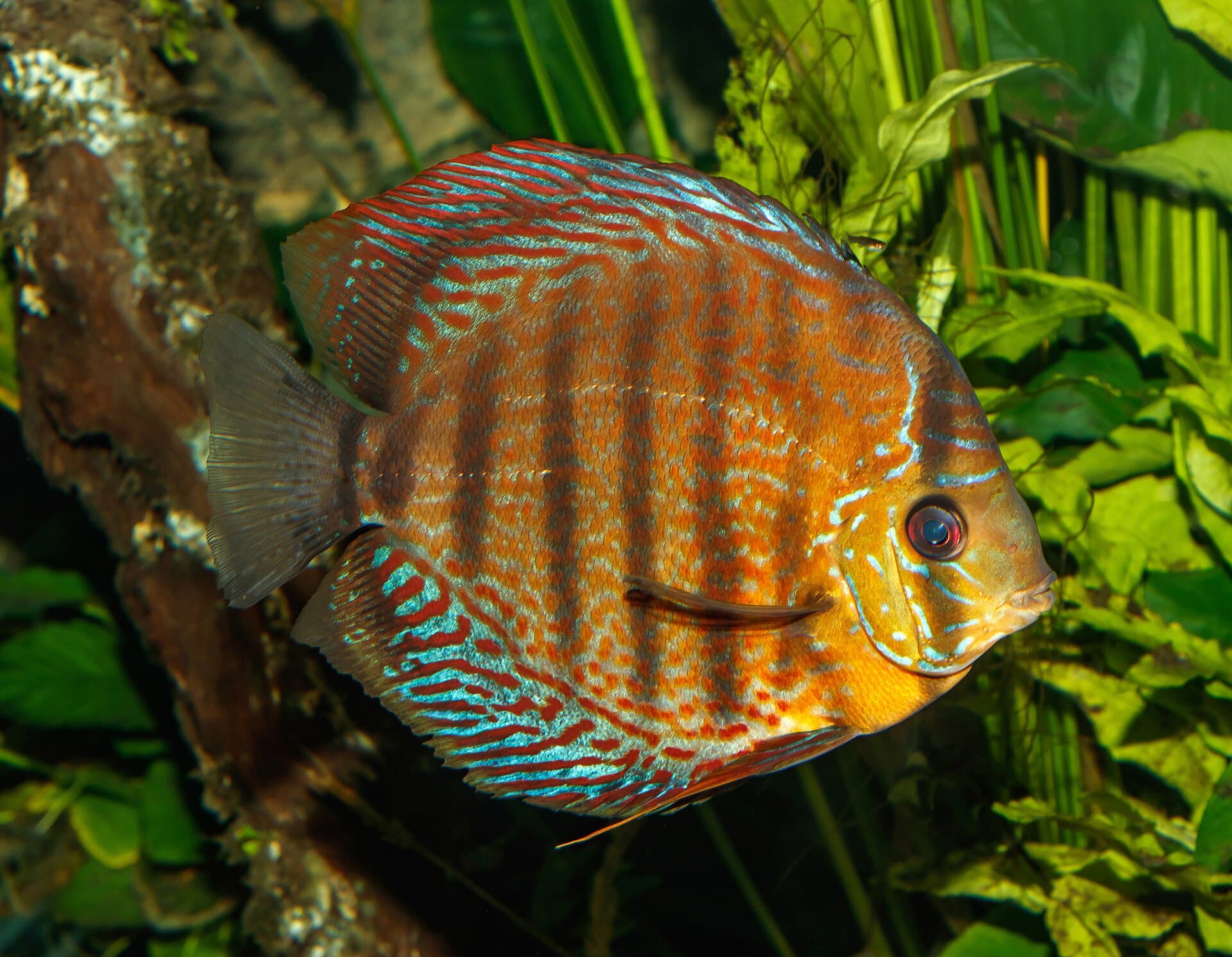

All bred varieties descend from wild discus from the Amazon basin. These natural forms are less vividly coloured, but have a calm, elegant beauty that many enthusiasts prefer over any bred variety.
How many species are there?
Traditionally two species are distinguished: Symphysodon discus, the Heckel discus, and Symphysodon aequifasciatus, which includes the green, blue and brown forms. Scientists don’t agree: some recognise more species, such as S. haraldi and S. tarzoo. In the trade people usually simply speak of Heckel, green, blue and brown, often with the collection locality added.
The Heckel discus
The Heckel is recognisable by its broad, dark middle vertical bar. It lives in places such as the Rio Negro: extremely soft, acidic blackwater with very low conductivity. Heckels are therefore the most demanding discus and feel best at around 30 °C in very soft water.
Green discus
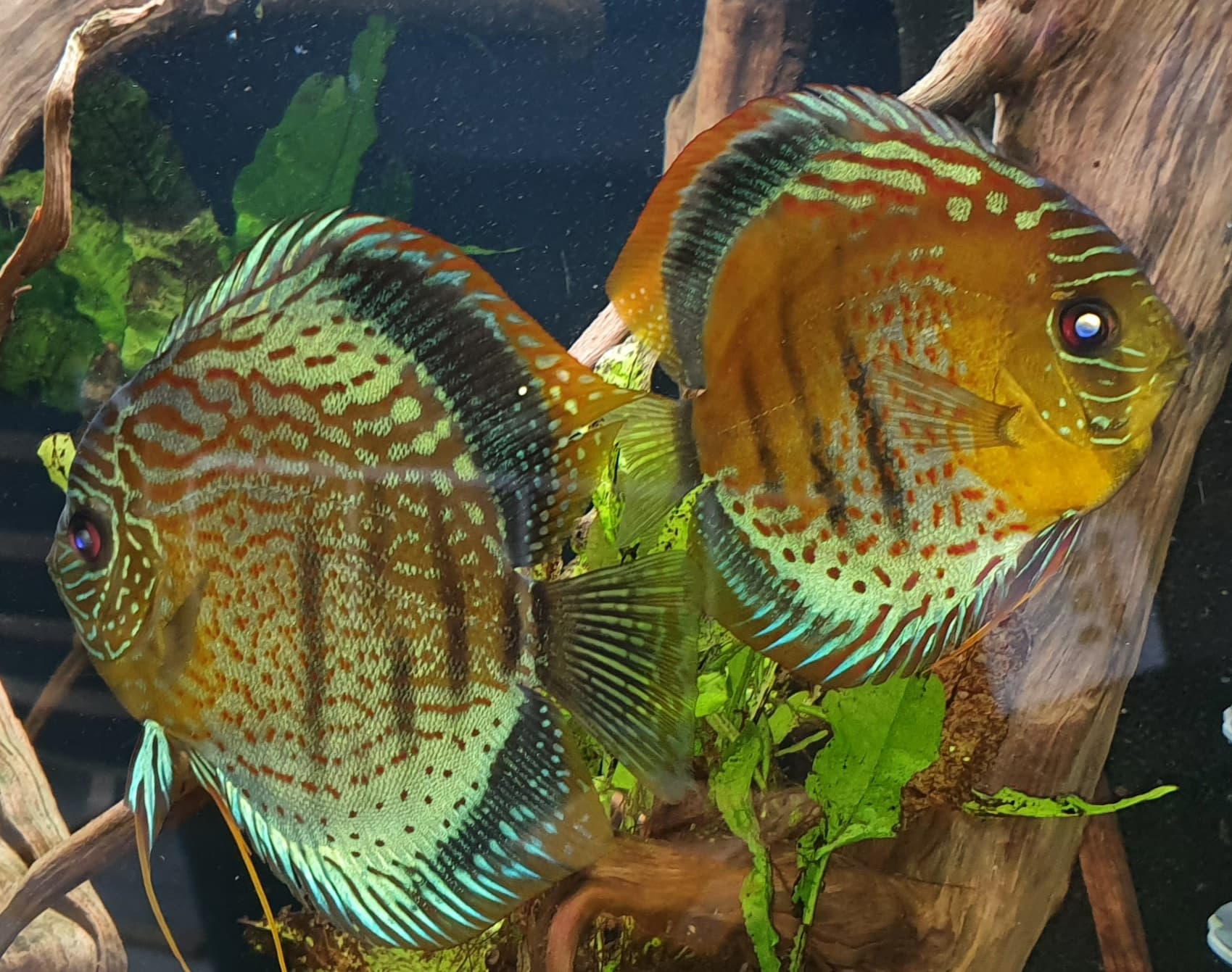

Green discus come from areas such as the region around Lake Tefé. The Tefé green, with red spots on the lower body, is particularly popular. ‘Santarém’ is another well-known locality name.
Blue and brown discus
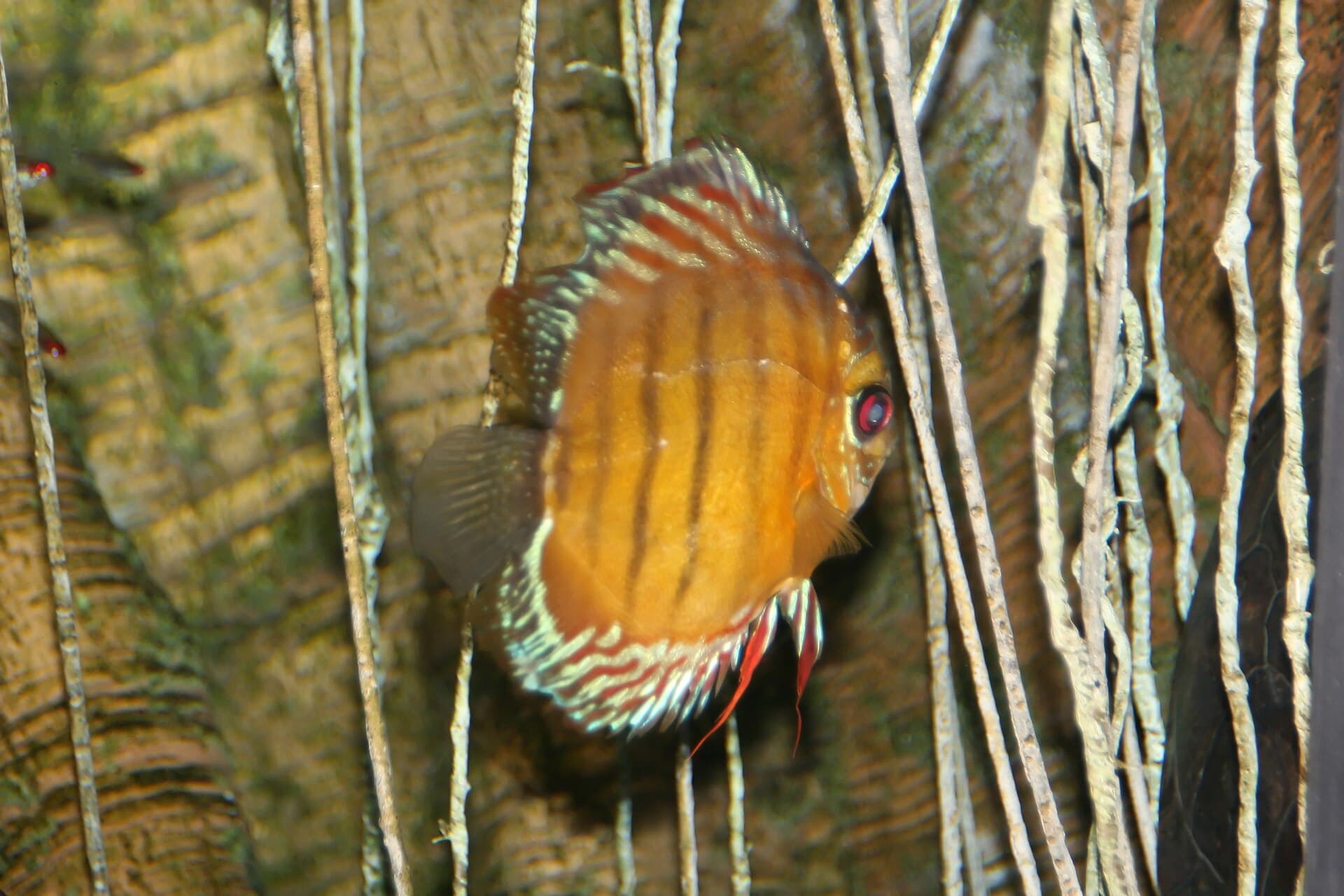

Blue discus have blue lines over the head and back; they are the basis of many turquoise varieties. Brown discus, such as the red-brown forms from the Alenquer area, are the most common and usually the least demanding.
Keeping wild discus
- Parasites: wild fish often carry intestinal and gill parasites. A quarantine period with checks is essential.
- Soft water: start with soft, slightly acidic water and make any changes very gradually.
- Calm: wild fish are shyer than tank-bred fish. Driftwood, plants and subdued light help.
- Offspring: F1 offspring of wild parents combine the natural look with better adaptation to the aquarium.
Wild discus are not for beginners, but a group of well-settled wild discus in a planted blackwater aquarium is among the most beautiful sights fishkeeping has to offer.