The right water for discus: reverse osmosis, parameters and water changes
Warm, soft and above all clean: that’s ideal discus water. About temperature, pH, conductivity, reverse osmosis water and why large water changes matter so much.
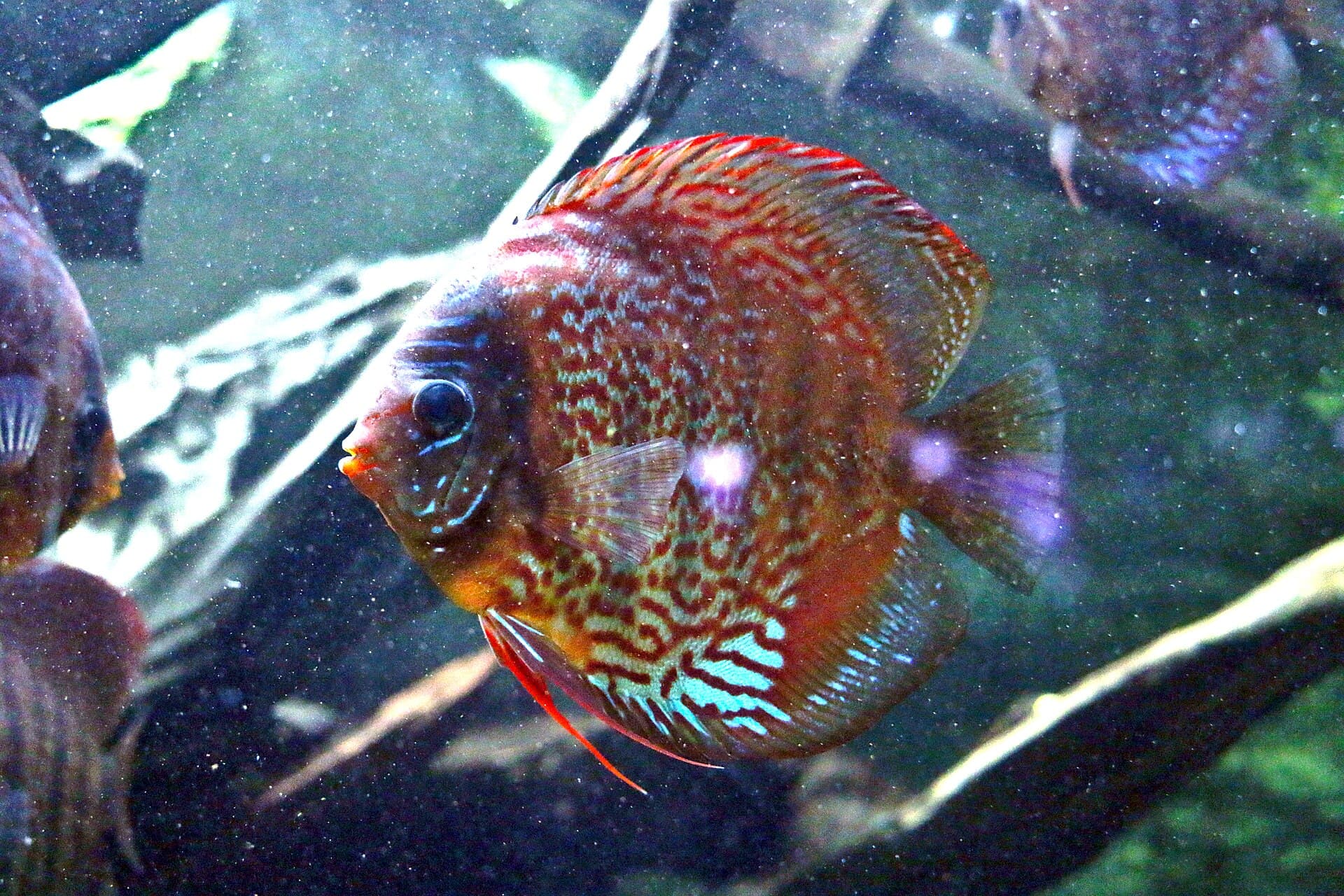

Water quality is the most important factor for healthy discus. Most diseases don’t start with a parasite, but with water that isn’t right.
The ideal parameters
- Temperature: 28–30 °C. Young fish and breeding pairs towards the upper end.
- pH: 6.0–7.0. More important than the exact value is that it stays stable.
- Hardness: soft water, a KH of 1–4 °dH and a GH of 2–6 °dH.
- Conductivity: around 100–300 µS/cm for tank-bred discus; wild fish and breeding pairs often lower.
- Ammonia and nitrite: undetectable.
- Nitrate: as low as possible, ideally below 20 mg/l.
Tank-bred discus have often been used to harder conditions for generations. So always ask what parameters your fish were kept in, and never change anything abruptly.
Reverse osmosis water
A reverse osmosis unit removes almost all dissolved substances from tap water. That pure water is too ‘empty’ to use on its own: mix it with tap water or add minerals until you reach the desired hardness and conductivity. That way you get the same, reliable water every time.
Tips
- Use a conductivity meter to fix your mixing ratio.
- Let replacement water stand heated and aerated in a storage barrel for a day.
- Replace the RO unit’s pre-filters on time.
Change plenty of water
Discus produce a lot of waste and are fed a lot. That’s why discus keepers change more water than with most fish: at least 30–50% per week, spread over several changes. Breeders with young fish often change water daily. What matters is that the new water has the same temperature and similar parameters to the aquarium water.
Want to know how much water to change to lower your nitrate? Use the water change calculator under Tools. With the water log you keep track of your measurements and see trends in charts.
Common mistakes
- ‘Forcing’ the pH down with chemicals in water with a high KH: the pH then fluctuates strongly.
- Large water changes with cold water: this causes stress and can trigger disease.
- Not cycling a new aquarium: discus belong in a tank with a mature filter.
- Judging water by its appearance: clear water can still be full of nitrate.