The right water for community fish
pH, GH, KH, nitrate and water changes: what do these values mean, which matter for your community fish, and how do you keep them stable without chemicals?
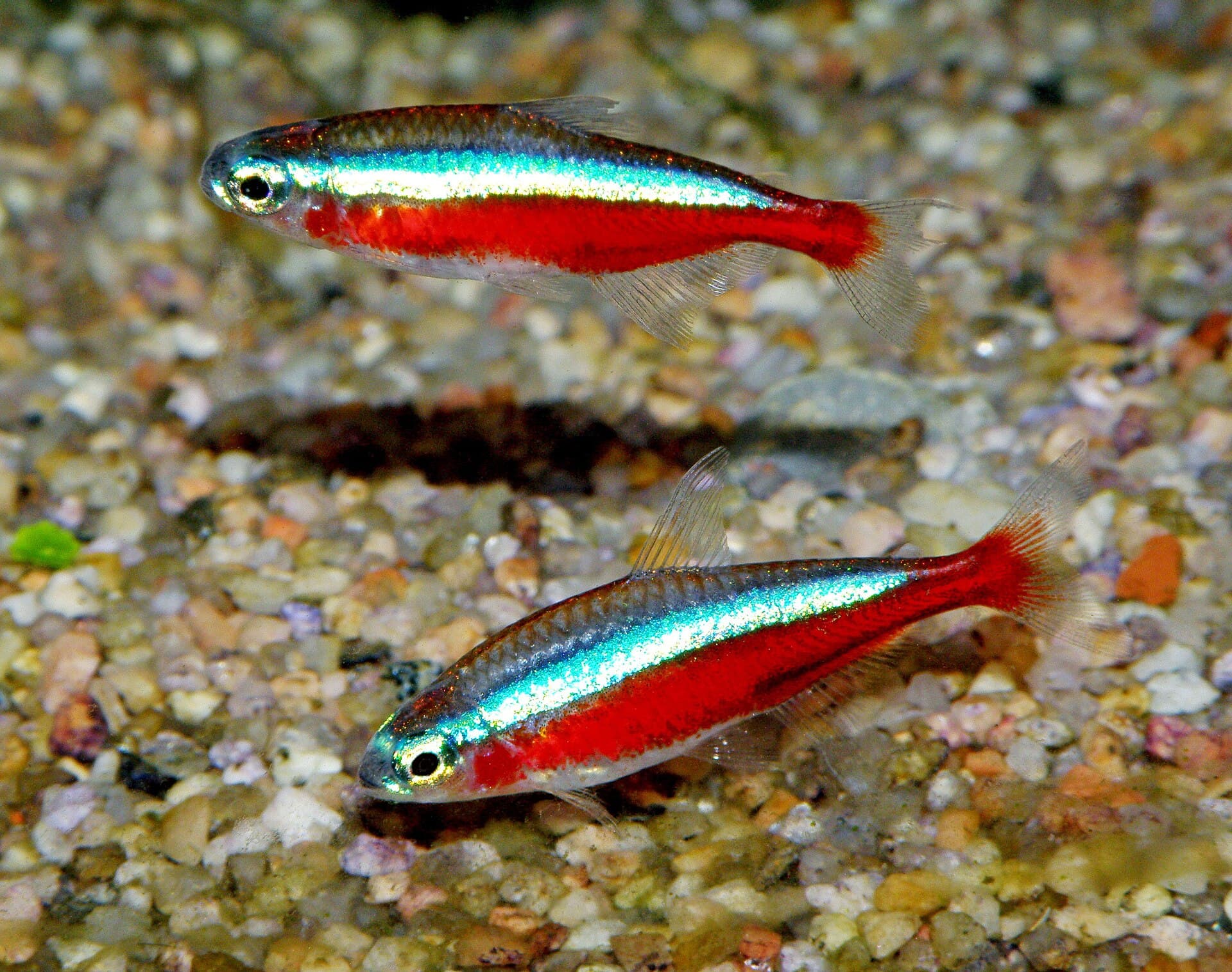

Fish live in their own waste. Good water mainly means: clean and stable. Most problems in a community aquarium start with the water, not with a disease.
The key parameters
- Ammonium/ammonia and nitrite: toxic, must always be 0. In a cycled aquarium they are converted by bacteria.
- Nitrate: the end product. Preferably below 25 mg/l, certainly below 50 mg/l. You lower it with water changes and plants.
- pH: acidity. For most community fish, 6.5–7.5 is fine.
- GH (general hardness): the amount of calcium and magnesium. Soft water (below 8 °dH) for tetras, harder water for livebearers.
- KH (carbonate hardness): buffers the pH. A KH of at least 3–4 °dH prevents sudden pH drops.
- Temperature: 24–26 °C for most species.
Cycle first
A new aquarium doesn’t yet have bacteria that break down ammonia and nitrite. So let it cycle for four to six weeks before adding fish, and test until ammonia and nitrite are stable at 0. You can read all about this process in our article on the nitrogen cycle.
Tap water
Tap water in the Netherlands and Belgium is usually perfectly usable. In the Netherlands it is generally supplied without chlorine; in parts of Belgium it can contain chlorine. A water conditioner makes chlorine harmless. Don’t let cold tap water run too fast into a warm aquarium: bring it up to temperature first.
How hard your tap water is varies greatly by region. Your water company publishes the values, or you can test them yourself. Choose fish that suit your water; that way you don’t need to adjust it.
Making soft water
If you want to keep soft-water fish and your tap water is hard, you can mix it with RO water or rainwater (only if collected cleanly). Always mix in a fixed ratio, so the values stay stable.
Water changes
Change 20–30% of the water every week and vacuum the substrate at the same time. Small, regular changes are better than an occasional large one. With the water change calculator under Tools you can work out how much to change to lower your nitrate; in the water log you keep track of your measurements.
No quick chemical fixes
Products that quickly lower or raise the pH seem handy, but often cause fluctuations. A stable value slightly off the ideal is better for your fish than a ‘perfect’ value that changes every day.