Stocking a Malawi aquarium: which species to combine?
Mbuna or peacocks, how many fish, and in what ratio? With these rules you can put together a Malawi group that lives together calmly and looks beautiful.
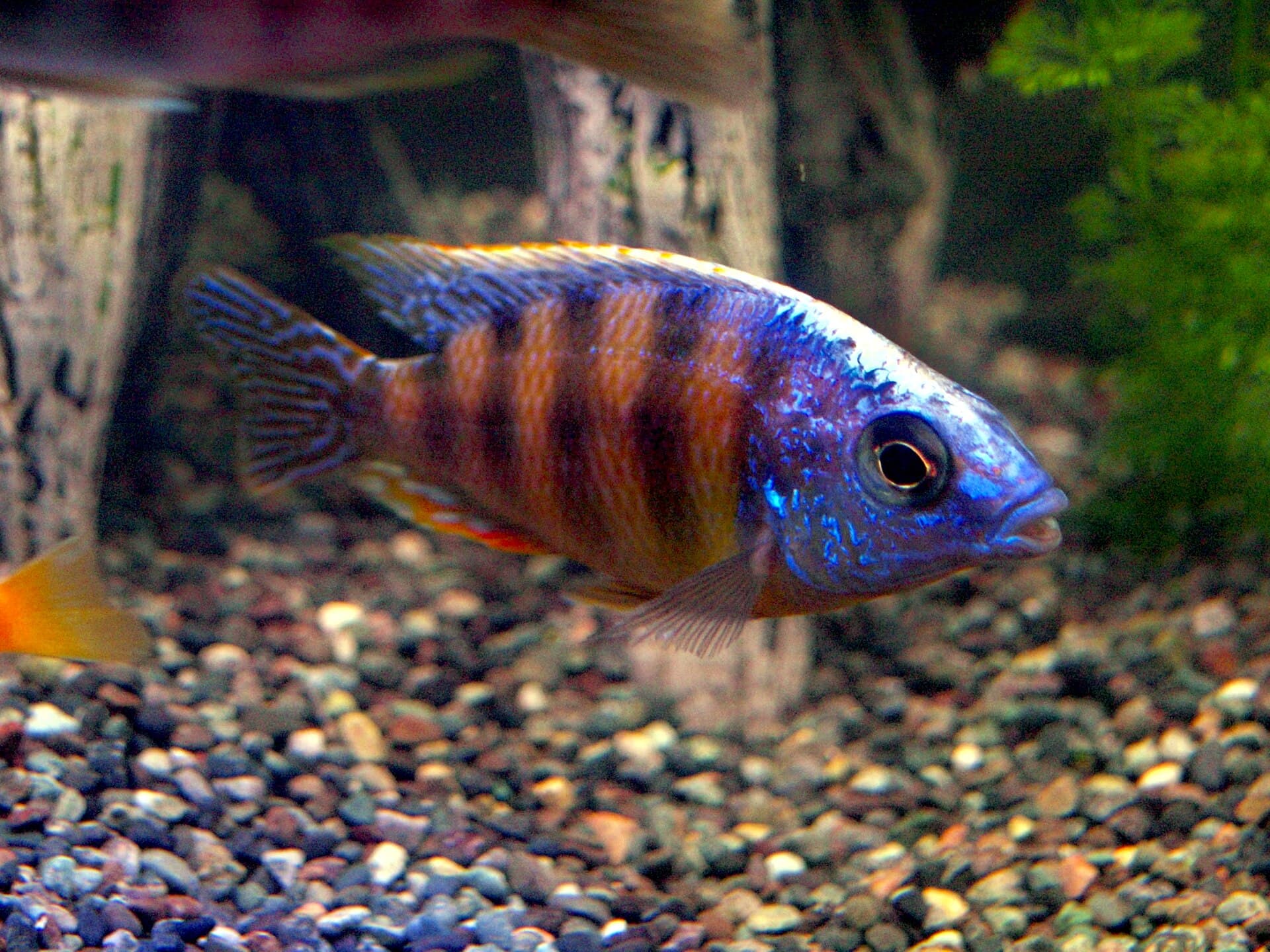

With Malawi cichlids, the composition of the group decides whether your aquarium becomes calm and colourful, or a battlefield. So think carefully before buying fish.
Step 1: choose a type of aquarium
- Mbuna aquarium: lots of rocks, lots of small, active and territorial fish. Colourful, but busy.
- Peacock and hap aquarium: a sand bottom, open swimming space and calmer, larger fish. Only the males are coloured.
- Mixed: possible, with calm mbuna such as Labidochromis caeruleus or Iodotropheus sprengerae, but not with feisty species such as Melanochromis auratus.
Step 2: the male-to-female ratio
Males of most species constantly chase females. By keeping one male with three or four females, this attention is spread out. Two males of the same species only work in a large tank.
Step 3: how many fish?
Mbuna keepers often deliberately stock their tanks fairly densely: this way no single male can defend a large territory, and aggression is spread over many fish. This only works with a powerful filter and lots of water changes. Preferably add all fish at once; if you add some later, rebuild the rockwork so that territories are divided anew.
Step 4: don’t combine look-alike species
- Don’t combine species with the same colour and pattern, for example two blue-and-black striped mbuna. The males see each other as rivals and the females are hard to tell apart.
- Keep one locality form of each species: related forms hybridise easily.
- Don’t combine predators such as Nimbochromis or Sciaenochromis with small species that fit in their mouths.
Example: a 150 cm mbuna aquarium
- Labidochromis caeruleus ‘Yellow’: 1 male, 4 females
- Pseudotropheus saulosi: 1 male, 4 females
- Cynotilapia sp. (a blue form with a yellow dorsal fin): 1 male, 3 females
- Labeotropheus trewavasae: 1 male, 3 females
Three or four species with clearly different colours (yellow, blue with black bars and blue with orange) give a beautiful, calm look.
Tankmates
Many Malawi keepers add catfish, such as Synodontis multipunctatus or other Synodontis species, which tolerate the same hard water. Soft-water fish, such as South American cichlids or small tetras, don’t belong in a Malawi aquarium.