Water parameters in a reef aquarium: what to test and why
Salinity, KH, calcium, magnesium, nitrate and phosphate: which parameters matter for corals, how often to test them and how to keep them stable?
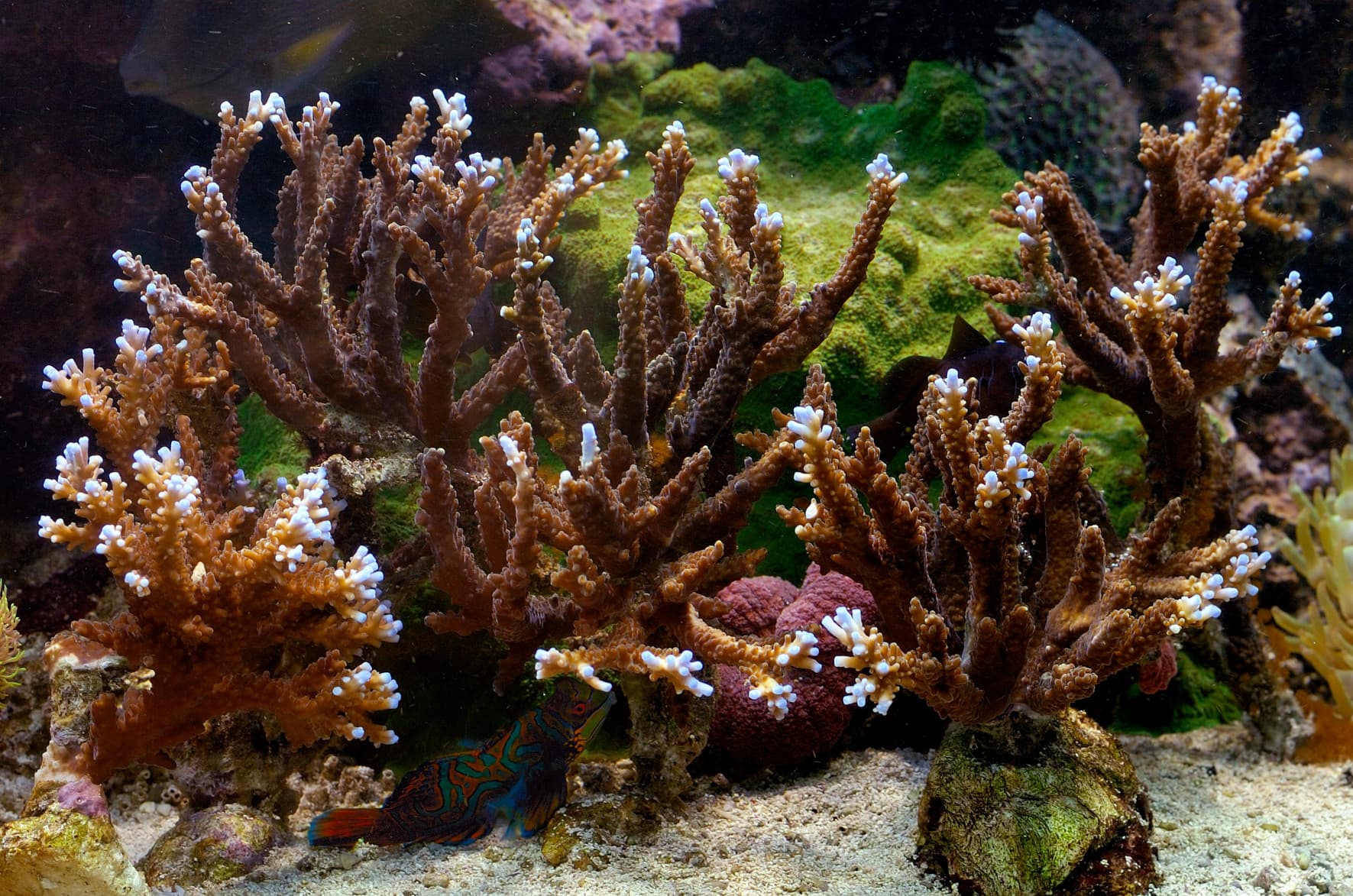

Corals build their skeleton from calcium and carbonate in the water, and they react sensitively to fluctuations. By testing regularly, you see problems coming before your corals suffer.
The ideal parameters
- Salinity: 35 ppt (specific gravity about 1.025–1.026). Measure with a refractometer.
- Temperature: 24–26 °C.
- pH: around 8.0–8.4.
- KH (alkalinity): 7–9 dKH.
- Calcium: 400–450 mg/l.
- Magnesium: 1250–1350 mg/l.
- Ammonia and nitrite: undetectable.
- Nitrate: low but not zero, about 2–10 mg/l.
- Phosphate: low but not zero, about 0.02–0.1 mg/l.
Stability over perfection
A value that deviates slightly from the ideal but stays stable is better than one that keeps swinging back and forth. So always correct slowly, especially KH: large jumps can kill corals.
The big three: KH, calcium and magnesium
Stony corals consume KH and calcium to build their skeleton. In an aquarium with few corals, water changes often replenish enough. If your corals grow well, the values drop and you need to supplement them, for example with:
- Two-part solutions (such as the Balling method), dosed with a dosing pump.
- Kalkwasser (calcium hydroxide), often via the auto top-off.
- A calcium reactor for large aquariums with many stony corals.
Magnesium keeps calcium and KH in balance. If it is too low, calcium and KH are hard to keep at the right level.
Nitrate and phosphate
Too much nitrate and phosphate feeds nuisance algae and slows stony coral growth. But zero isn’t good either: corals need some nutrients and bleach when they are completely absent. Adjust by feeding less or more, with the skimmer, water changes or a refugium with macroalgae.
How often to test?
- Weekly: salinity, temperature, KH, nitrate and phosphate.
- Every two weeks: calcium and magnesium.
- In a new aquarium: ammonia and nitrite until they are stable at zero.
- After every change in dosing: more often, until the values are stable.
Record your measurements in the water log under Tools, so you can see how your values evolve in charts. With the water change calculator you can work out the effect of a water change. Change about 10% of the water weekly with carefully mixed salt water at the same temperature and salinity.