The most beautiful peacocks and haps from Lake Malawi
Aulonocara, the Electric Blue and the Red Empress: ‘peacocks’ and ‘haps’ are calmer and larger than mbuna, and the males are among the most colourful freshwater fish.
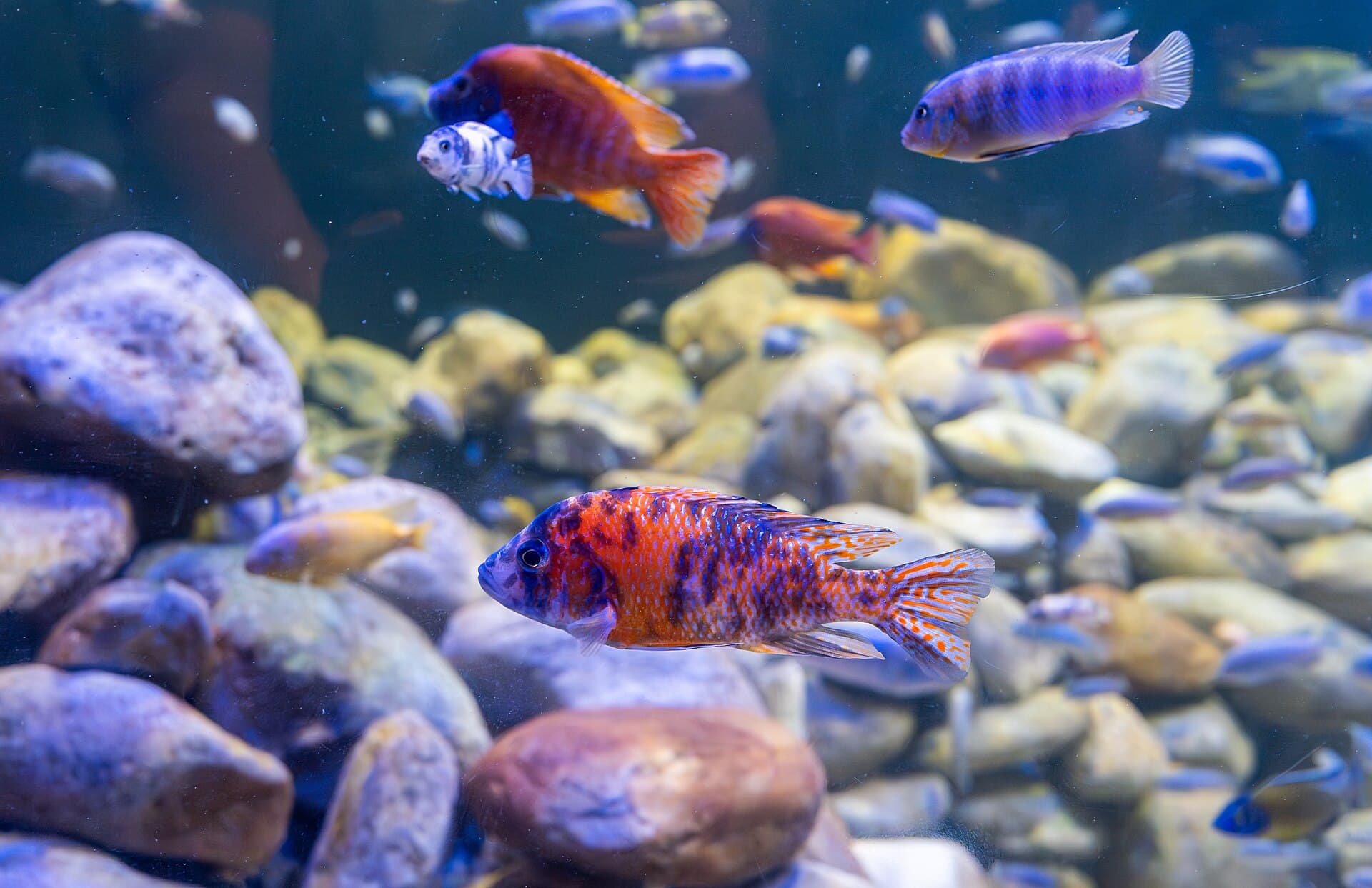

Besides the mbuna, Lake Malawi is home to hundreds of other cichlids that swim above sandy bottoms and in open water. In the hobby they are called peacocks (the genus Aulonocara) and haps (a collective name for the other, often larger species). They are usually less aggressive than mbuna. In most species only adult males are colourful; females are grey to brown.
Aulonocara (peacocks)
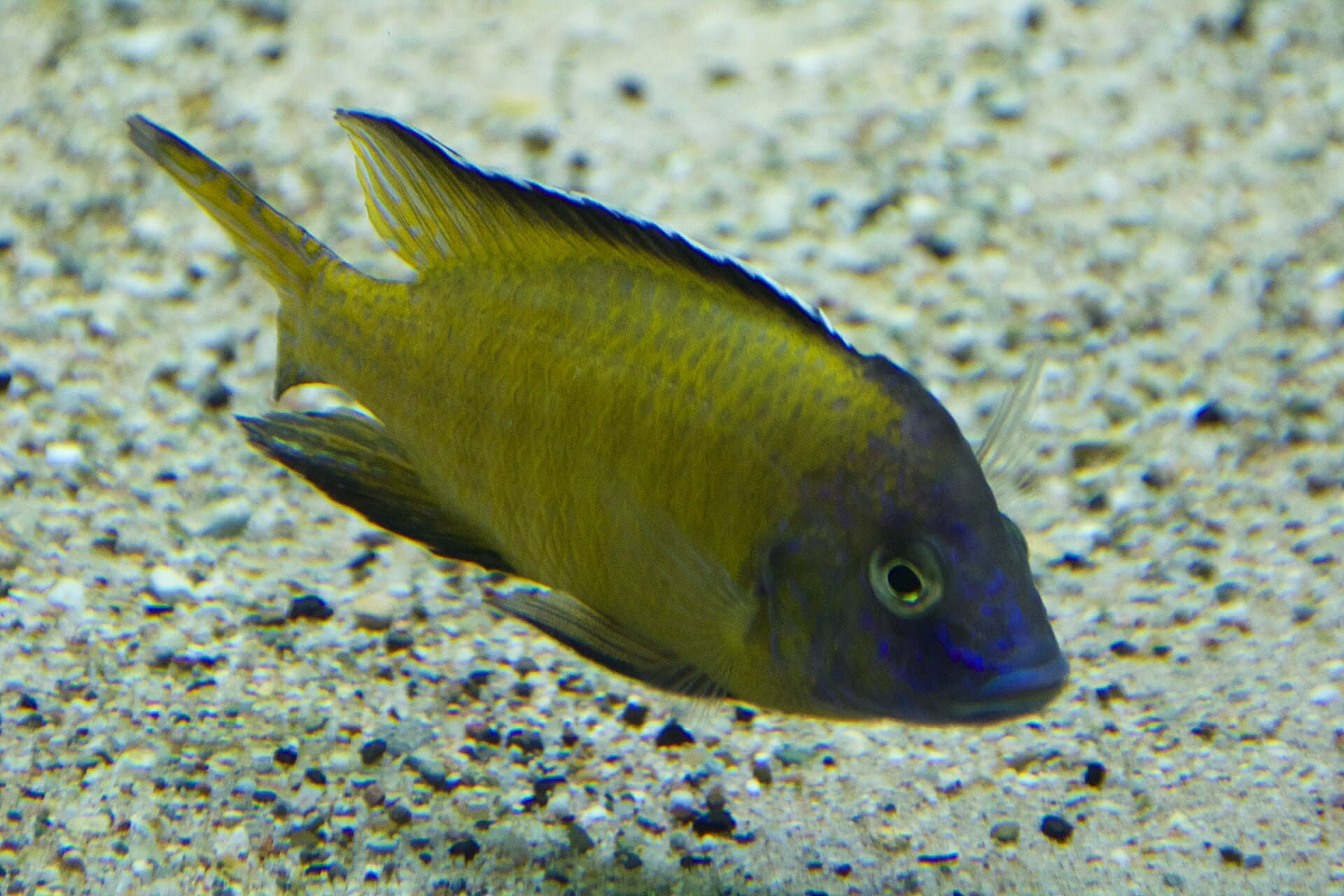

Peacocks hunt small animals in the sand, which they detect with sensory pores on their heads. The males are beautifully coloured:
- Aulonocara baenschi (‘Yellow Regal’): yellow with a blue head.
- Aulonocara jacobfreibergi: blue to orange, with long fins.
- Aulonocara stuartgranti: named after exporter Stuart Grant; many locality variants, from blue to yellow and red.
There are also many bred varieties such as ‘Rubin Red’, ‘Dragon Blood’ and albinos. These are not natural species: don’t cross them with pure forms.
Copadichromis borleyi
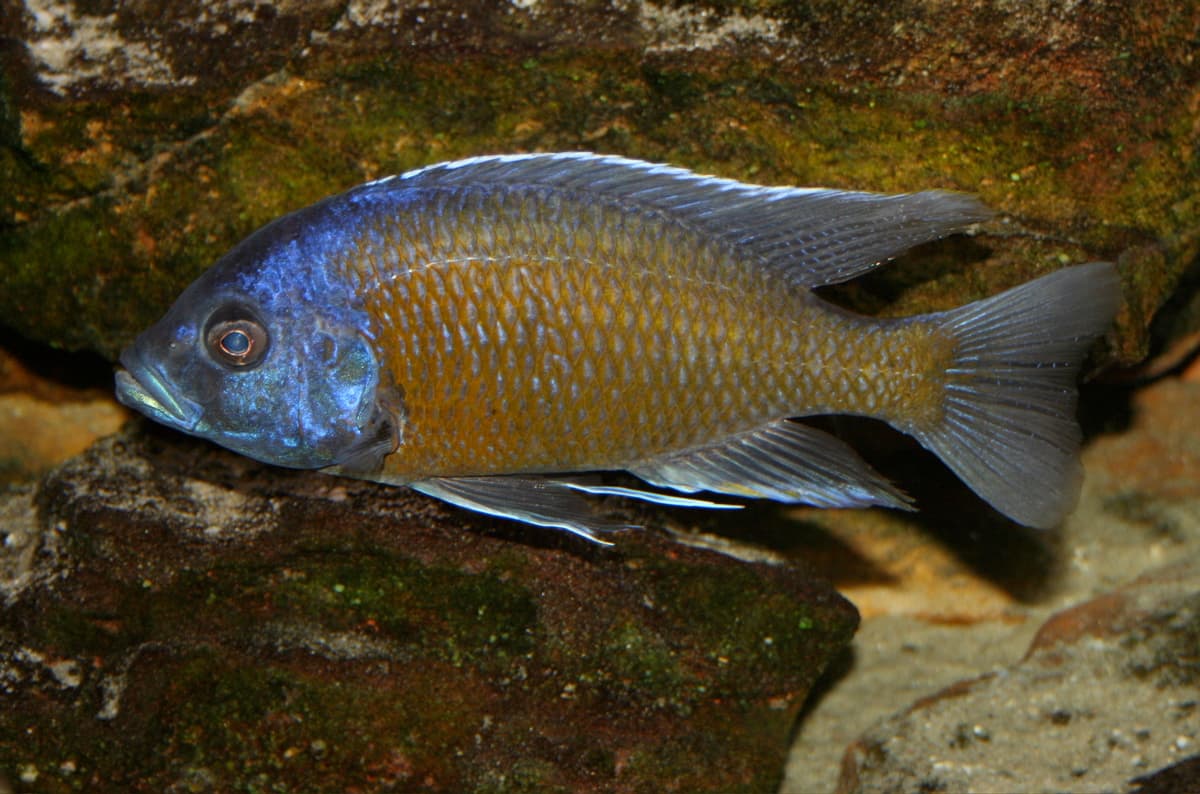

This ‘utaka’ lives in schools in open water and eats plankton. Males have a blue head and, depending on the locality, red, orange or yellow flanks. A calm species for a large tank.
Sciaenochromis fryeri (Electric Blue Hap)
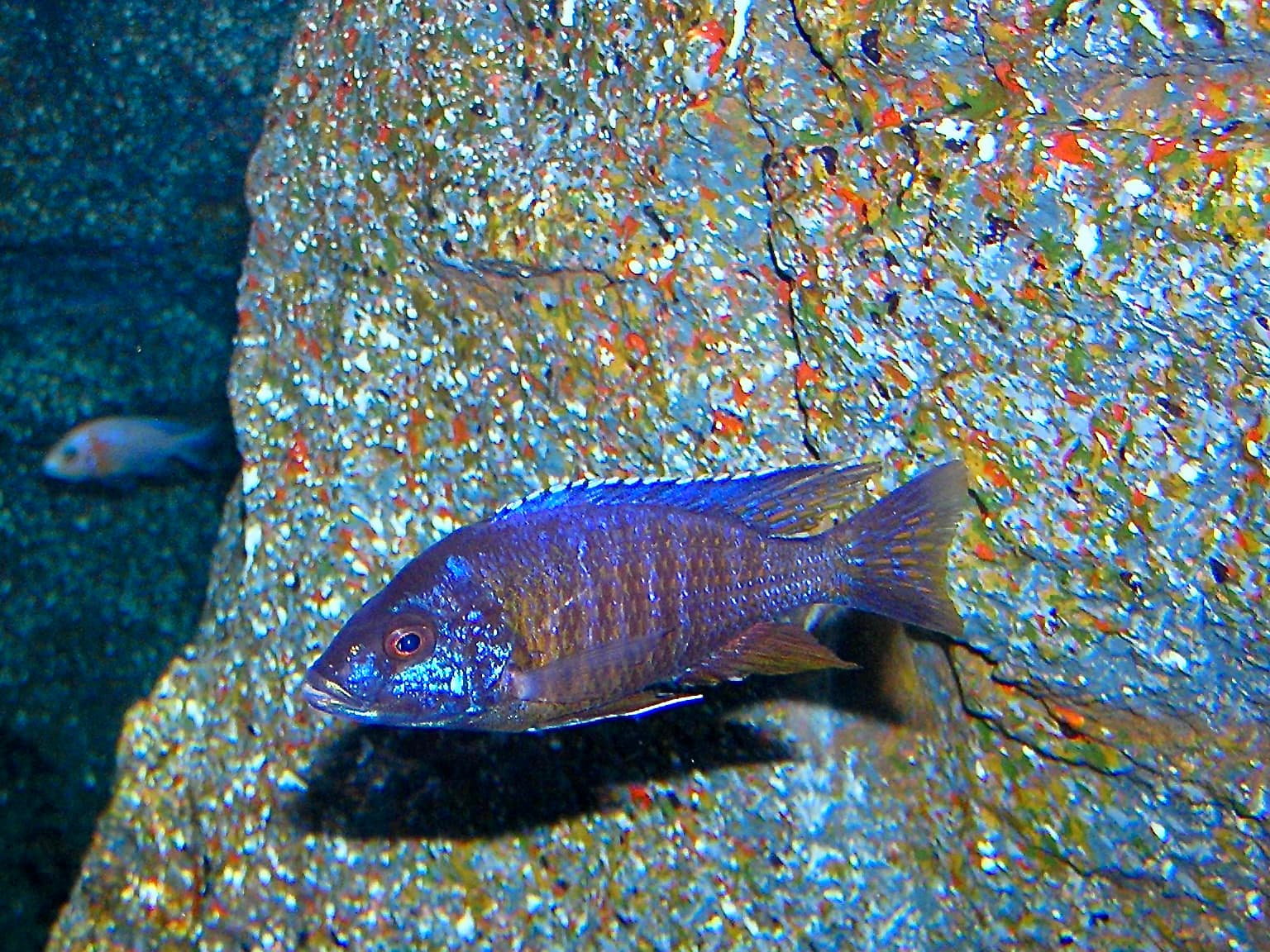

The males are an intense metallic blue, often with a white edge on the dorsal fin. It is a predator that eats young fish; don’t keep it with small species. Grows to about 15–18 cm.
Placidochromis electra (Deep Water Hap)
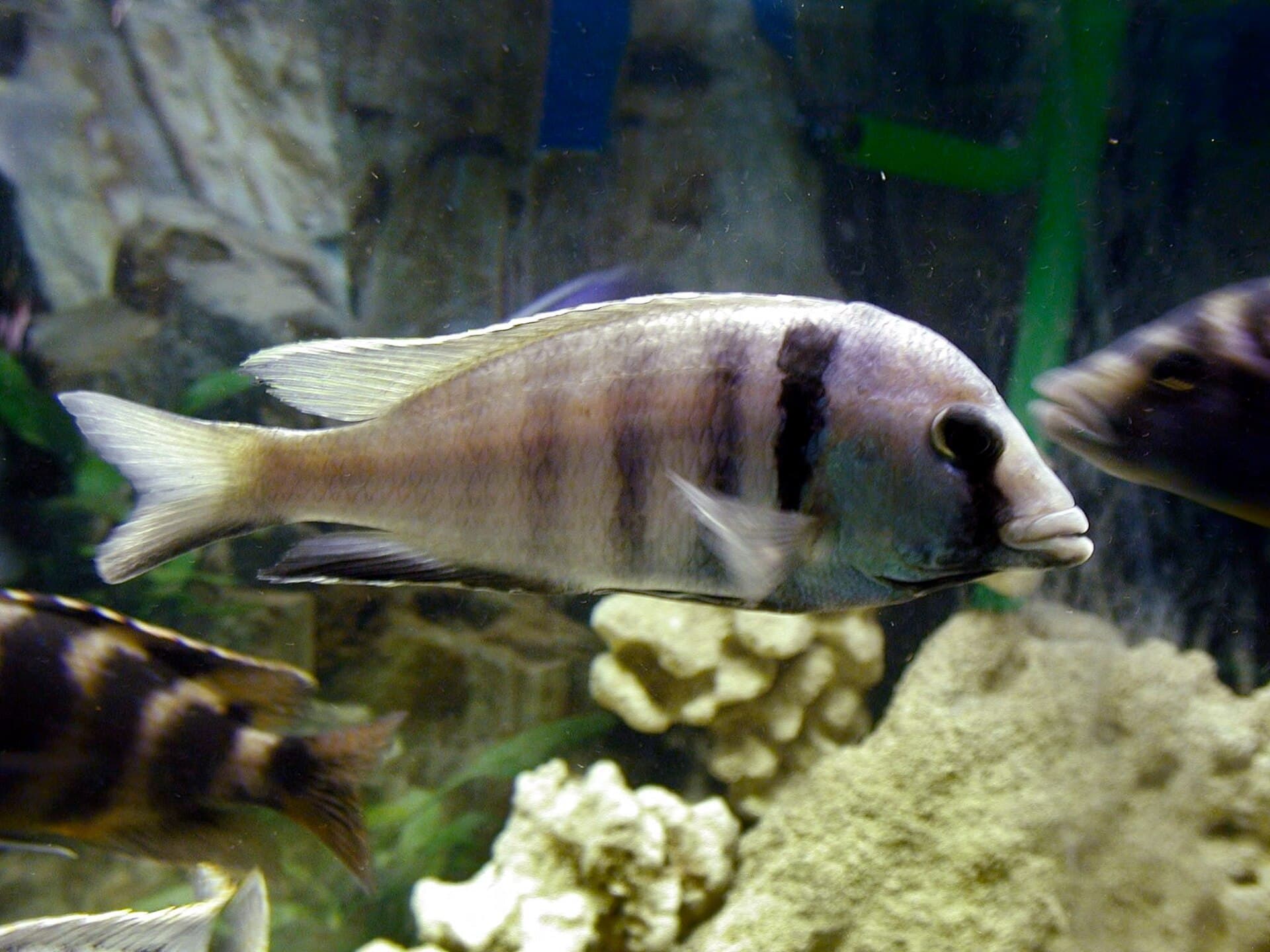

A peaceful species with a bright blue body and dark vertical bars. In the lake it often follows other fish to feed on what they stir up.
Protomelas taeniolatus ‘Red Empress’
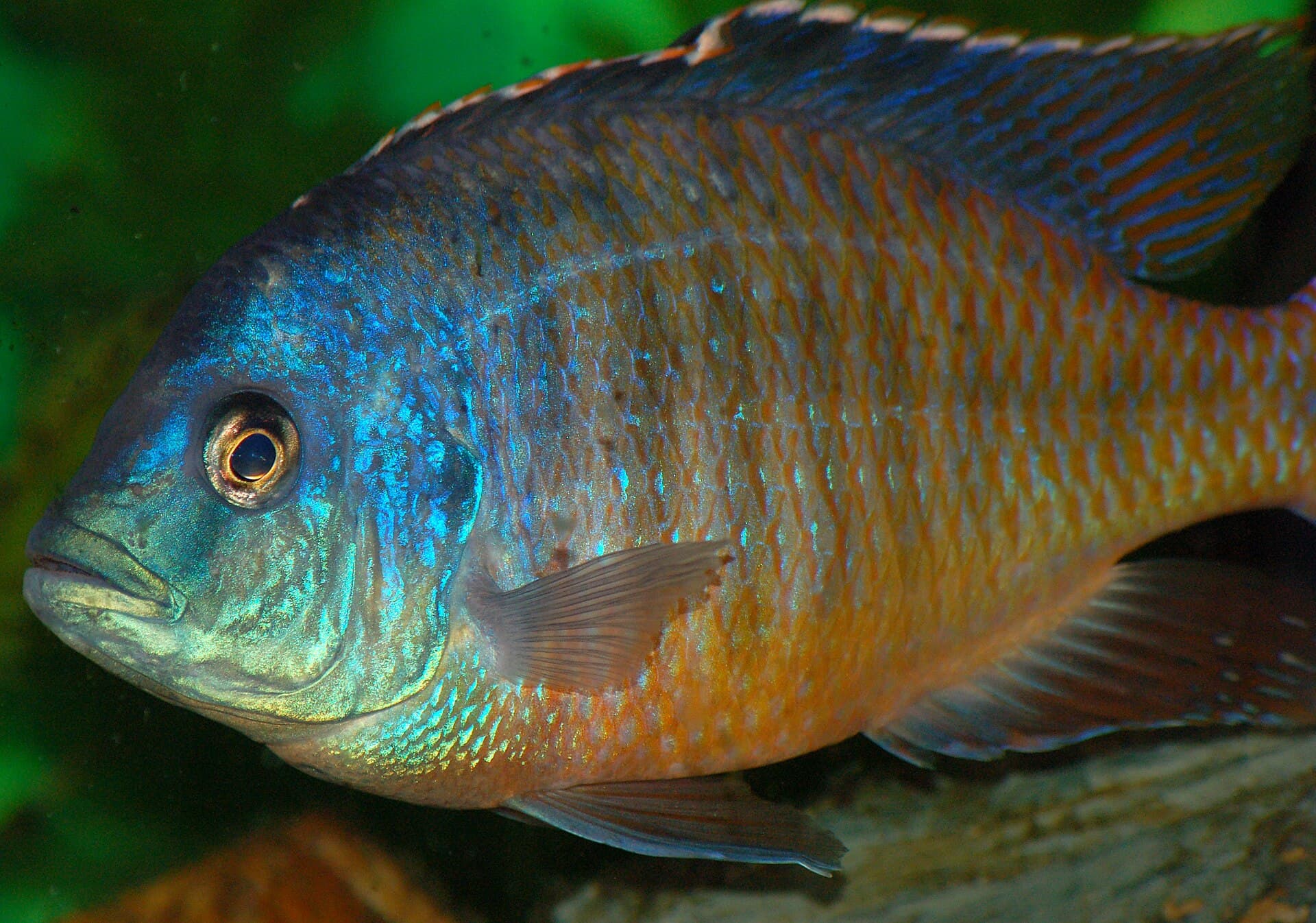

Males have a blue head and an orange-red body. One of the most beautiful haps, growing to about 15 cm.
Nimbochromis venustus
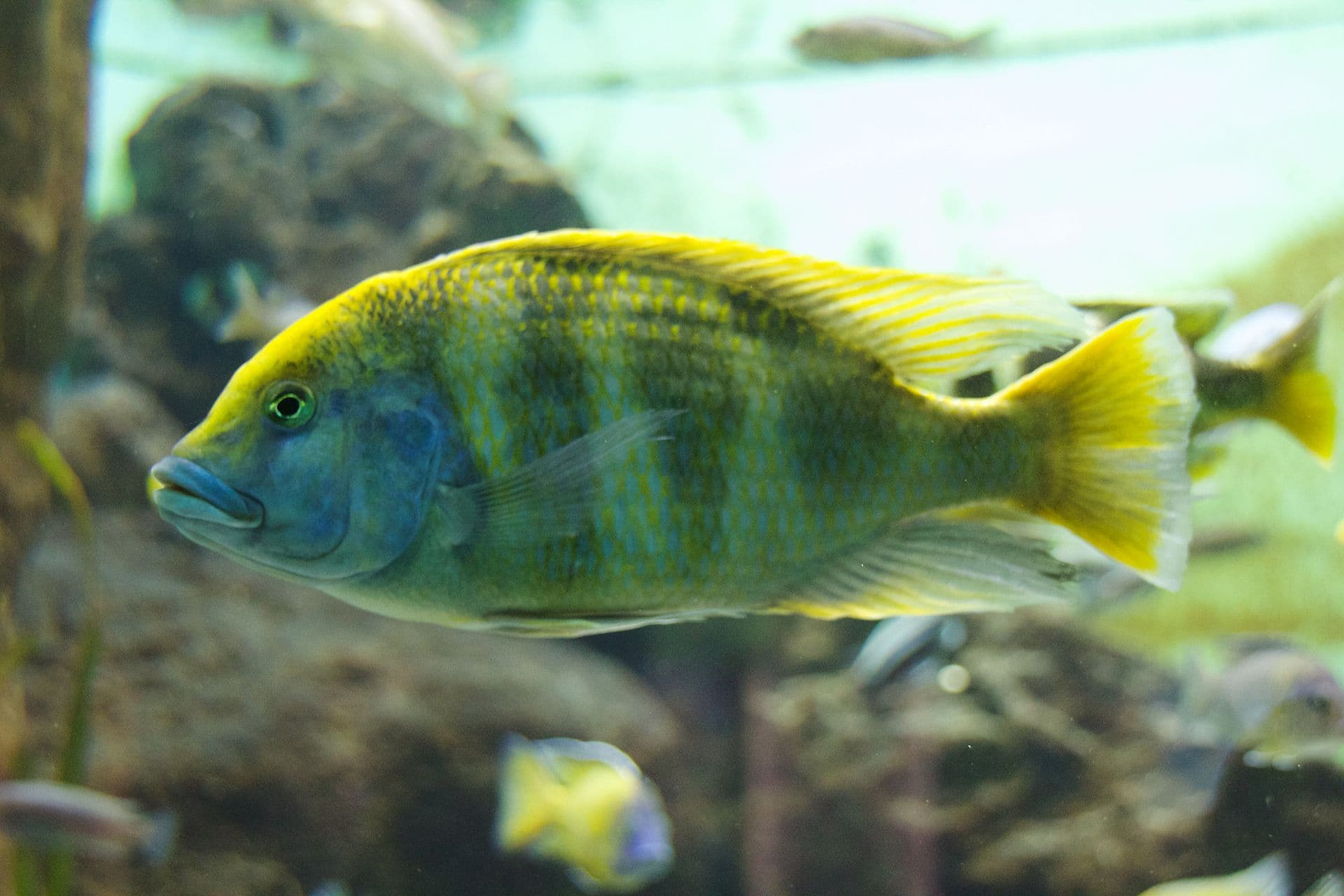

A large predator (up to 25 cm) with a spotted ‘giraffe’ pattern. In the wild it sometimes lies ‘dead’ on the sand to lure small fish. Only for truly large aquariums.
Keeping peacocks and haps
- Larger tank: count on at least 150 cm for peacocks and 180–200 cm for large haps.
- Open swimming space and a sand bottom, with rocks at the back.
- Preferably not with feisty mbuna: they chase away the calmer peacocks and eat their food.
- Feed more protein than mbuna, such as krill, mysis and quality pellets.
- Watch out for hormones: young peacocks are sometimes treated with colour enhancers or hormones so they show ‘male colours’ early. Buy from a reliable breeder.