The most beautiful mbuna: colourful rock dwellers from Lake Malawi
Yellow, cobalt blue, orange or striped: mbuna are the most colourful inhabitants of Lake Malawi. These species are among the most beautiful, and here is what you need to know about them.
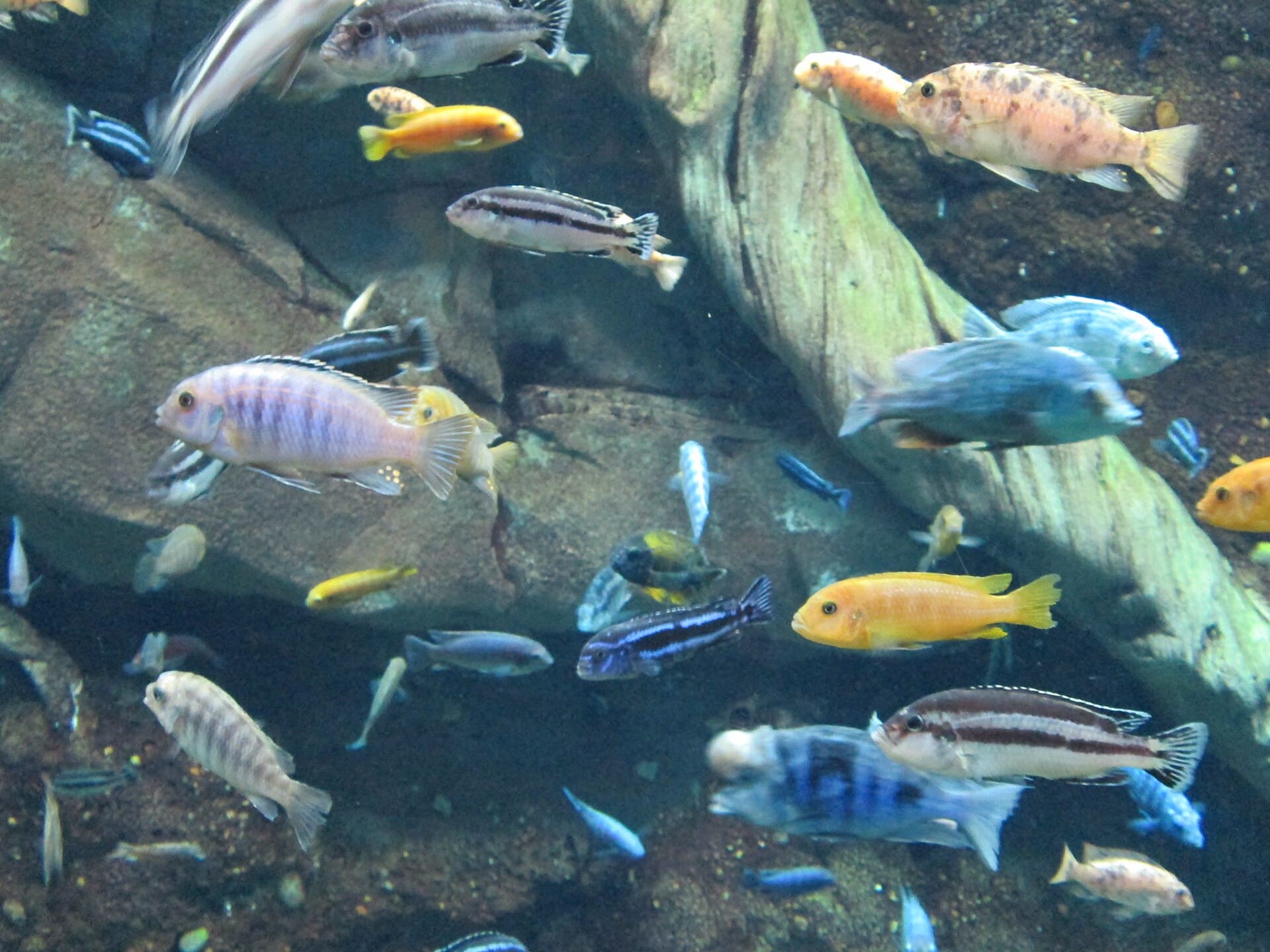

Mbuna means ‘rockfish’ in the local language. These cichlids live between the stones of Lake Malawi’s rocky shores, where they graze on algae and the tiny animals living in them. They are small (usually 8 to 12 cm), active and often beautifully coloured all year round: females too. The drawback: many species are territorial and feisty.
Labidochromis caeruleus ‘Yellow’
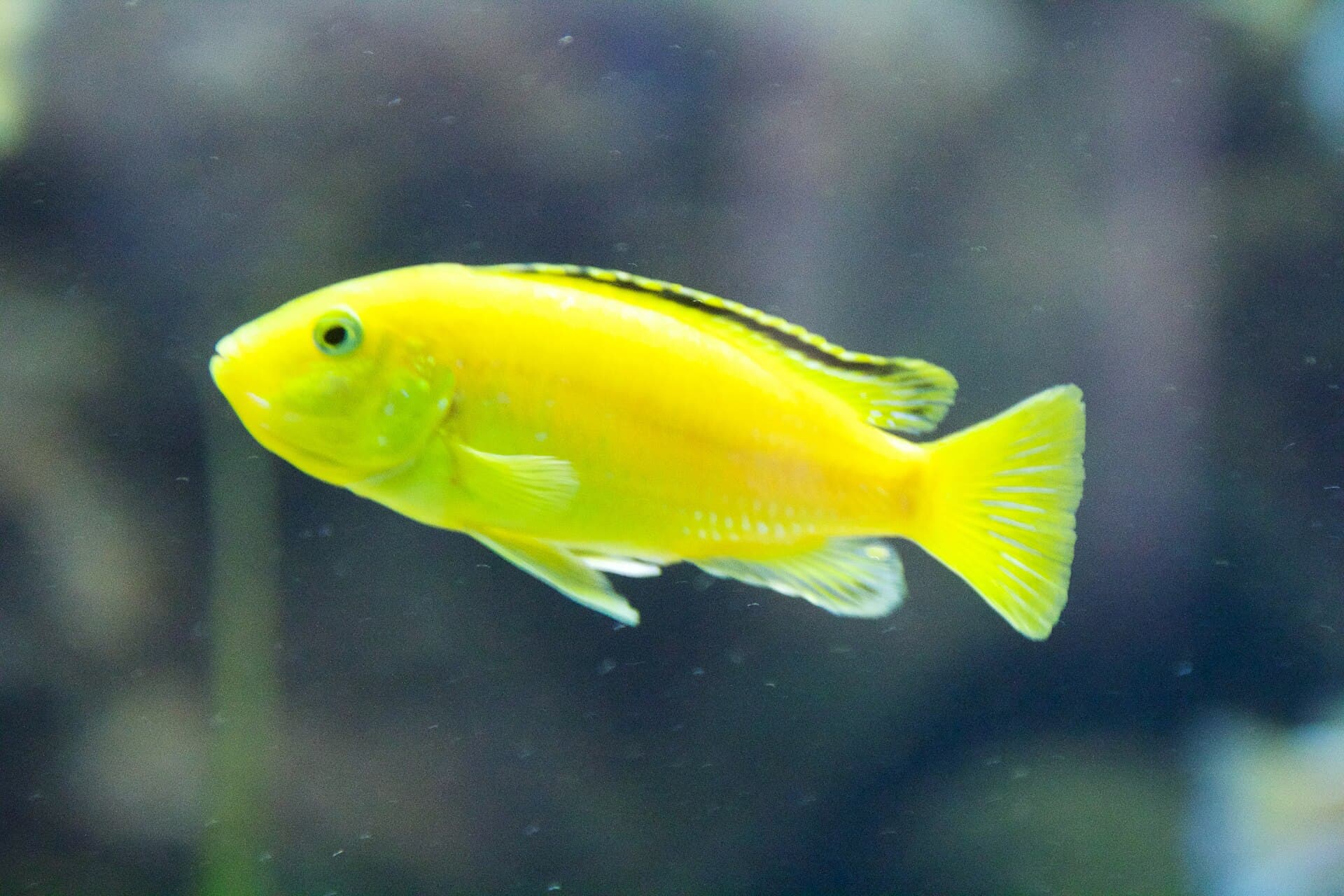

The lemon-yellow Labidochromis caeruleus with its black fin edge is perhaps the best-known mbuna. Both sexes are yellow, the species stays around 10 cm and is one of the calmest mbuna. An ideal first choice.
Pseudotropheus saulosi
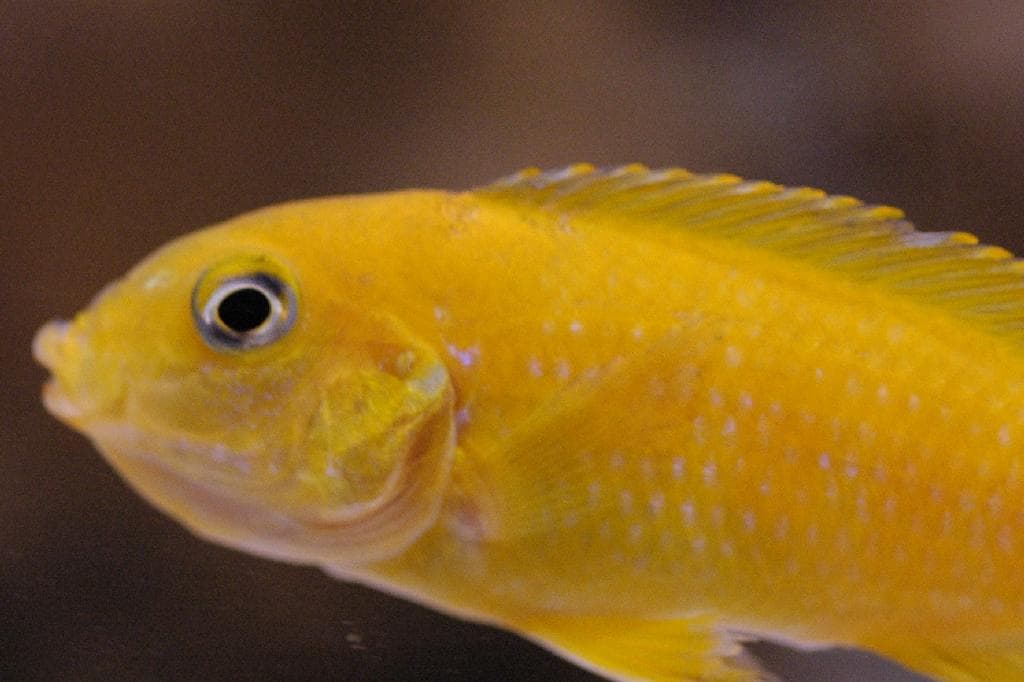

In Pseudotropheus saulosi the sexes look completely different: males are blue with dark vertical bars, females and juveniles bright yellow. A group of one male and several females gives a beautiful contrast. The species stays small (around 8 cm).
Maylandia estherae (Red Zebra)
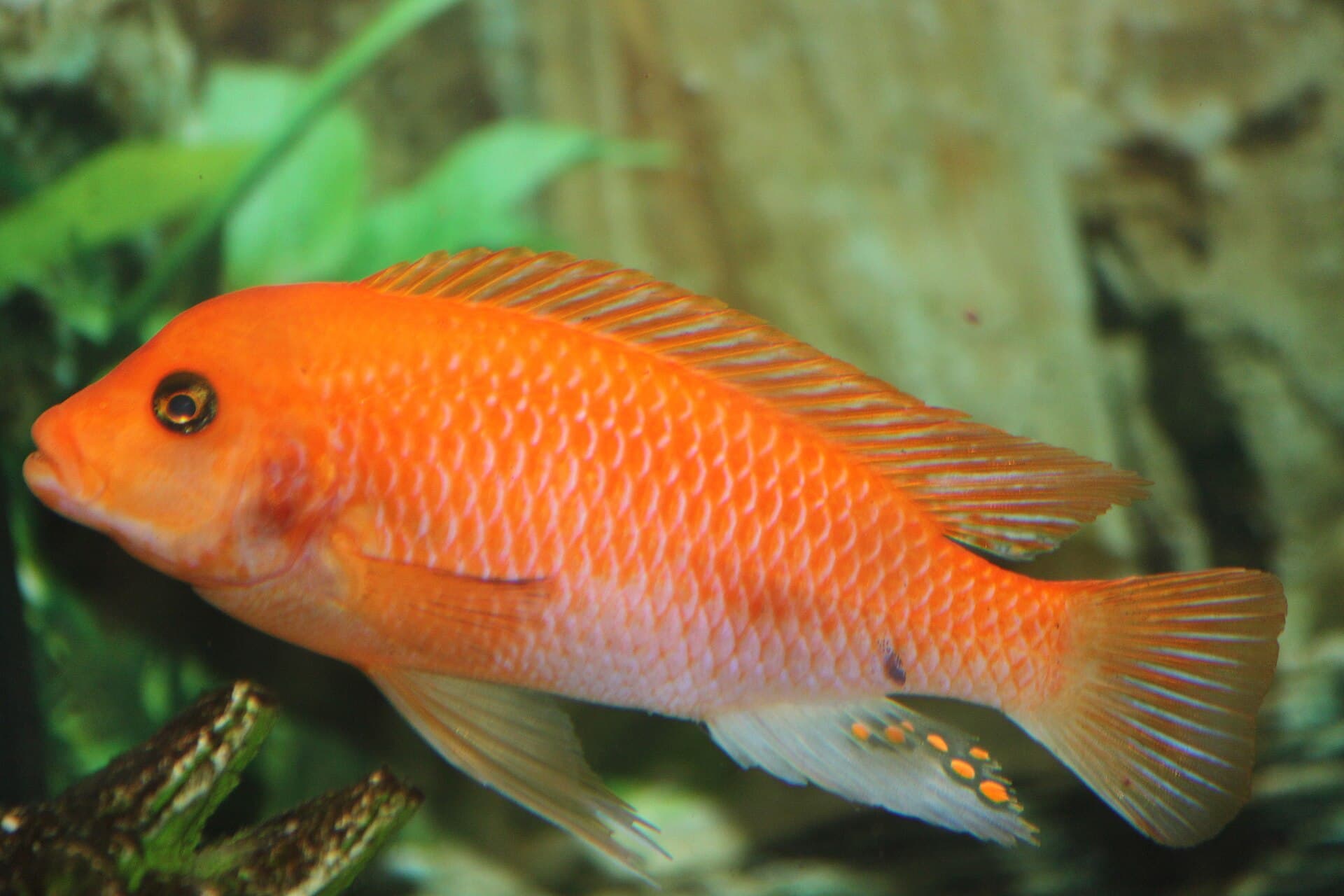

The Red Zebra is named after Esther Grant, the wife of well-known fish exporter Stuart Grant at Lake Malawi. Females are usually orange, males range from orange to light blue. A hardy but temperamental species.
Cynotilapia and Maylandia callainos
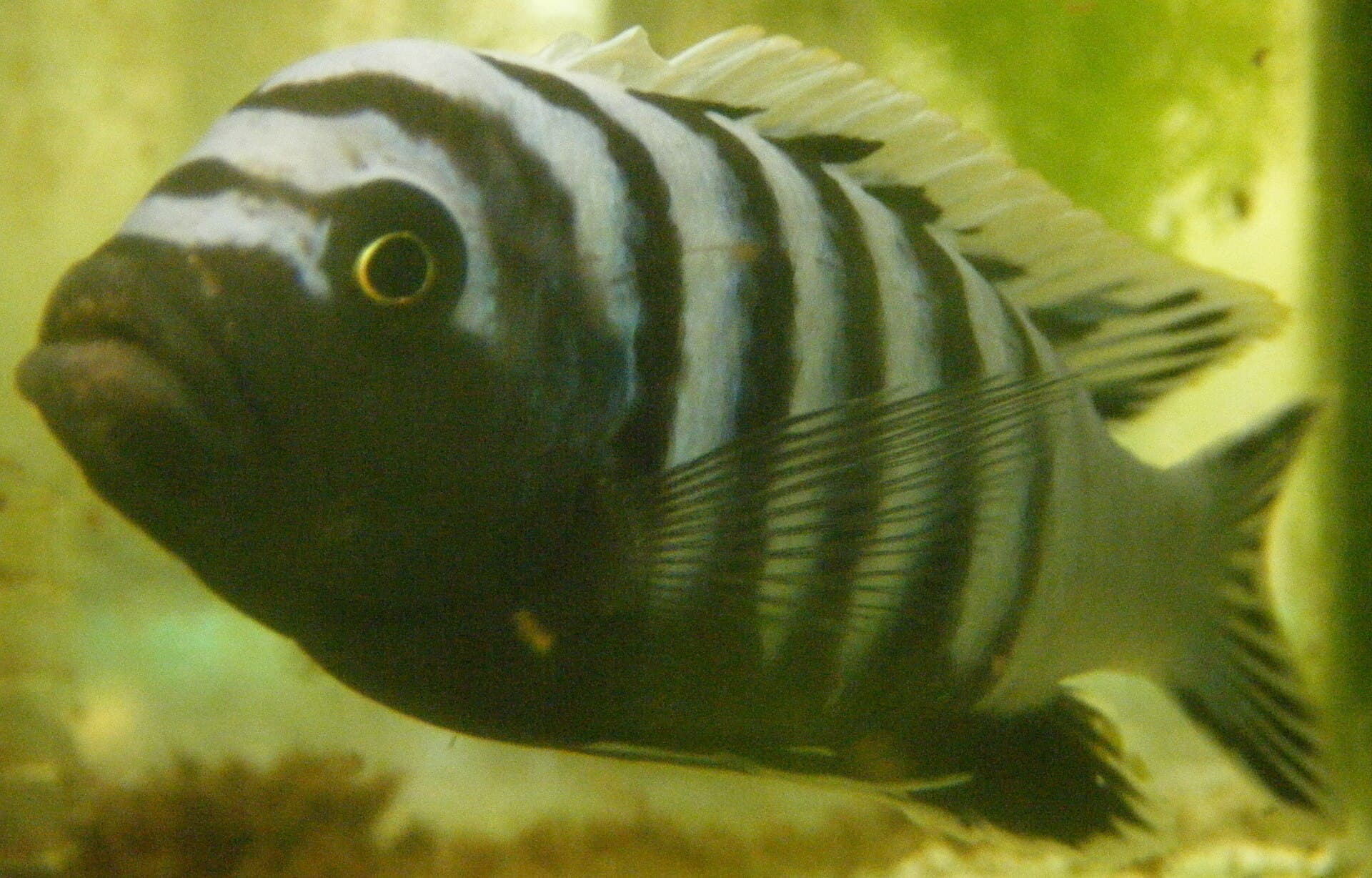

Cynotilapia species (often sold as ‘afra’) are blue with black bars and differ in colour by locality, such as a yellow or orange dorsal fin. Maylandia callainos (Cobalt Zebra) is solid cobalt blue; there is also a white form.
Melanochromis auratus
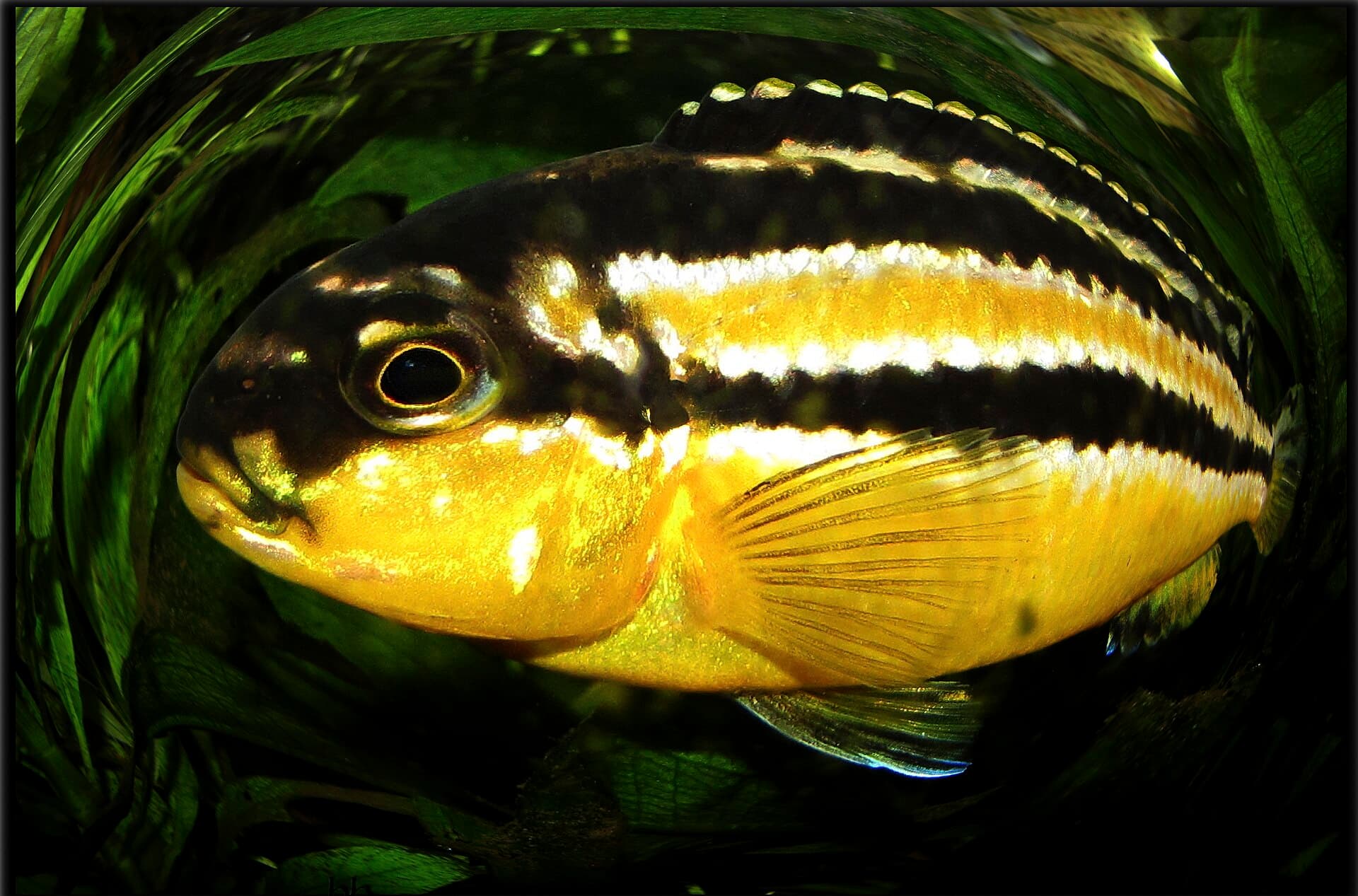

Juveniles and females are golden yellow with black horizontal stripes, adult males turn dark with light stripes. A beautiful but very aggressive species, only to be kept in a large tank with many other mbuna.
Labeotropheus
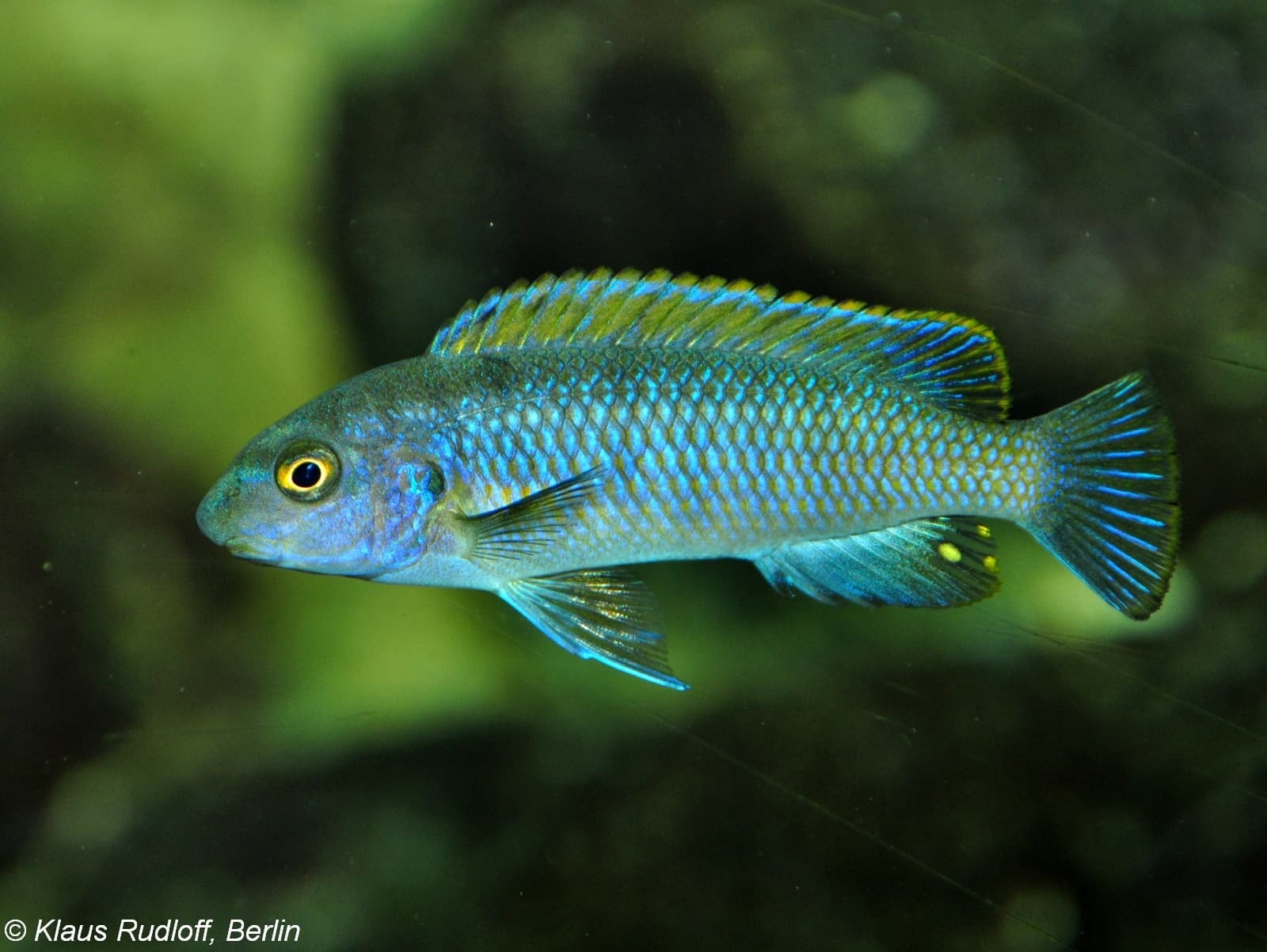

Labeotropheus species have a typical underslung mouth with which they scrape algae off the rocks. L. trewavasae comes in many colour forms, from blue to orange marbled (‘OB’, orange blotch).
Pseudotropheus demasoni
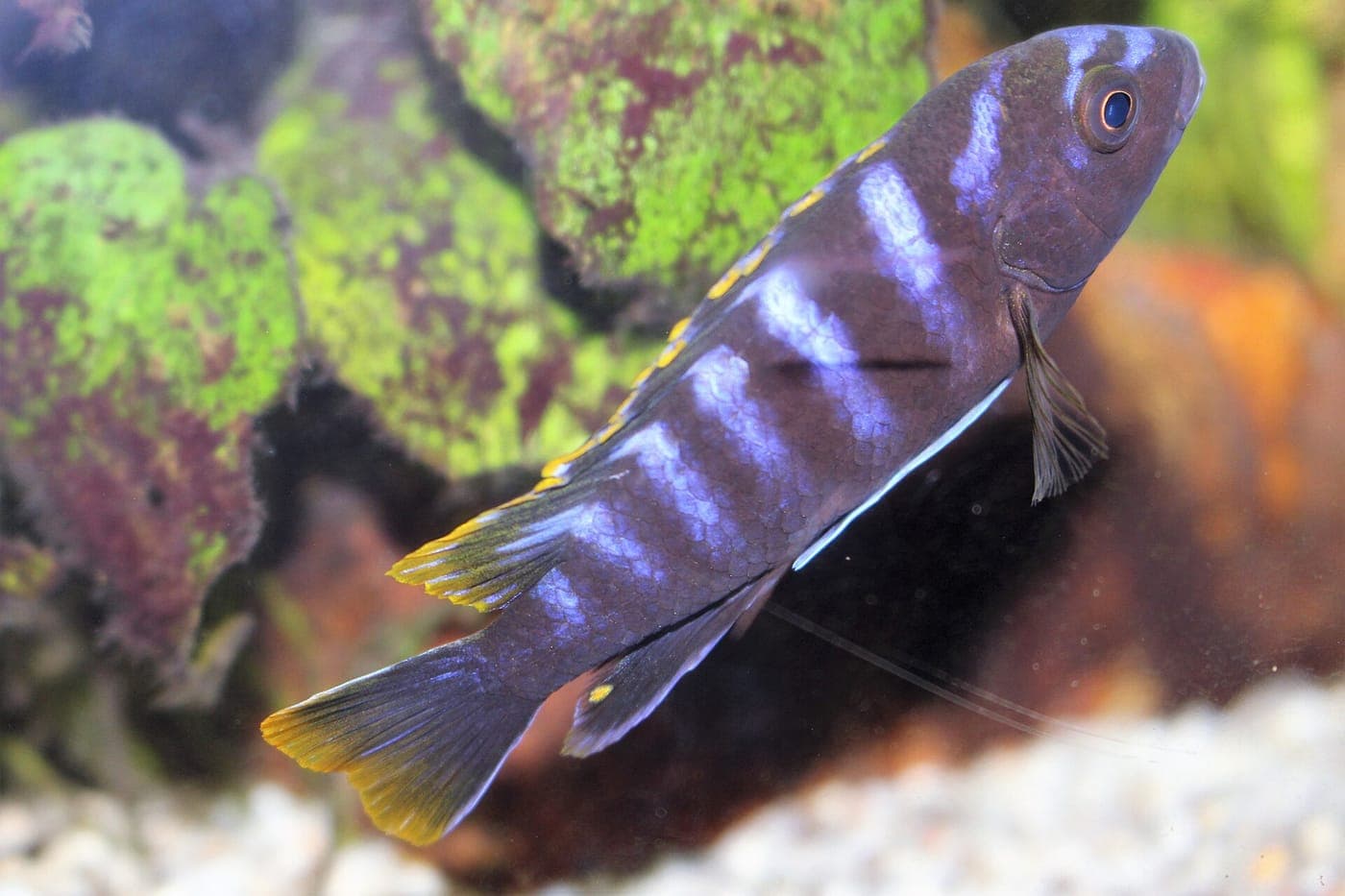

We covered the small, blue-and-black striped demasoni in detail in a separate article.
Tips for a beautiful mbuna group
- Don’t combine look-alike species: fish with the same colour or pattern fight more and can hybridise.
- Choose pure, named forms (species plus locality) rather than ‘mixed Malawis’, which are often hybrids.
- Keep more females than males: for example one male to three or four females.
- Mbuna mainly eat plant-based food: feed food based on spirulina and vegetables.