The most beautiful discus varieties: from Blue Diamond to Pigeon Blood
Turquoise, Blue Diamond, Pigeon Blood or Leopard? The best-known discus colour varieties at a glance, and how to recognise a truly beautiful fish.
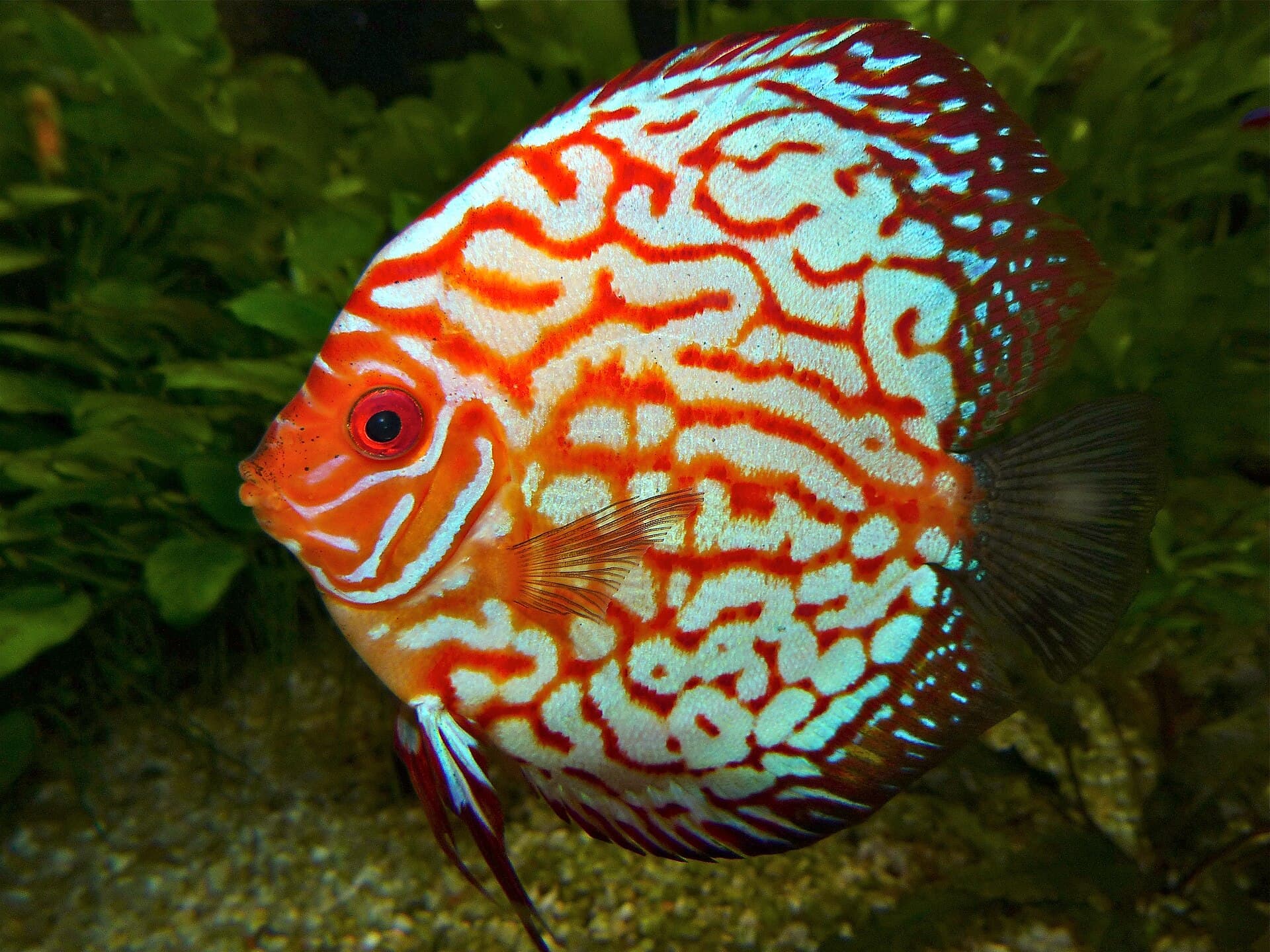

Since the 1970s and 1980s, breeders have developed dozens of colour varieties from the wild discus. The names aren’t officially defined: the same fish can have a different name at two breeders. Still, there are a number of classics every discus lover knows.
Turquoise and Red Turquoise
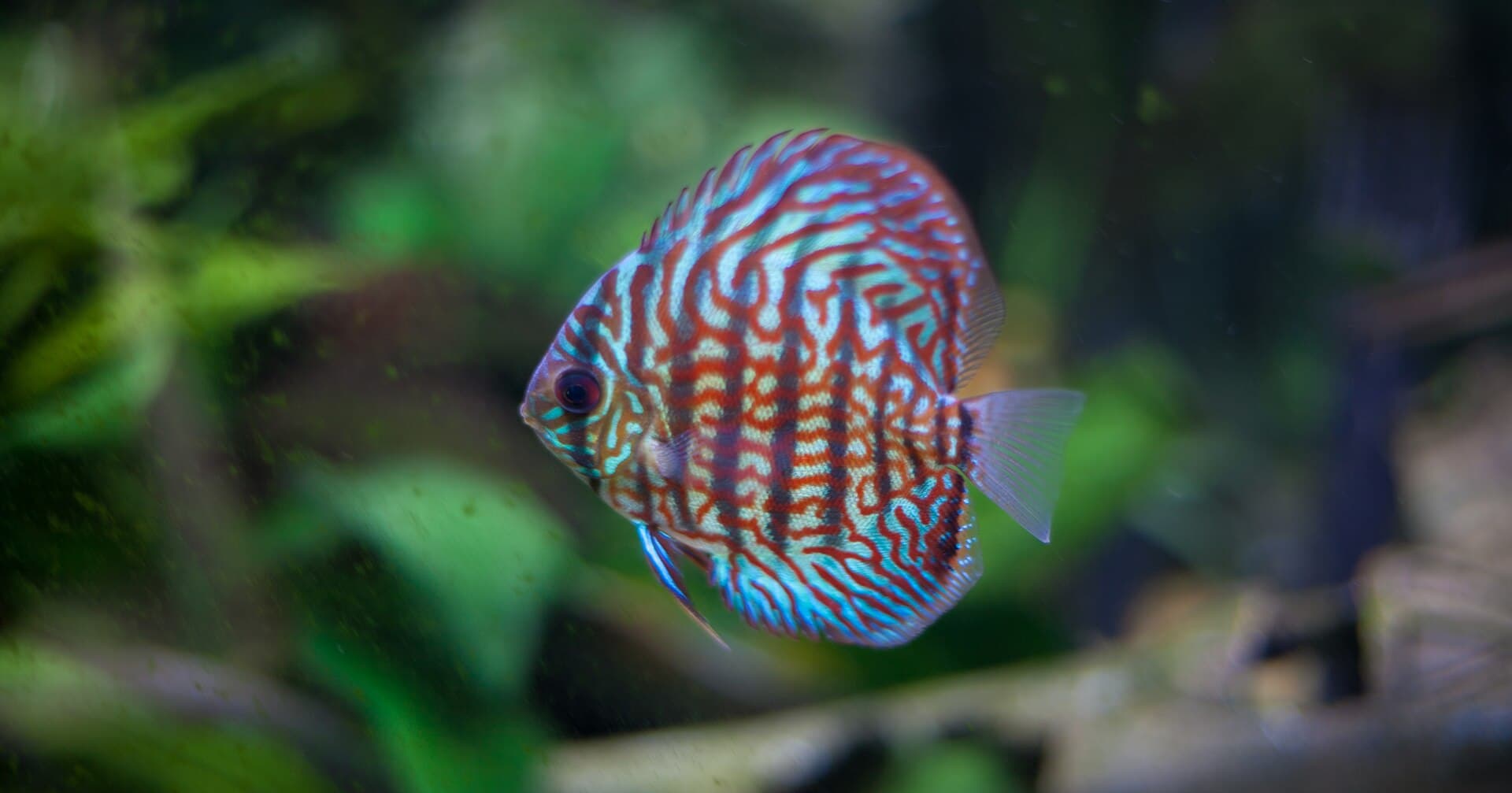

The Turquoise is one of the oldest varieties: its body is covered in wavy blue-green lines. In the Red Turquoise, those turquoise lines run over a red-brown base. Both are considered hardy and remain popular with beginners and experts alike.
Blue Diamond
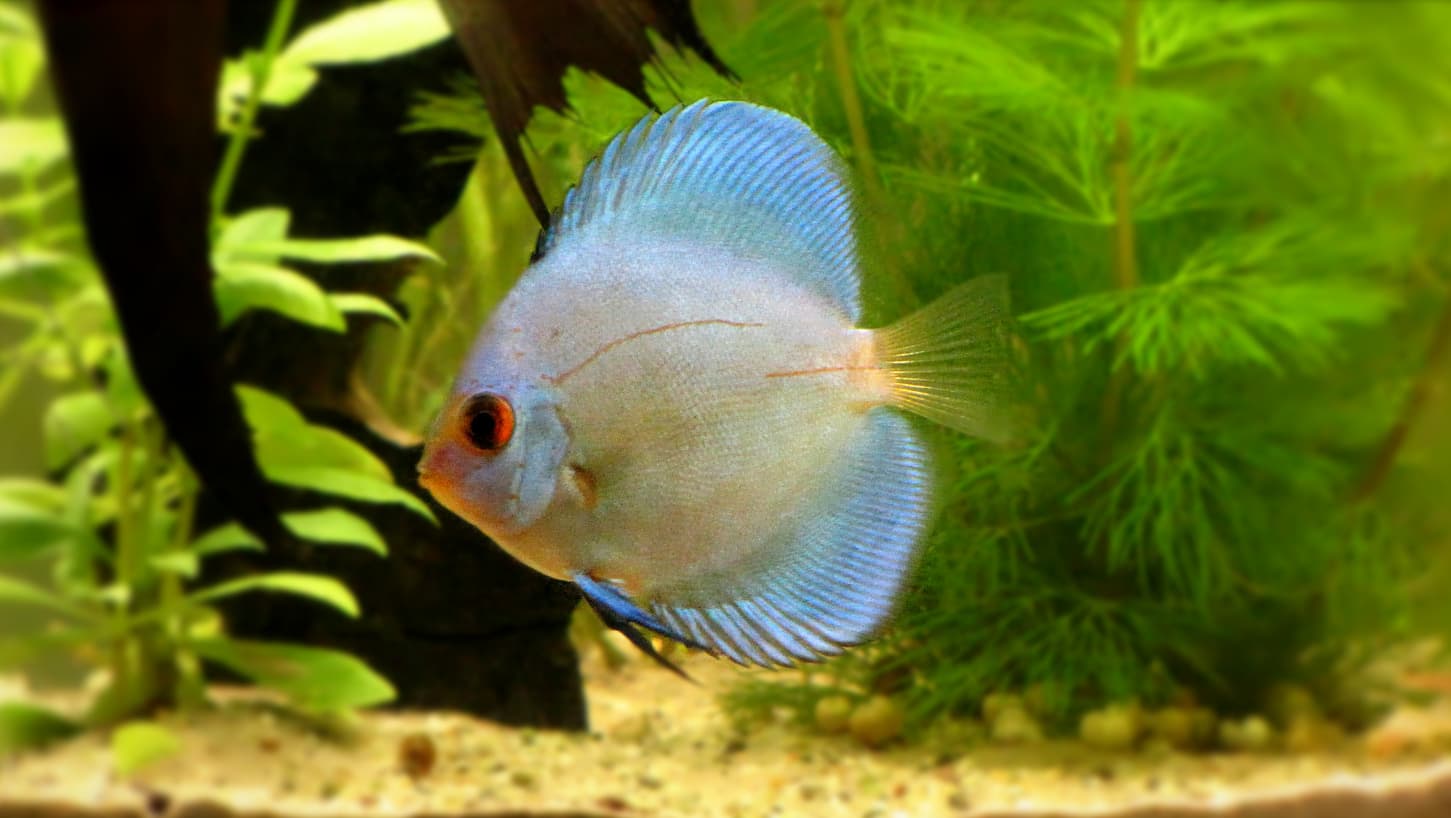

The Blue Diamond (also called Cobalt) is solid blue, without stripes or spots. Its colour looks best against a dark background and under lighting that isn’t too bright.
Pigeon Blood
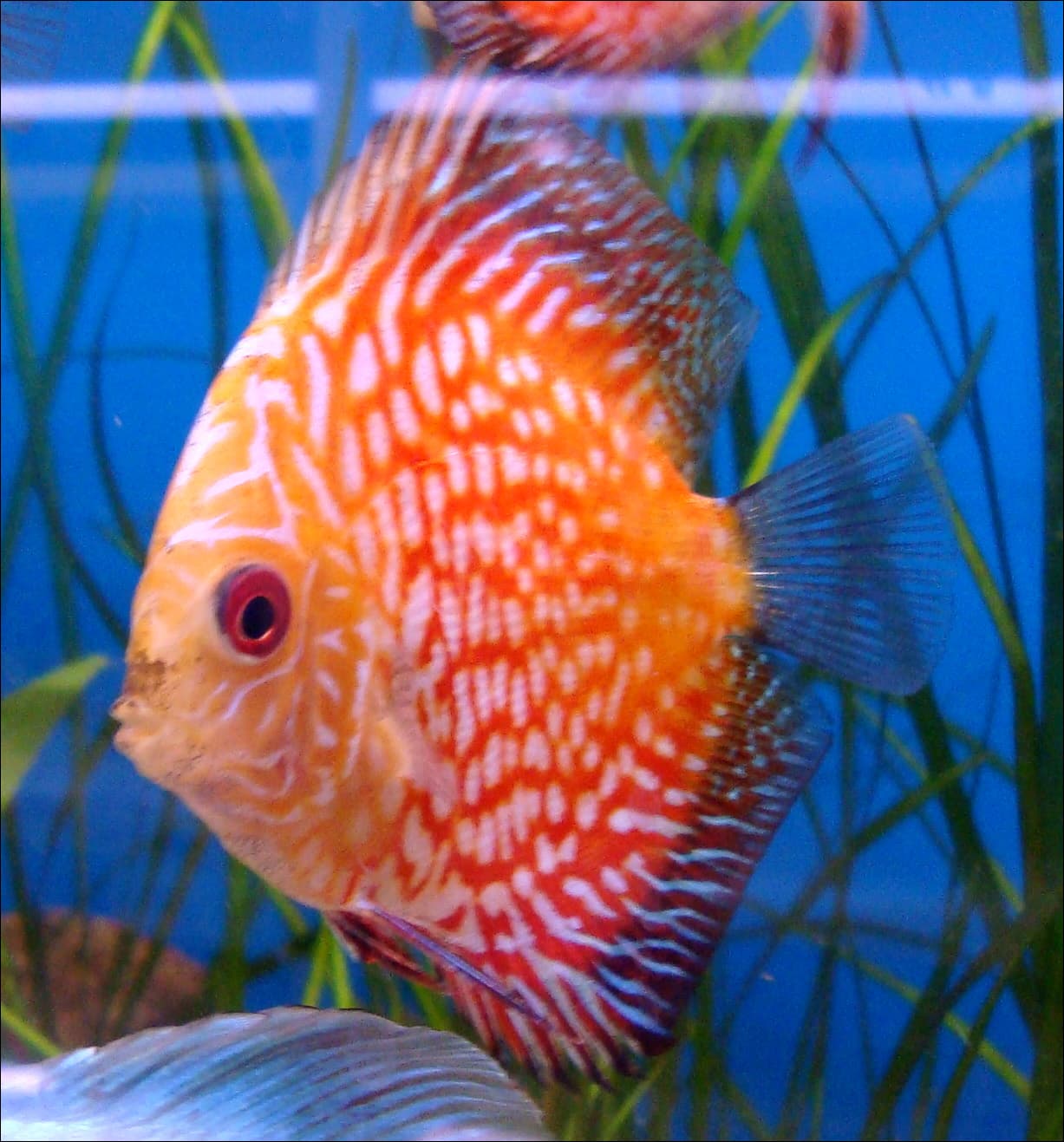

The Pigeon Blood was bred in Thailand in the early 1990s and changed the discus world: a light orange-white base with a fine red pattern. A well-known drawback is ‘peppering’: small black dots in the skin. The less peppering, the more highly the fish is valued.
Solid red and orange
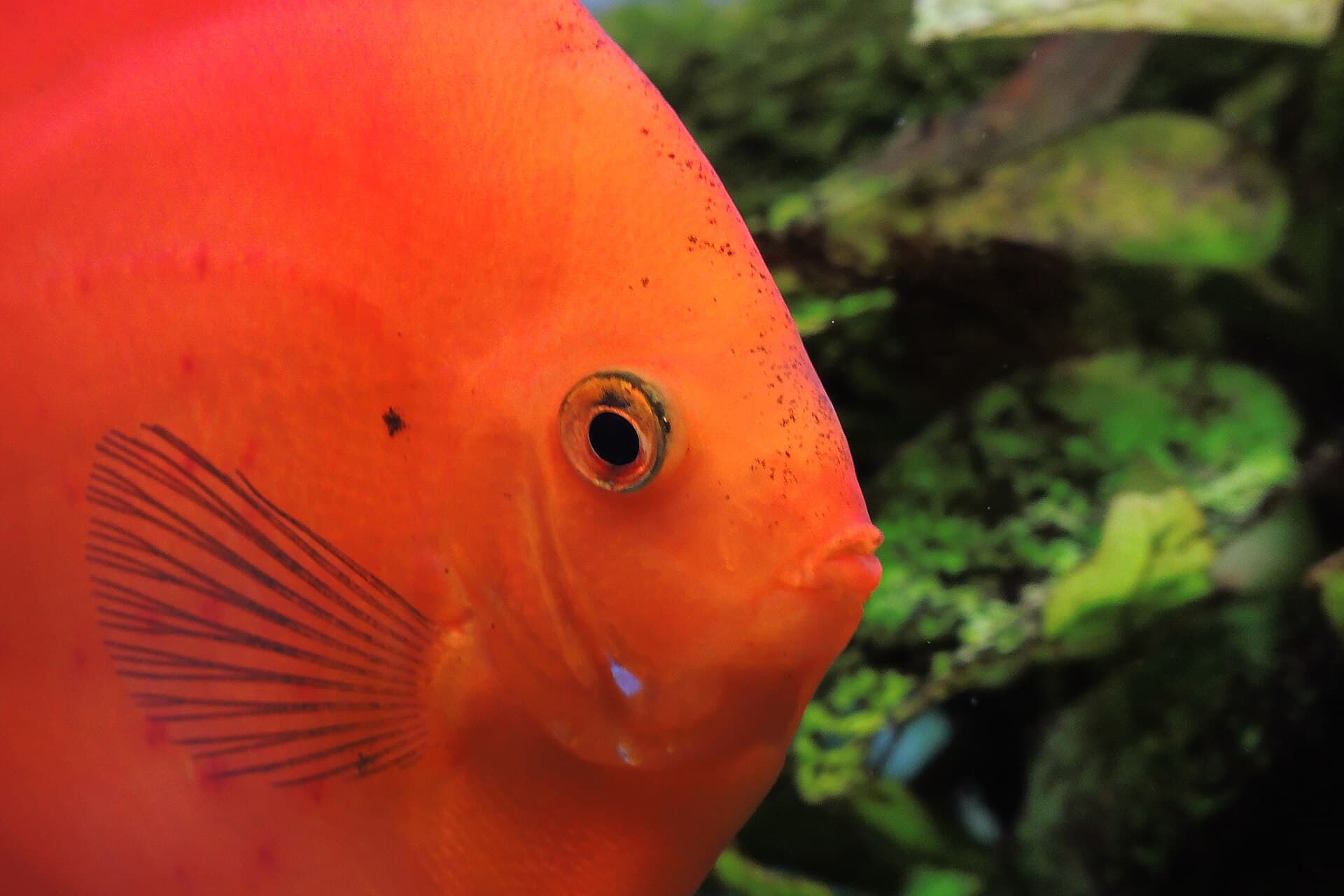

Pigeon Blood lines gave rise to solid-coloured varieties such as Red Melon, Marlboro Red and Red Cover. Their red colour partly depends on diet: carotenoids in the food intensify it. Be aware that some fish are given colour-enhancing food or even hormones before sale, after which the colour disappoints at home.
Pattern varieties
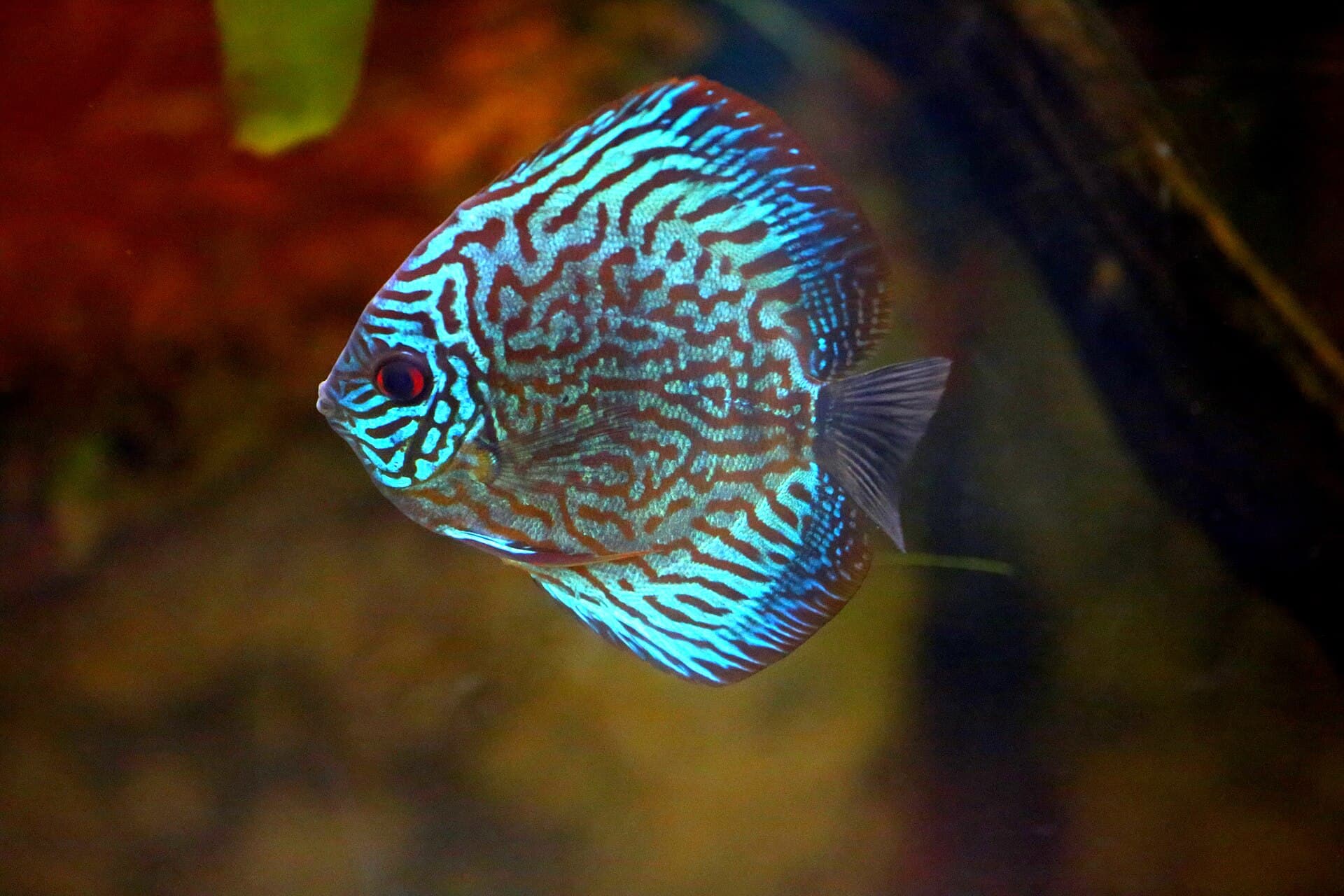

- Leopard: a turquoise body full of small red dots.
- Snake Skin: very many fine vertical bars and a snakeskin-like pattern.
- Checkerboard: a ‘chequerboard’ pattern of broken lines.
Albino and Golden
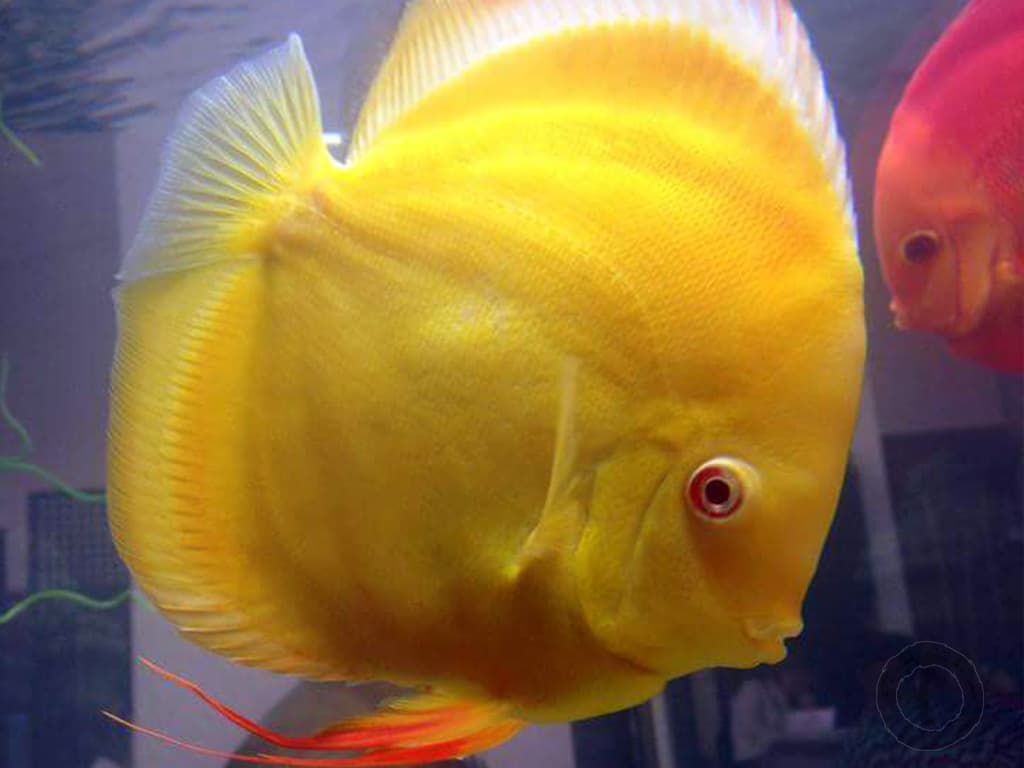

Albinos lack black pigment and have red eyes; they exist in many colour varieties, from white to red. Golden discus are yellow to gold. Both are more sensitive to bright light.
How to recognise a beautiful discus
- Round body: height and length are about equal; an oval fish was often underfed while growing.
- Small eyes: large eyes relative to the body point to stunted growth.
- Intact fins that are symmetrical and well spread.
- Clear colours and calm but alert behaviour.
Which variety is the most beautiful is a matter of taste. Above all, choose a fish that is healthy and suits your aquarium: in a planted tank with driftwood, natural-looking colours often stand out better than in a bare breeding tank.