The most common diseases in marine fish and how to treat them
White spot, velvet, clownfish disease, flukes and HLLE: an overview of the most common diseases in marine fish, and why quarantine is the most important medicine.
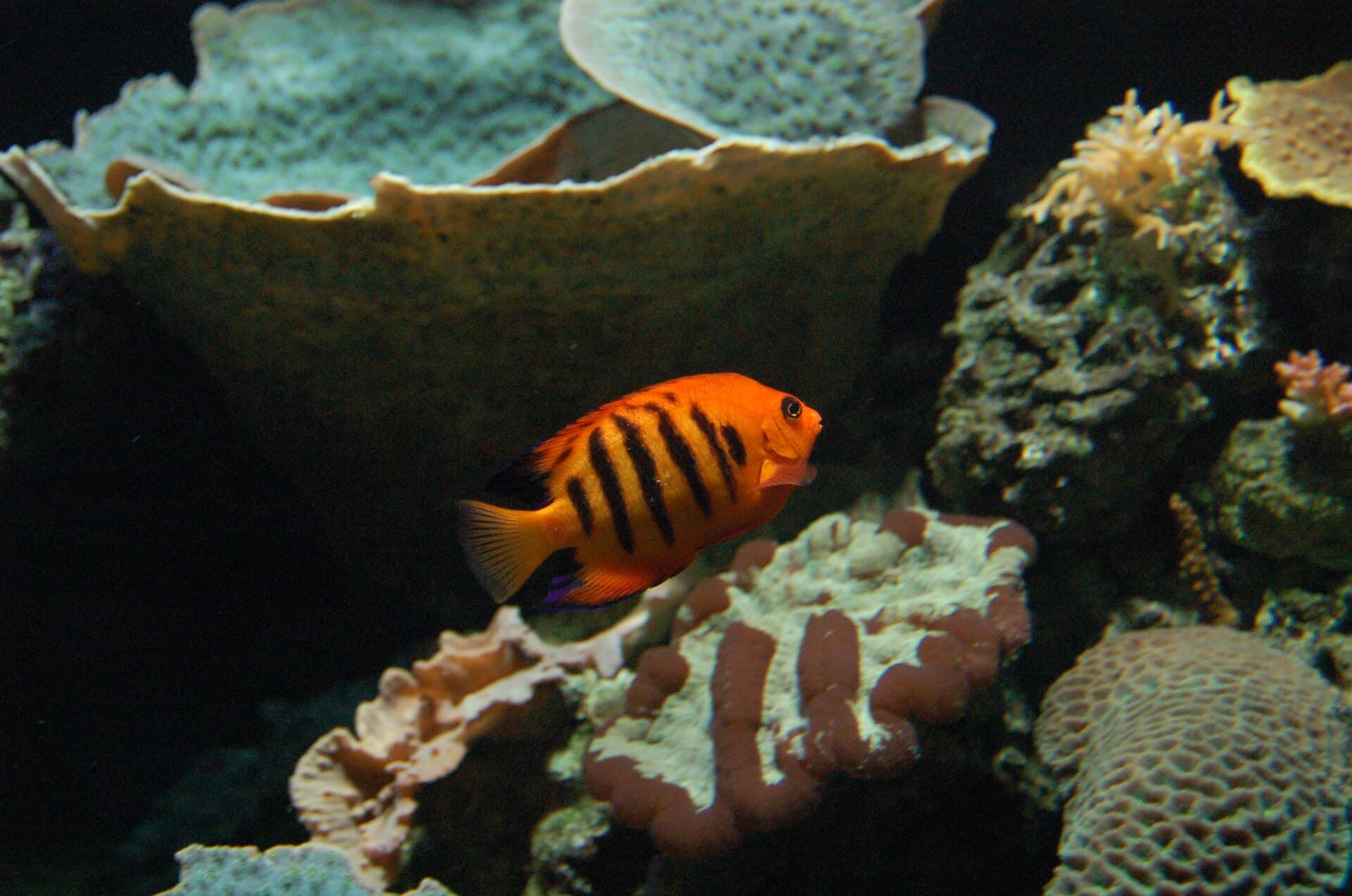

Marine fish often fall ill in the first weeks after purchase, when the stress of collection and transport weakens their resistance. The big problem in a reef aquarium: most medications also kill corals, shrimp and snails. So prevention matters even more than in freshwater.
Quarantine: the best medicine
Keep each new fish for four to six weeks in a separate quarantine tank with its own cycled filter, heater and a few PVC pipes as hiding places. Observe daily. Many experienced keepers also treat new fish preventively in quarantine. Only when a fish is fully healthy and eating well does it go into the reef aquarium.
Overview
Marine ich (Cryptocaryon irritans)
Symptoms: white dots like grains of salt, flashing, rapid breathing. The best-known disease in marine fish. Read all about it in our article on marine ich and velvet.
Velvet (Amyloodinium ocellatum)
Symptoms: a fine, dusty coating on the skin, very rapid breathing, fish hanging at the surface. Much faster and more dangerous than ich: fish can die within a few days. See our article on marine ich and velvet.
Clownfish disease (Brooklynella hostilis)
Symptoms: thick white mucus that sloughs off in patches, dull colour, rapid breathing. Mainly affects clownfish, often wild-caught. Progresses quickly; treatment in a separate tank is needed.
Uronema
Symptoms: red patches and ulcers that deepen quickly. A single-celled parasite that mainly affects weakened fish, often also at reduced salinity.
Flukes (Neobenedenia, gill flukes)
Symptoms: flashing, cloudy eyes, rapid breathing. Skin flukes are hardly visible on the fish. A short freshwater dip with water at the same temperature and pH often makes them visible as small white specks that detach.
HLLE (Head and Lateral Line Erosion)
Symptoms: pits and erosion on the head and along the lateral line, especially in tangs and angelfish. The cause isn’t fully known; it is linked to diet, stress and fine particles from activated carbon. Varied food with plenty of algae and good water quality usually help.
Lymphocystis
Symptoms: white, cauliflower-like growths on fins or skin. A viral disease that looks unsightly but usually disappears on its own under good conditions. No treatment needed.
Treating: never in the reef aquarium
- Copper, the most widely used treatment against ich and velvet, is deadly to corals and invertebrates. Only use it in a separate tank, and measure the concentration with a copper test.
- Products labelled ‘reef safe’ are often ineffective or only weakly effective against parasites.
- A UV steriliser can help reduce free-swimming parasites, but doesn’t cure sick fish.
Yawar deliberately gives no dosages: always follow the product’s instructions and, when in doubt, ask a vet experienced with fish. Always treat fish in a separate tank, never in the reef aquarium.