Malawi bloat and the right diet
Malawi bloat is one of the most feared diseases in Malawi cichlids. How to recognise the first signs, how to react, and how to prevent it with the right diet.
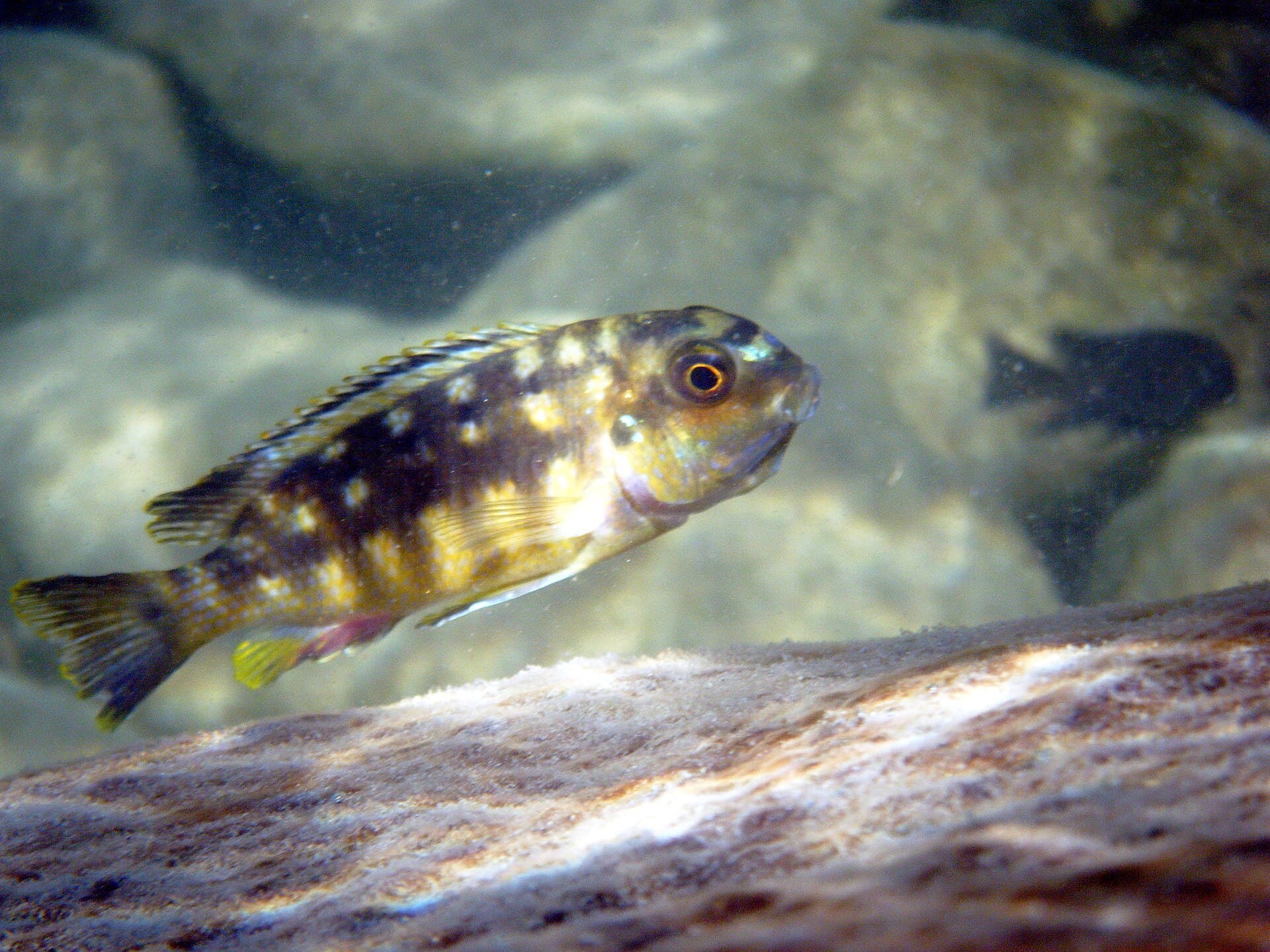

Malawi bloat is a disease in which a fish’s belly swells and the fish stops eating. It mainly affects herbivorous mbuna and can be fatal within a few days. So reacting quickly matters.
Symptoms
- Not eating or eating less, or spitting food out again: often the first sign.
- White, stringy droppings.
- A swollen belly, sometimes with protruding scales.
- Rapid breathing, isolating itself, turning dark or pale.
- Sometimes a red or swollen vent.
Note the difference with a mouthbrooding female: she doesn’t eat either, but has a bulging throat instead of a bulging belly and otherwise behaves normally.
Causes
The exact cause hasn’t been fully established. It is usually a combination of:
- The wrong food: too much protein and fat for herbivorous species, such as bloodworms or beef heart.
- Too much food and too little fibre.
- Stress and poor water quality.
- An overgrowth of intestinal flagellates or bacteria in a weakened gut.
Approach
- Stop feeding and move the fish to a quiet hospital tank.
- Check and improve the water in the main aquarium.
- Treat quickly: a treatment against intestinal flagellates is often used; metronidazole is common for this but is prescription-only in many countries. Ask a vet for advice.
- Keep a close eye on the other fish, as several fish often fall ill.
- Recovery: start again with small portions of light, plant-based food.
Yawar deliberately gives no dosages: always follow the product’s instructions and, when in doubt, ask a vet experienced with fish. Preferably treat in a separate tank and remove activated carbon from the filter during treatment.
The right diet
Mbuna
In the lake, mbuna graze the ‘aufwuchs’ on the rocks: algae with tiny animals living in them. Their gut is long and made for fibre-rich, plant-based food. Feed food based on spirulina or other algae, supplemented with, for example, blanched spinach or courgette. Avoid bloodworms, beef heart and fatty food.
Peacocks and haps
In nature these species eat more small animals and fish. They get a protein-rich menu: quality pellets, krill, mysis and brine shrimp. If you combine mbuna with peacocks, choose a food suitable for both and give protein-rich food only in moderation.
How often and how much?
- Feed once or twice a day, as much as is eaten in a minute or two.
- Include a fasting day once a week.
- Alternate between a few good foods.
- Keep food dry and sealed, and use it within a few months of opening: vitamins break down.