Livebearers: guppy, platy, molly and swordtail
Livebearing fish are colourful, hardy and give birth to live young. All about guppies, Endlers, platies, swordtails and mollies, and how to keep your aquarium from overflowing.
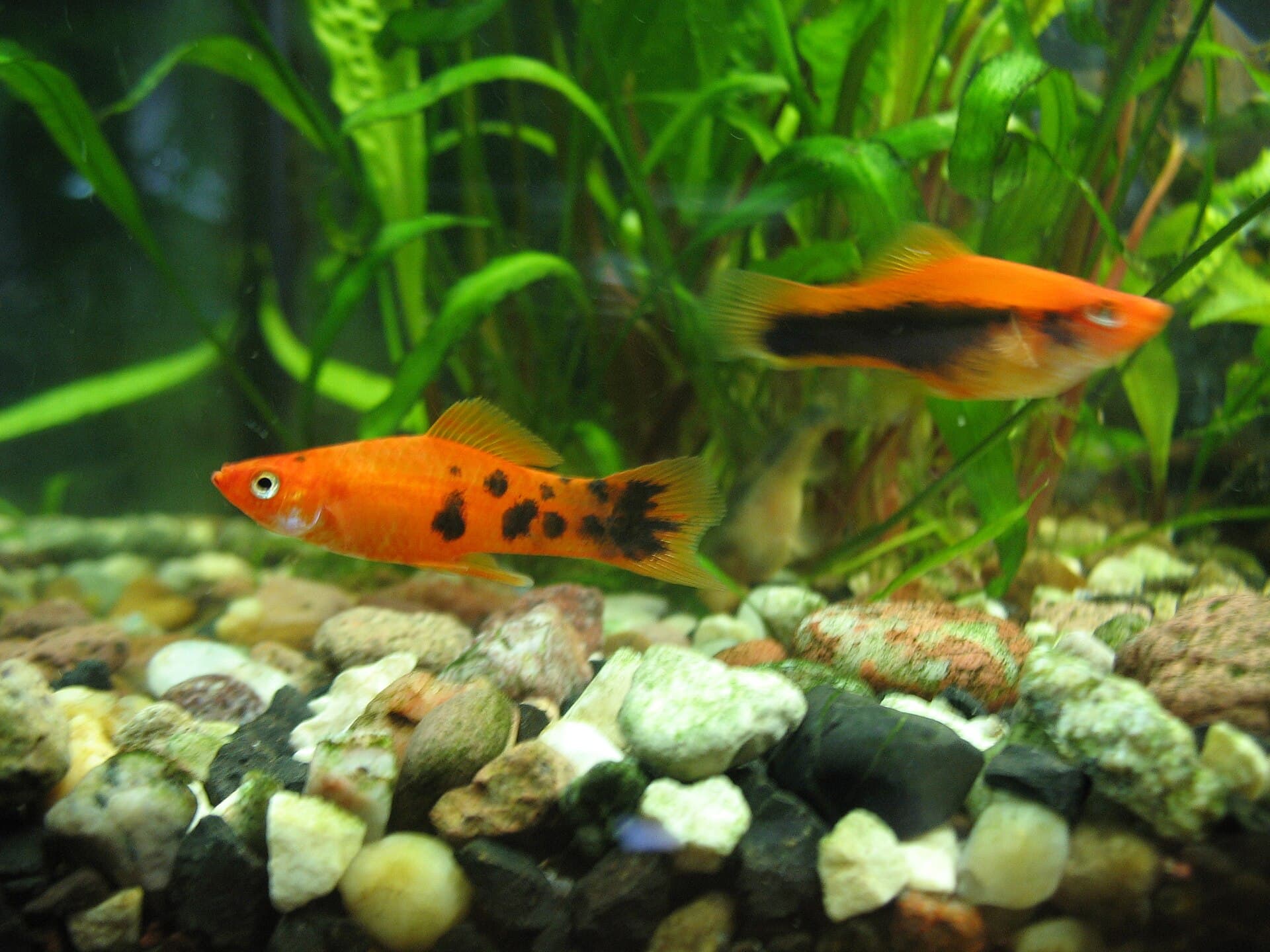

In livebearers, the eggs hatch inside the female’s body and fully formed young are born. They are colourful, hardy and easy to breed: ideal for beginners, and for children who love seeing baby fish.
The best-known species
Guppy (Poecilia reticulata)
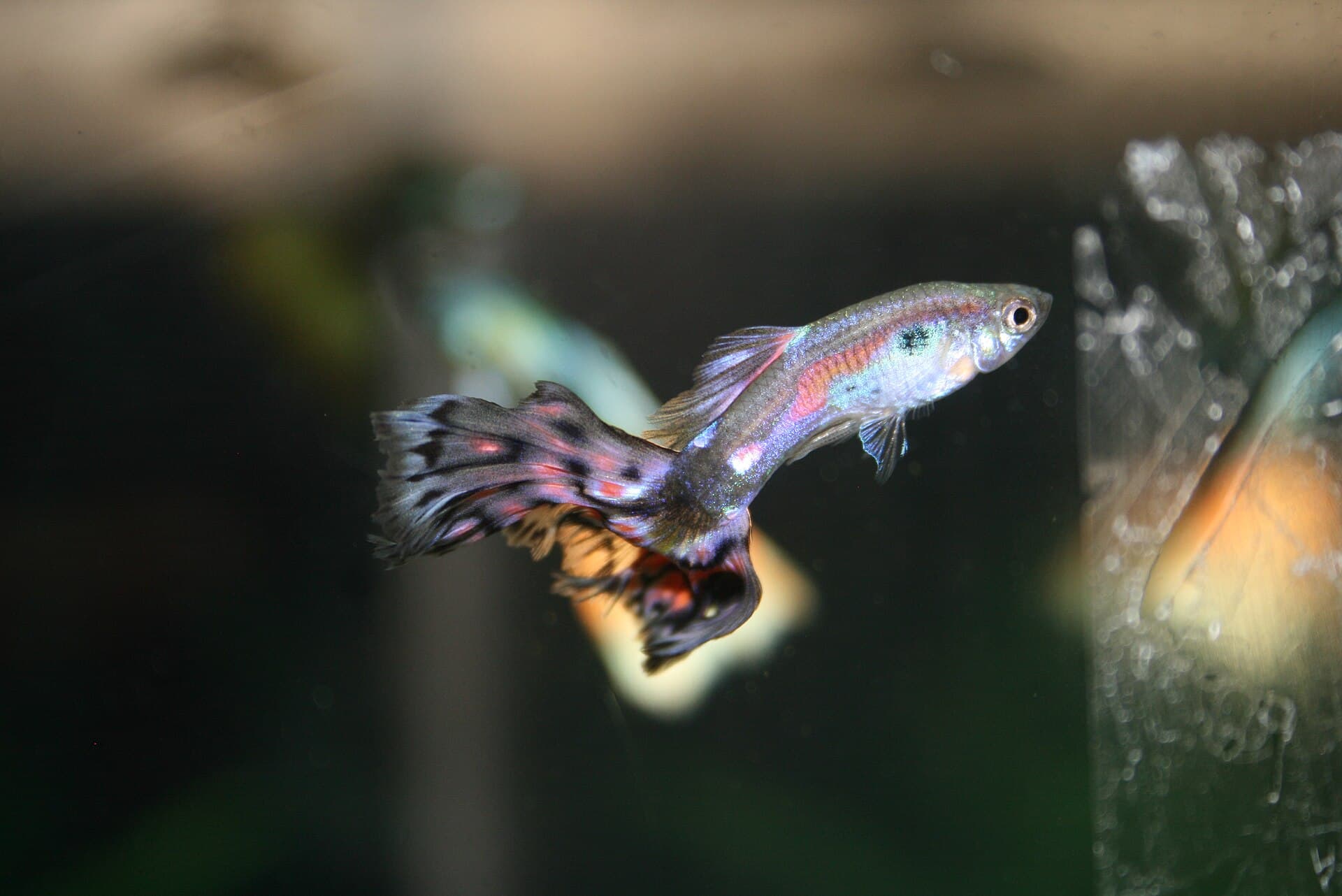

Males have large, colourful tail fins, in endless bred varieties. Females are larger and less colourful. Grows to 3 to 6 cm.
Endler’s livebearer (Poecilia wingei)
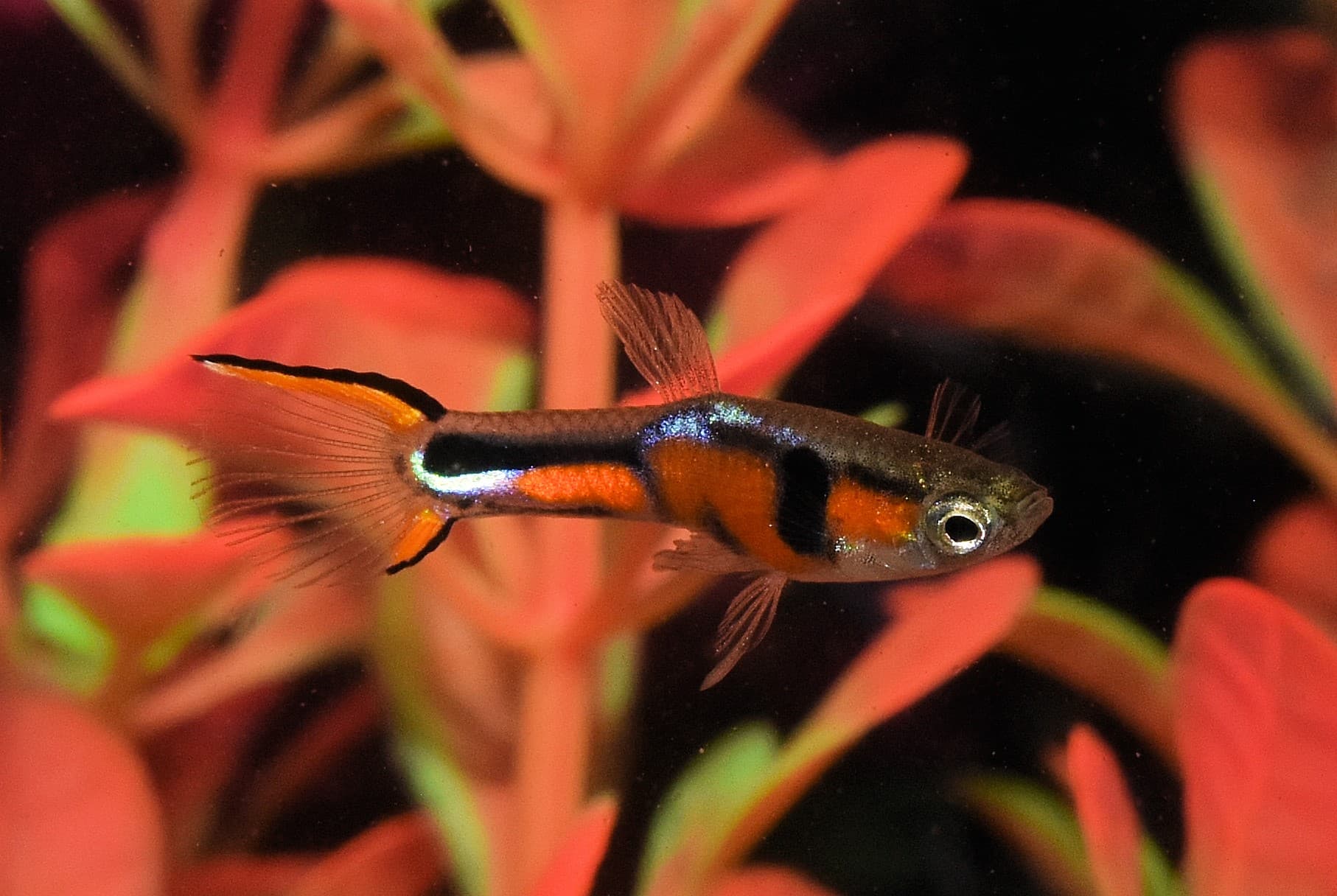

Smaller and more compact than the guppy, with vivid neon and orange hues. Crosses easily with guppies; keep them separate if you want to keep pure Endlers.
Platy (Xiphophorus maculatus)
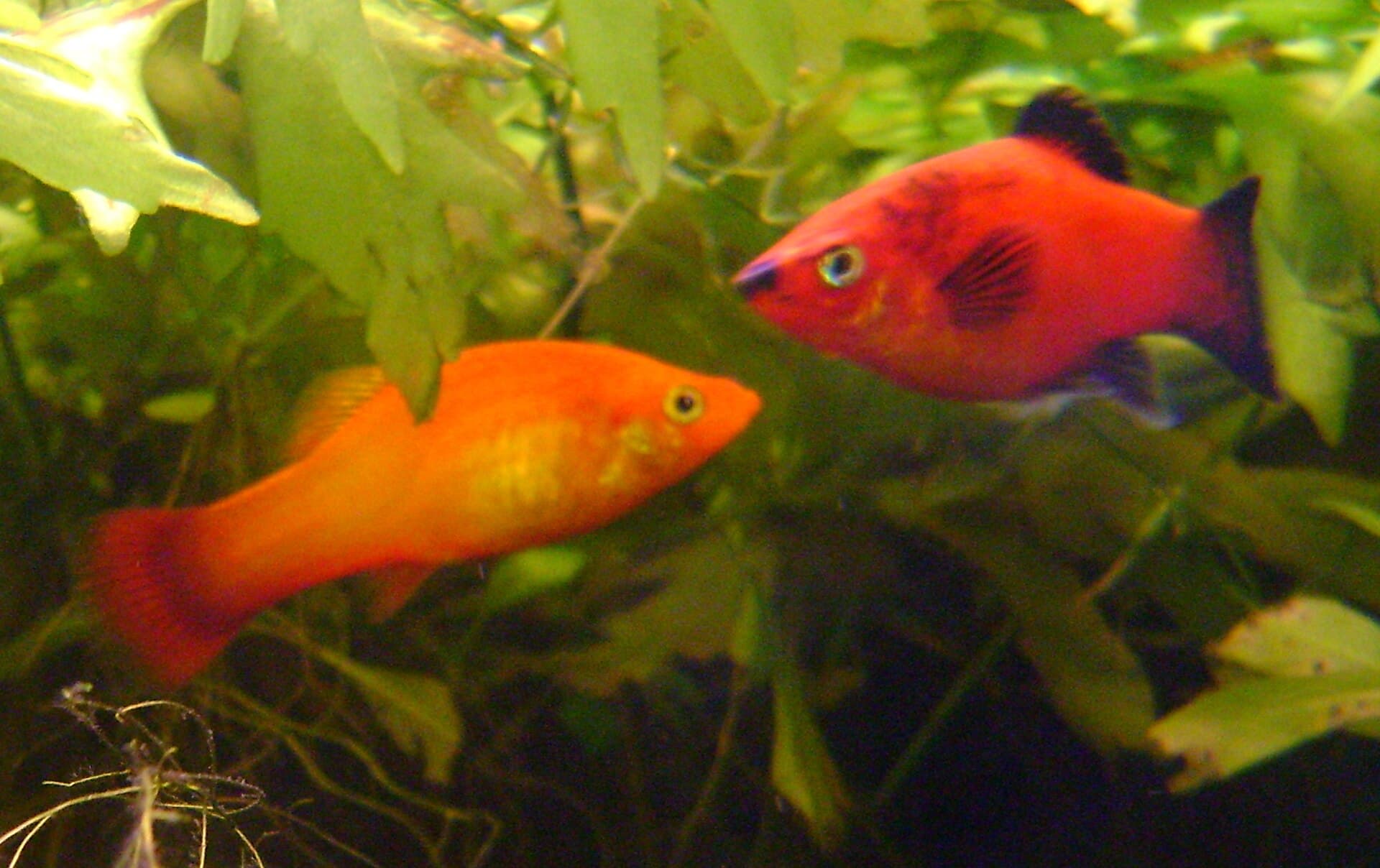

A calm, hardy fish in many colours, from red to blue and spotted. Grows to about 5 cm.
Swordtail (Xiphophorus hellerii)
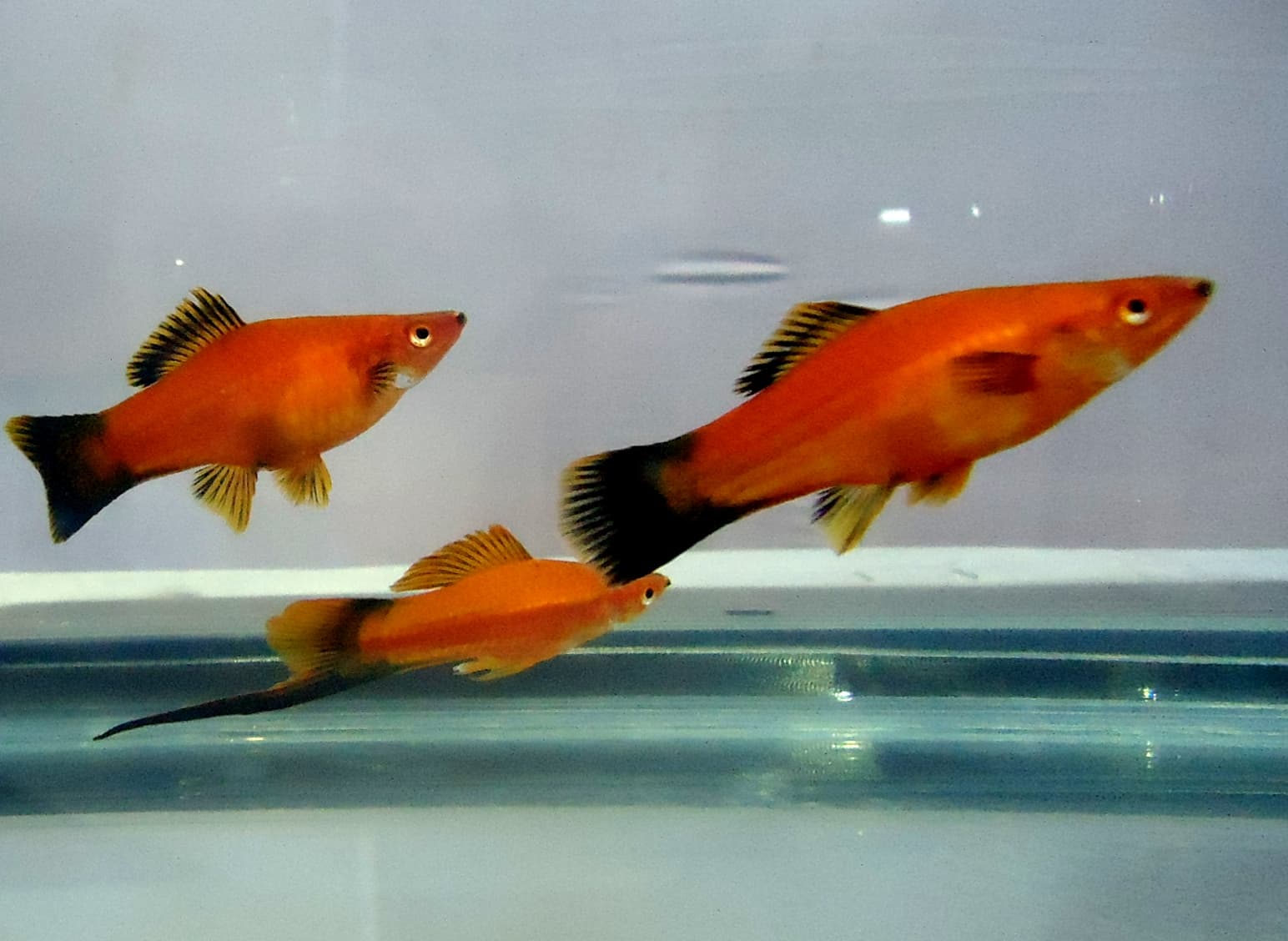

Males have a long ‘sword’ on the lower edge of the tail fin. Grows to about 12 cm and is an active swimmer. Males can be feisty with each other: keep one male, or several in a large tank.
Molly (Poecilia sphenops and P. latipinna)
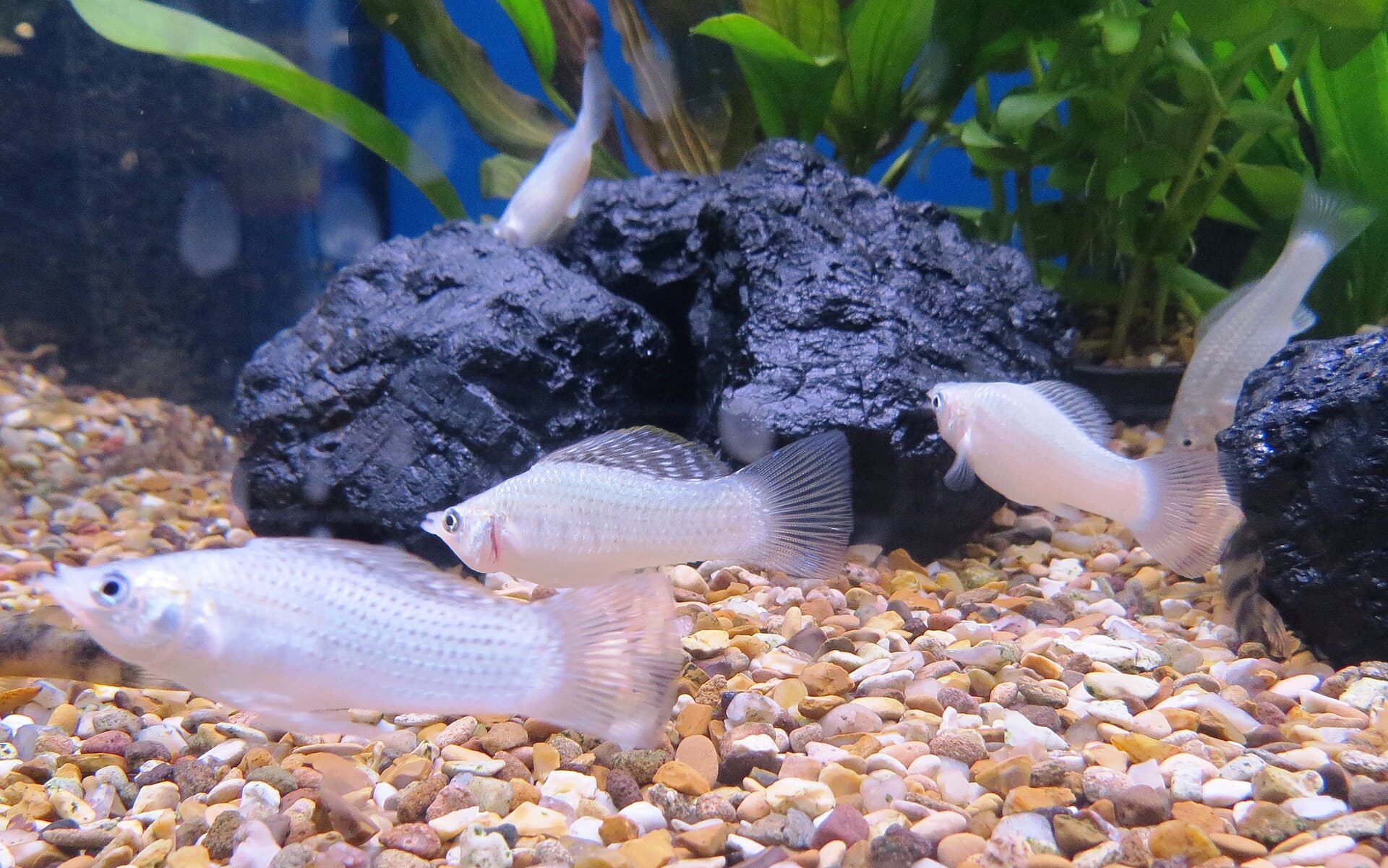

Beautiful and large, from black to spotted and with large dorsal fins (sailfin molly). Mollies like hard water and a slightly higher temperature.
Water and care
- Temperature: 22–26 °C (mollies rather 24–28 °C).
- Water: medium-hard to hard, pH 7–8. Tap water in large parts of the Netherlands and Belgium is often suitable.
- Aquarium: at least 60 cm for guppies, Endlers and platies; at least 100 cm for swordtails and mollies.
- Food: varied, including plant-based food; mollies love grazing on algae.
Breeding
A female gives birth roughly every four weeks. She can store sperm and use it for several broods after a single mating, even when there is no longer a male in the tank. Keep two to three females per male, so that no single female is constantly chased.
Preventing a population explosion
Livebearers multiply quickly. Think ahead about what you’ll do with the young:
- Keep only males if you don’t want fry: colourful and no offspring.
- Let nature take its course: in a community aquarium many fry are eaten. If you want more to survive, provide dense plants such as Java moss or floating plants.
- Pass surplus fish on to a shop, club or other hobbyist. Never release them into the wild.
A buying tip
Many livebearers in the trade come from mass breeding in Asia. Hobby breeders and specialist shops often offer hardier fish that are used to local water. More about that in our article on breeders in Europe.