Hexamita and hole-in-the-head in discus
White, slimy droppings and holes in the head: hexamita and hole-in-the-head are among the best-known discus problems. How to recognise them, and how to tackle them.
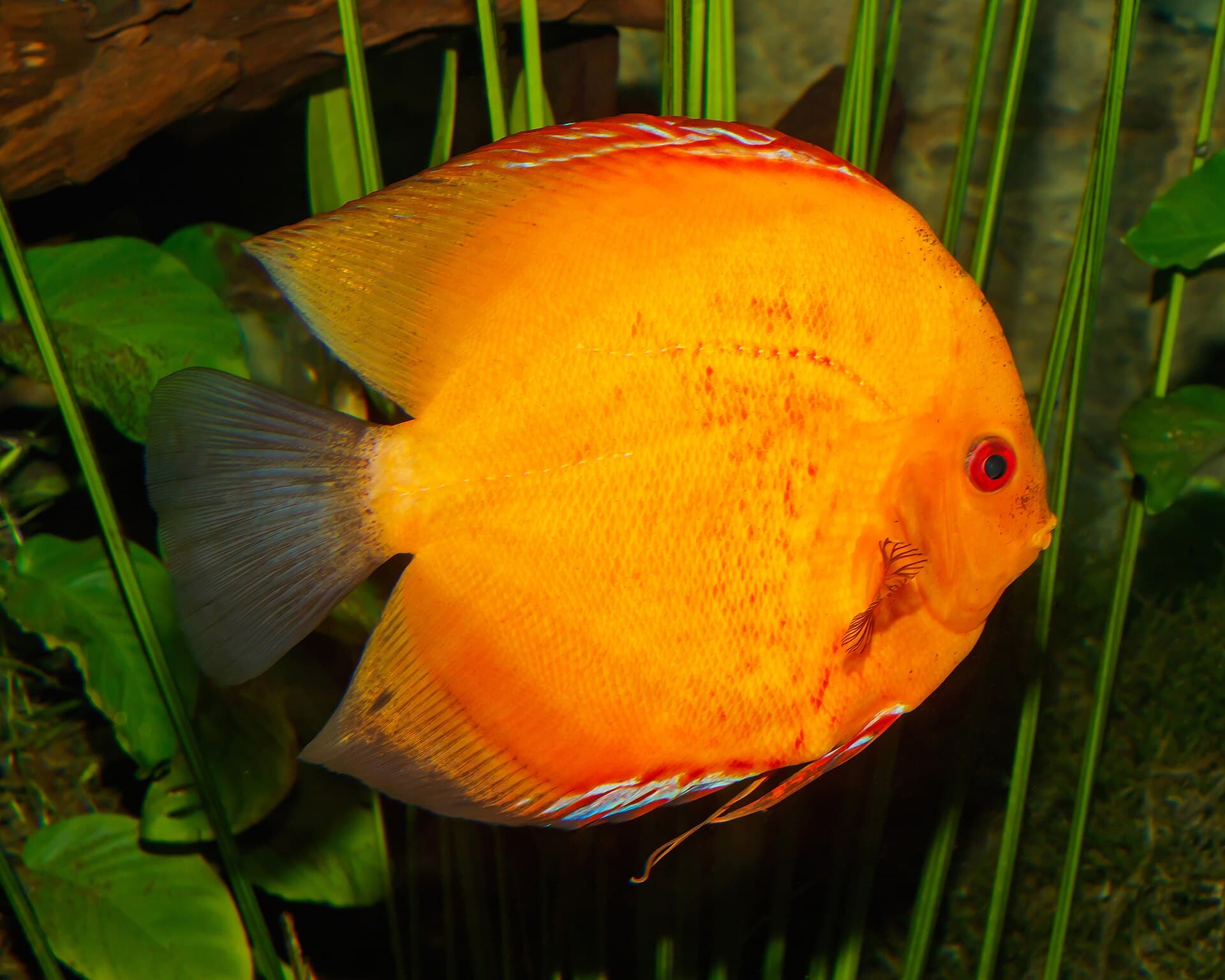

Hexamita (and related flagellates such as Spironucleus) are single-celled parasites that live in small numbers in the intestines of many cichlids. As long as the fish is healthy, they cause no problems. With stress, poor water or the wrong food, they can multiply explosively.
Symptoms
- White, stringy or slimy droppings, often the first sign.
- Not eating or eating less: the fish takes food but spits it out again.
- Turning dark and isolating itself.
- Losing weight, with a hollow belly and a ‘sunken’ forehead.
- At a later stage: small holes or sores in the head and along the lateral line.
Hole-in-the-head (HITH)
Hole-in-the-head, or HITH, causes small pits in the head that can grow into open sores. Hexamita is often named as the cause, but the disease is also linked to poor water quality, high nitrate, a lack of vitamins and minerals, and activated carbon. A combination of factors is likely involved.
Approach
- Improve the water: large water changes, lower nitrate, check temperature and filter.
- Isolate sick fish in a hospital tank, so you can treat them specifically.
- Possibly raise the temperature slightly to 30–31 °C, if your fish tolerate it, and provide extra aeration.
- Treat with a medication against flagellates. In many countries metronidazole is common for this, but it is often prescription-only. Get advice from a vet and follow the instructions.
- Treat via the food, if the fish still eats: medicated food works directly in the gut.
- Recovery: varied, vitamin-rich food; holes in the head usually heal, sometimes with scars.
Yawar deliberately gives no dosages: always follow the product’s instructions and, when in doubt, ask a vet experienced with fish. Treat in a separate tank and remove activated carbon from the filter during treatment.
Prevention
- Stable, clean water with low nitrate.
- A varied diet with enough vitamins and no spoiled (frozen) food.
- Calm in the aquarium and a group of at least five to six fish.
- Quarantine for new fish.