Gill flukes and intestinal worms in discus
Rapid breathing or losing weight despite eating well? Worms are among the most common discus problems. How to recognise gill flukes and intestinal worms, and how to tackle them.
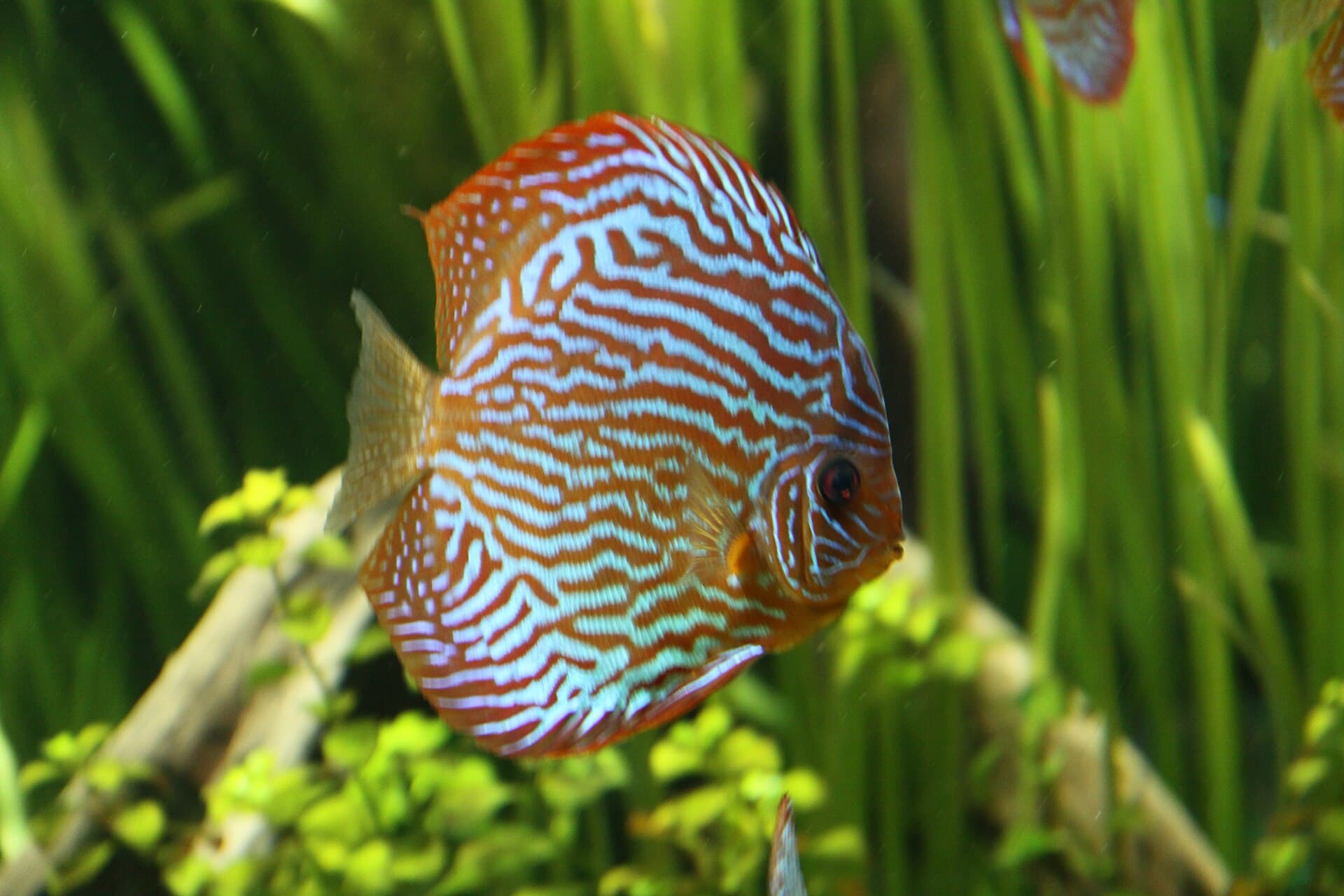

Almost all wild-caught and many tank-bred discus carry a few worms. In small numbers that’s usually not a problem, but in an aquarium they can build up. That’s why many discus keepers have new fish dewormed preventively.
Gill flukes
Gill flukes (Dactylogyrus and relatives) are tiny flatworms under a millimetre long that attach to the gills. They lay eggs in the water, so they can spread quickly in an aquarium.
Symptoms
- Rapid breathing, even when the water is fine.
- Breathing with one gill cover, while the other stays closed.
- Flashing against objects, shaking the head.
- Red, swollen or slime-covered gills.
- In young fish: stunted growth and deaths.
Approach
There are specific treatments against gill flukes (often based on praziquantel or flubendazole). Because the eggs are often not affected, a repeat treatment is usually needed to kill newly hatched worms. Change water before and after treatment and keep a close eye on breathing.
Intestinal worms
Hairworms (Capillaria) in particular are notorious in discus. Tapeworms also occur. The worms live in the intestines and spread via the droppings.
Symptoms
- Losing weight despite a good appetite.
- A hollow belly, and a body that looks ‘thinner’ behind the head.
- White or transparent, stringy droppings.
- Turning dark and eventually stopping eating.
Approach
Intestinal worms are treated with a dewormer, preferably via the food while the fish still eats. Siphon the substrate thoroughly during and after treatment to remove eggs. A faecal examination by a vet helps to determine which worm it is.
Yawar deliberately gives no dosages: always follow the product’s instructions and, when in doubt, ask a vet experienced with fish. Treat in a separate tank and remove activated carbon from the filter during treatment.
Prevention
- Quarantine of four to six weeks for new fish, with observation and possibly preventive deworming.
- Buy from a breeder who explains how they deal with parasites.
- Keep the substrate clean and remove leftover food.
- Be careful with live food from unknown sources.