The best equipment for a reef aquarium
Protein skimmer, flow, lighting, sump and auto top-off: the equipment that keeps a reef aquarium stable, with a handy checklist.
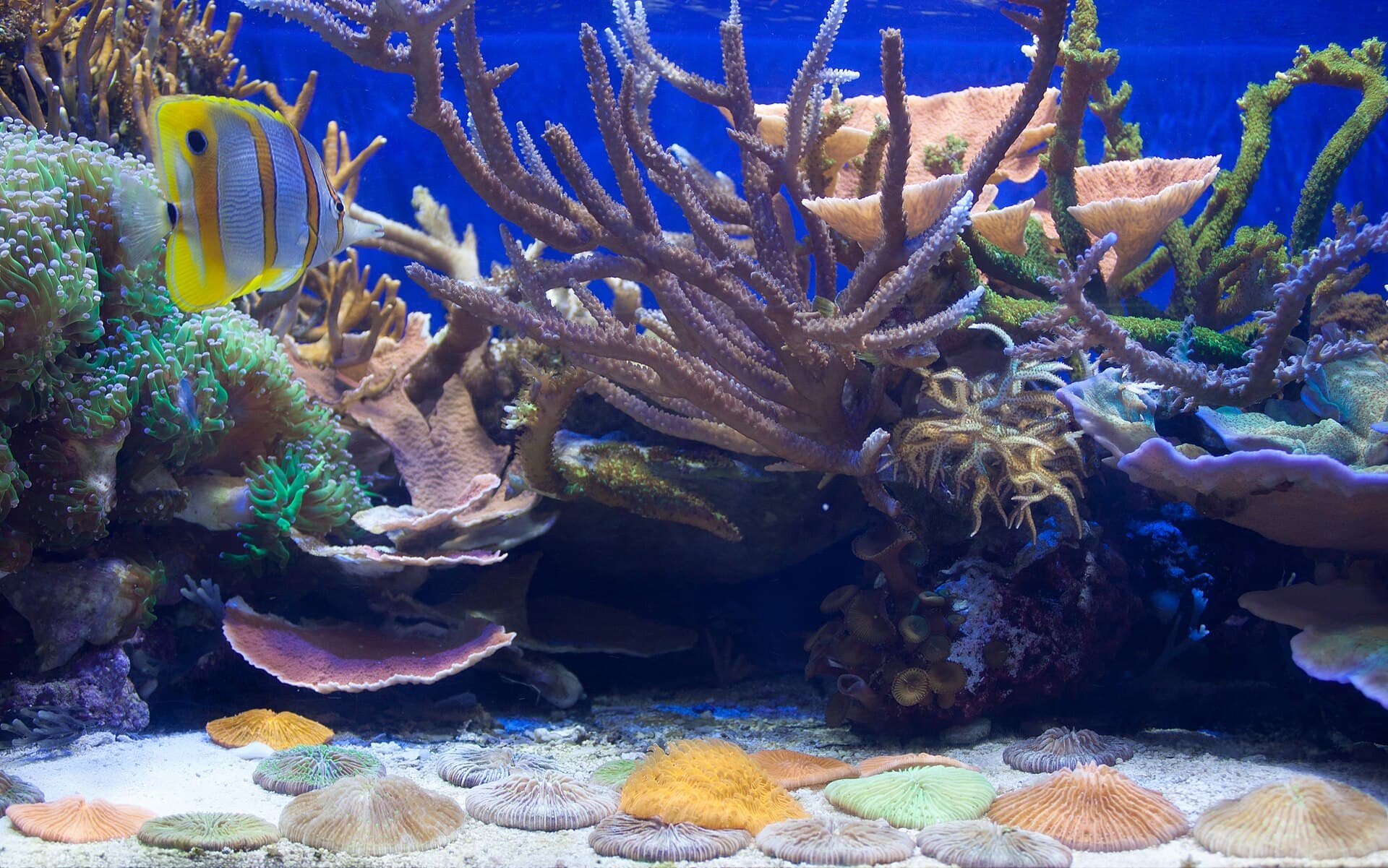

In a reef aquarium, everything revolves around stability. Corals tolerate fluctuations in temperature, salinity and nutrients poorly. The equipment has to absorb them. Our article on starting a reef aquarium covers the basics; here we go deeper into each component.
Live rock: the biological filter
In a reef aquarium, live rock (porous limestone full of bacteria) does most of the biological filtration. Classic sponge filters are often discouraged: dirt gets trapped in them and is turned into nitrate. Only use them for mechanical filtration and clean them often, or choose filter socks or a roller filter that you replace regularly.
Protein skimmer
The protein skimmer is the heart of the equipment. It pushes fine air bubbles through the water, to which organic waste sticks; this ends up as foam in a cup. This removes waste before it breaks down into nitrate and phosphate. Choose a skimmer that suits the volume and stocking.
Sump
A sump is an extra tank under the aquarium that the water flows into. It holds the skimmer, heater and possibly a refugium. This keeps equipment out of the display and increases the water volume.
Flow
Corals need flow to bring in food, carry away waste and keep their tissue clean. Use controllable wavemakers that give a varying, broad flow, and aim them so there are no dead spots. SPS corals need more flow than soft corals and LPS.
Lighting
Modern marine LED lighting is adjustable in colour and intensity. Corals mainly need blue light. Build up the intensity slowly in a new aquarium, and use a programme with a sunrise and sunset. Soft corals and LPS need less light than SPS.
Temperature
Keep the temperature between 24 and 26 °C, as stable as possible. A heater with a separate temperature controller is safest. In summer a fan or chiller is sometimes needed, because pumps and lighting warm the water.
Auto top-off
Water evaporates, but salt doesn’t: salinity rises every day. An auto top-off (ATO) replaces evaporated water with pure RO water and keeps salinity stable. Never top up with salt water.
Making water
For water changes and top-off, use water from a reverse osmosis unit, preferably with an extra resin filter (RO/DI). Tap water contains phosphate, nitrate, silicates and sometimes copper, which feed algae or harm invertebrates.
Checklist
- Live rock for biological filtration
- Protein skimmer suited to the volume
- Sump with return pump (recommended)
- Controllable wavemakers
- Adjustable marine LED lighting
- Heater with controller, possibly a chiller
- Auto top-off
- Reverse osmosis unit (RO/DI)
- Refractometer and test kits
- A separate quarantine tank