The best equipment for a Malawi aquarium
A powerful filter, solid rockwork and a good cover: that’s what the equipment of a Malawi aquarium looks like. A practical overview with checklist.
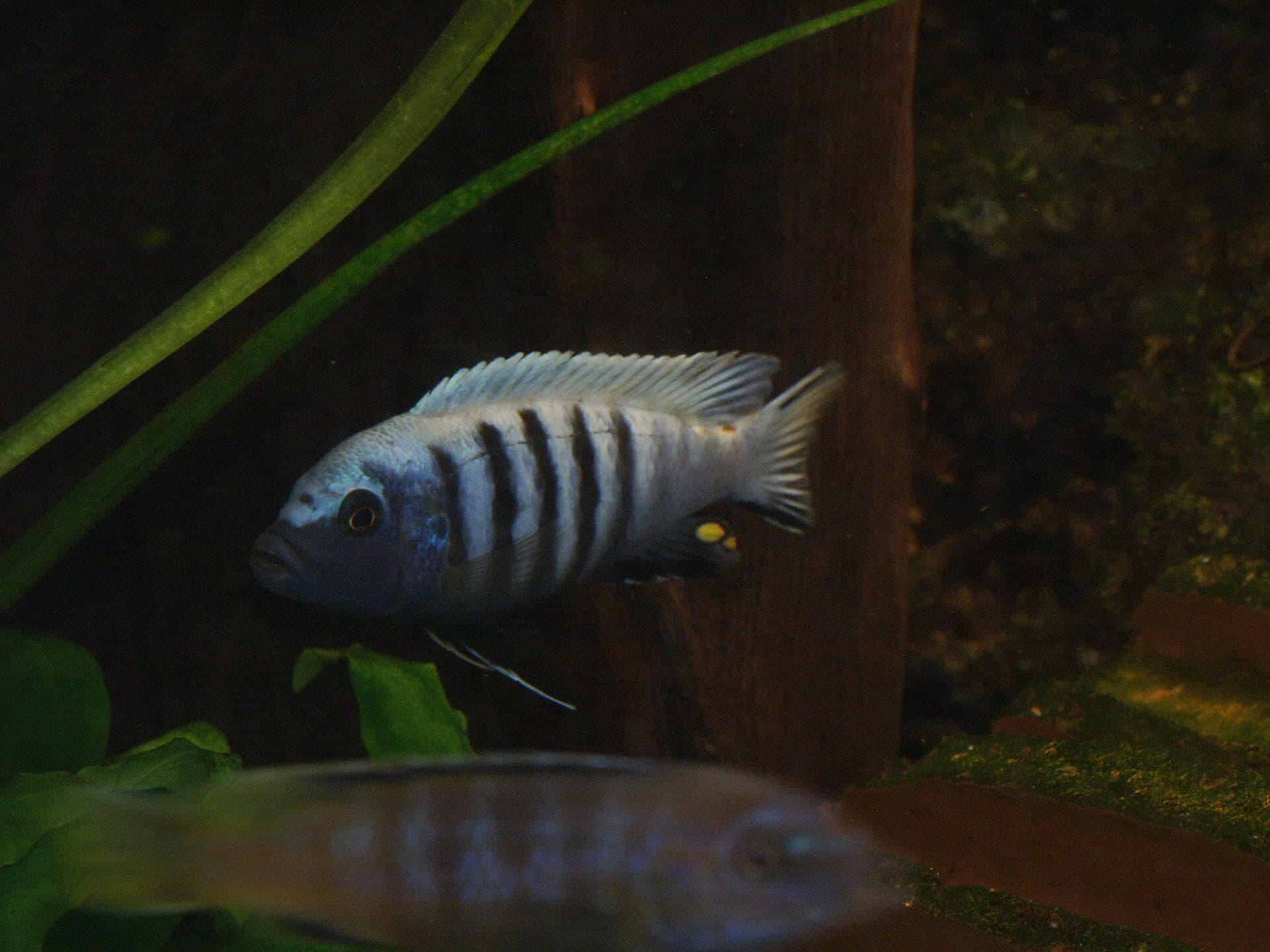

Malawi cichlids are active, eat a lot and are often stocked fairly densely. The equipment therefore mainly needs to do one thing well: keep the water clean and stable.
The aquarium
- Mbuna: at least 120 cm long, preferably 150 cm or more.
- Peacocks: at least 150 cm.
- Large haps: 180–200 cm or more.
For Malawis, the footprint matters more than the height: territories are on the bottom and between the rocks. A depth of at least 50 cm leaves room for attractive rockwork.
Filtration
Choose a generously sized biological filter: a large canister filter, two canister filters or a sump. A turnover of four to six times the tank volume per hour is common. Unlike discus, Malawi cichlids don’t mind some current. Mechanical pre-filtration (a coarse sponge) catches the large amount of dirt and is easy to clean.
Heating
Malawi cichlids need 24–27 °C, with 25–26 °C as a good average. An adjustable heater with a separate thermometer is enough. In a warm living room, cooling is often needed in summer rather than heating.
Lighting
Lake Malawi is clear and sunny. LED lighting for eight to ten hours a day shows off the colours and creates a thin layer of algae on the stones, which mbuna love to graze on.
Substrate and rocks
- Sand: Malawis love to dig. Fine sand or coral sand (aragonite), which also helps keep pH and KH high.
- Rocks on the bottom glass: always place stones directly on the glass, and only then add the sand around them. Otherwise the fish dig the rocks out from under.
- Protect the bottom glass with a sheet of polystyrene or an egg-crate grid under heavy stones.
- Build stably: a falling stone can break a pane. Glue stones together with aquarium silicone if needed.
- Lots of caves and passages, so every fish can hide and multiple territories form.
Cover and extras
- A good cover: Malawi cichlids jump when startled or fighting.
- Aeration or an outflow that moves the surface, for enough oxygen.
- Test kits for pH, KH, GH, nitrite and nitrate.
- A separate quarantine or hospital tank for new, sick or bullied fish, and for mouthbrooding females.
Checklist
- Aquarium of at least 120 cm (mbuna) to 180 cm or more (haps)
- Biological filter with a turnover of 4–6× the volume per hour
- Heater and thermometer (24–27 °C)
- LED lighting with a timer
- Sand or coral sand, rocks on the bottom glass
- A good cover
- Test kits and a hospital tank