The best equipment for a discus aquarium
Which aquarium, which filter and how much heating do you need for discus? A practical overview of the equipment that makes the difference.
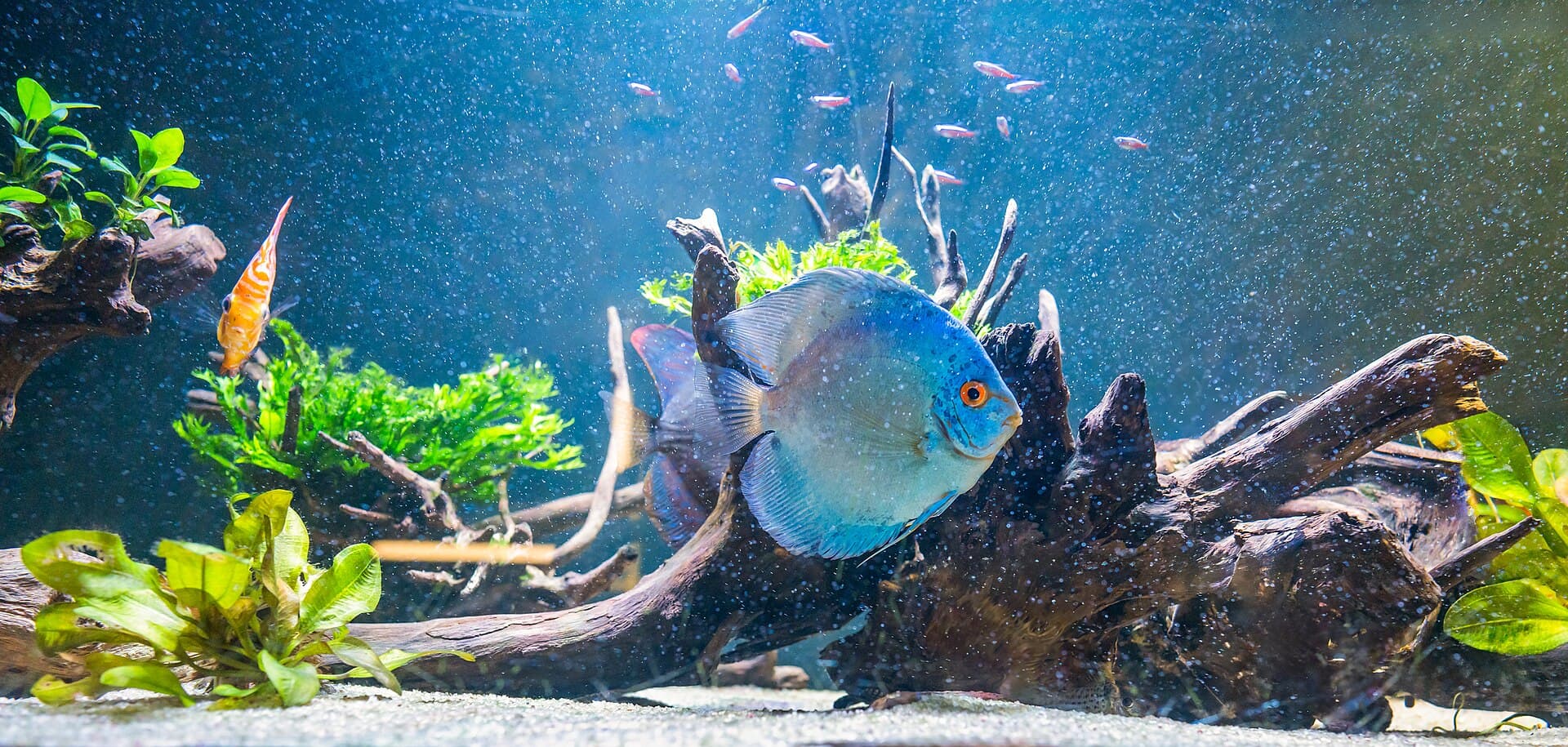

Discus are more demanding about their environment than most aquarium fish: warm, clean and stable water. The right equipment makes maintenance a lot easier.
The aquarium
Discus grow large and tall. Count on an aquarium of at least 120 cm long and 50 cm high, with around 300 litres for a group of five to six adult fish. More volume means more stable water parameters and less stress.
Filtration
- Choose a powerful biological filter: an external canister filter or a sump under the tank.
- Discus don’t like strong currents. Aim the outflow at the glass or use a spray bar.
- A turnover of three to five times the tank volume per hour is a good starting point.
- Clean the filter regularly in aquarium water, but never all of it at once.
Heating
Discus need 28 to 30 °C. Preferably split the wattage over two heaters: if one fails, the tank doesn’t cool down straight away, and if one sticks on, it overheats less quickly. A separate thermometer checks that everything is right.
Water
Many discus keepers use a reverse osmosis unit to make soft water, and a separate heated storage barrel to prepare replacement water. An automatic water change system makes small daily changes easy.
Lighting
Discus are shy under bright light. Choose moderate LED lighting, set a timer for eight to ten hours, and use floating plants to create shade. In a planted tank the light must still be strong enough for the plants: find the happy medium.
Substrate and decoration
Breeders often keep discus in bare tanks because they are easy to keep clean. In a display aquarium, a thin layer of fine sand is a good choice. Driftwood and large plants provide calm and hiding places; avoid sharp rocks.
Useful extras
- UV-C steriliser: kills free-floating bacteria and parasites in the water.
- Aeration: warm water holds less oxygen; an air stone helps, especially at night.
- Conductivity meter (EC/TDS): handy for mixing RO and tap water.
- Test kits for pH, KH, GH, nitrite and nitrate.
Checklist
- Aquarium of at least 120 × 50 cm (length × height)
- Biological canister filter or sump with gentle outflow
- Two heaters plus a thermometer
- Reverse osmosis unit and a storage barrel
- Dimmable LED lighting with a timer
- Test kits and a conductivity meter