The best equipment for a community aquarium
Internal filter, canister filter or sponge filter? Which heater and lighting? A practical overview of the equipment for a healthy community aquarium, with a checklist.
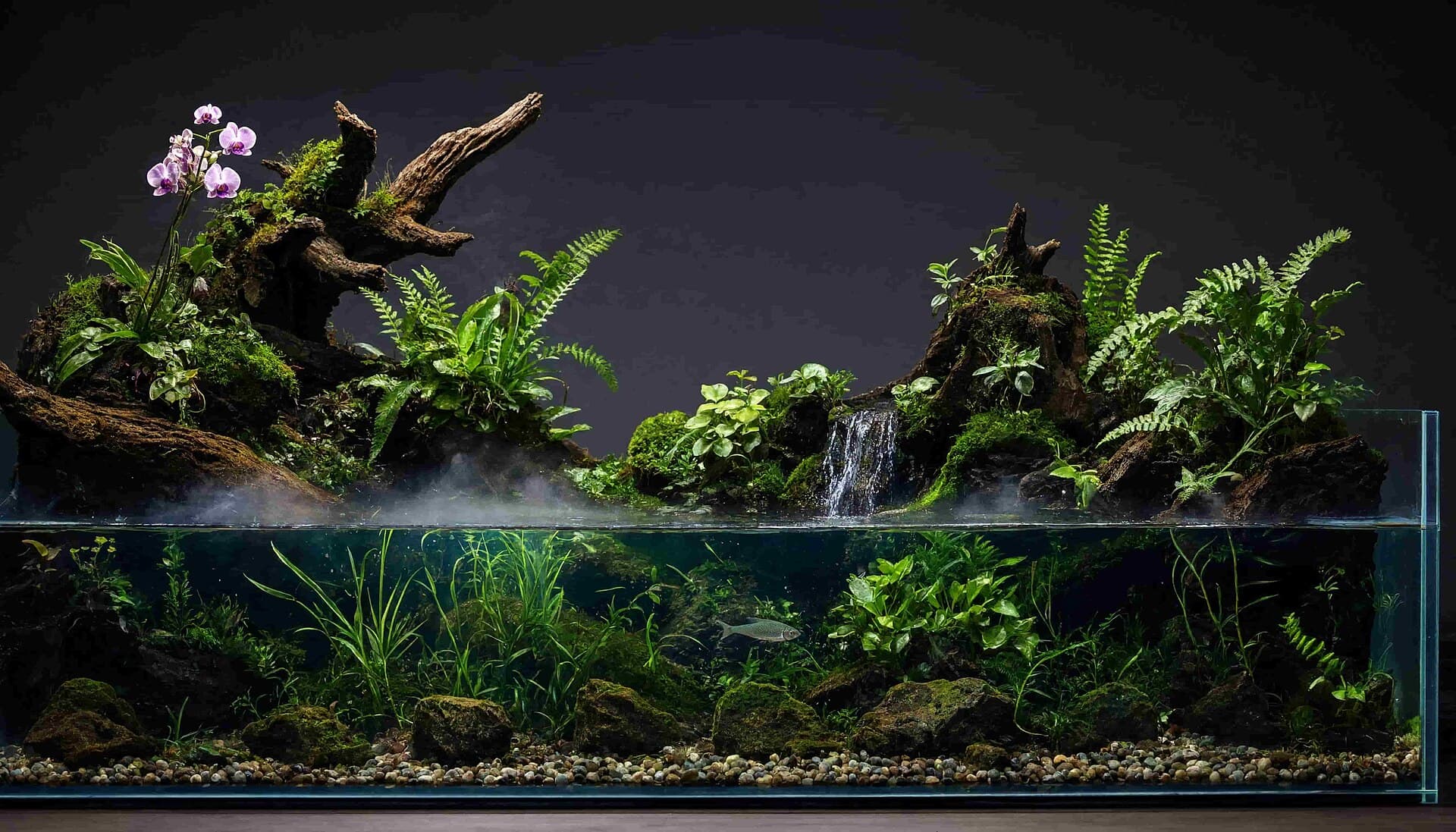

A community aquarium doesn’t need complicated equipment. With a good filter, a reliable heater and suitable lighting you have the basics. Do choose quality: a filter or heater that fails can cost you your whole aquarium.
The aquarium
A larger aquarium is more stable and more forgiving. For beginners, 60 to 100 cm (about 54 to 200 litres) is a good start. Very small aquariums (‘nanos’) are beautiful, but parameters fluctuate faster in them.
The filter
- Internal filter: cheap and simple, for aquariums up to about 100 litres. It does take up space in the aquarium.
- Canister filter: sits under the aquarium, holds a lot of filter media and is quiet. The best choice from about 100 litres.
- Sponge filter: runs on an air pump. Ideal for shrimp, breeding tanks and quarantine tanks: fry don’t get sucked in.
- Hang-on-back filter: hangs on the back rim; easy to maintain.
A turnover of three to five times the tank volume per hour is a good guideline. Only rinse filter media in aquarium water, never under the tap: that way the useful bacteria stay alive.
Heating
Most community fish like 24–26 °C. An adjustable heater with thermostat is enough, with a separate thermometer to check. Count on about 1 watt per litre. Place the heater in the filter flow, so the heat is distributed well.
Lighting
LED lighting is economical and good for plants. Keep the lights on for eight hours a day with a timer: longer mainly means more algae. For easy plants a standard aquarium LED is enough; a densely planted ‘nature aquarium’ needs more powerful lighting.
Substrate
A nutrient substrate under a layer of gravel or sand gives plants a good start. Choose sand if you keep Corydoras: their barbels get damaged on sharp gravel. A dark substrate makes fish stand out better.
CO₂
Plants need CO₂ to grow. For easy plants, the CO₂ in the water is usually enough. If you want a densely planted aquarium with demanding plants, a CO₂ system with a pressurised cylinder helps. Caution: too much CO₂ is dangerous to fish; measure and adjust carefully.
Essential tools
- A cover against jumping fish and evaporation.
- Test kits for pH, KH, GH, ammonia, nitrite and nitrate.
- A gravel vacuum or siphon and a bucket you only use for the aquarium.
- A fish net and a quarantine tank with a sponge filter.
Checklist
- Aquarium of 60–100 cm for a first tank
- Filter with 3–5× turnover per hour
- Adjustable heater and thermometer
- LED lighting with a timer
- Nutrient substrate with sand or gravel
- A cover
- Test kits, gravel vacuum and bucket