The most common discus diseases and how to treat them
Turning dark, not eating, white slime or rapid breathing: what’s wrong with your discus? An overview of the most common diseases, their symptoms and how to tackle them.
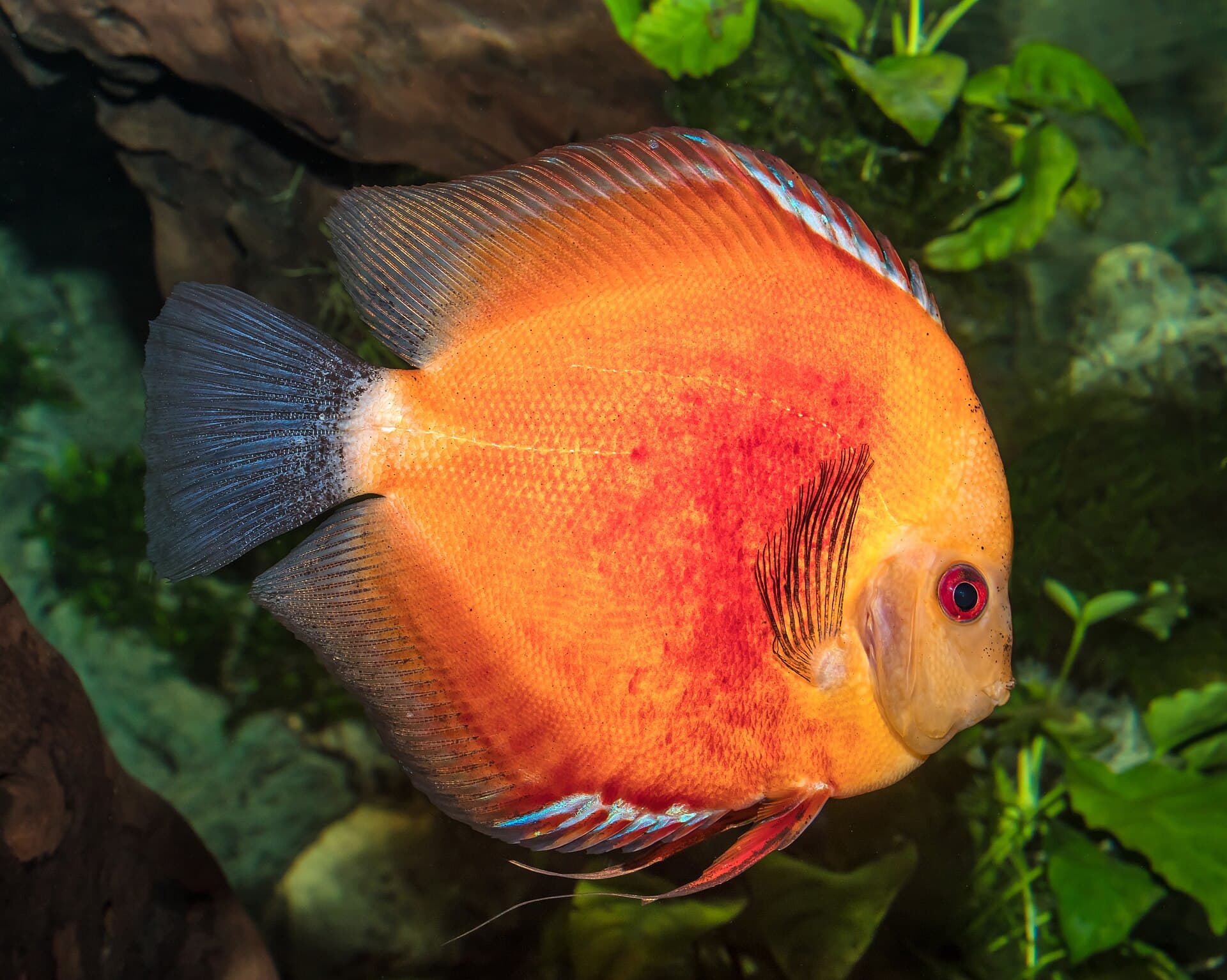

Discus aren’t weaker than other fish, but they react quickly to poor conditions. Almost every disease starts with stress or with water that isn’t right. So always look at the water first before putting medication in the tank.
First aid: what to do first, every time
- Test the water: ammonia, nitrite, nitrate, pH and temperature.
- Change water (with water of the same temperature and parameters).
- Isolate sick fish in a quarantine tank, if possible.
- Observe: appetite, droppings, breathing, skin and behaviour.
- Make a diagnosis before treating, possibly with the help of a vet. A ‘cocktail’ of medications often does more harm than good.
Overview
Hexamita and hole-in-the-head
Symptoms: white, slimy droppings, not eating, turning dark, later small holes in the head. Cause: intestinal flagellates that gain the upper hand with stress or poor water. Read all about it in our article on hexamita and hole-in-the-head.
Gill flukes
Symptoms: rapid breathing, breathing with one gill cover, flashing, red or swollen gills. Cause: parasitic worms (Dactylogyrus) that multiply quickly. See our article on gill and intestinal worms.
Intestinal worms
Symptoms: losing weight despite eating well, a hollow belly, white droppings. Common in wild-caught fish or fish of unknown origin. See our article on gill and intestinal worms.
Bacterial infections
Symptoms: cloudy eyes, ragged fins, wounds, red patches, a white film on the skin. Cause: usually secondary, after injuries or with poor water quality. Approach: improve the water, isolate sick fish; for serious infections, treatment under a vet’s guidance is the best choice.
White spot (Ichthyophthirius)
Symptoms: white dots like grains of salt on skin and fins. Less common in discus than in other fish because of the high temperature, but it does occur, for example after a temperature drop. Approach: an approved white spot treatment, following the instructions.
Discus plague
A highly contagious disease with heavy slime production, turning dark and sudden deaths, whose cause is not fully known (probably viral). There is no reliable treatment; strict quarantine is the best protection.
Stress: the biggest enemy
Stress weakens resistance. Common causes: too few fish (keep at least five to six together), aggressive tankmates, bright light without hiding places, fluctuating temperatures and a tank that is too small. A dark colour, hiding and not eating are the first signs.
Prevention is better than cure
- Always quarantine new fish first.
- Change plenty of water, regularly.
- Feed varied, high-quality food and remove leftovers.
- Test your water regularly, and keep track of the results in the water log.
- Use separate nets and hoses for the quarantine and main aquarium.
Yawar deliberately gives no dosages: always follow the product’s instructions and, when in doubt, ask a vet experienced with fish. Treat in a separate tank and remove activated carbon from the filter during treatment.