Coral pests and problems: Aiptasia, flatworms and bleaching
Glass anemones spreading everywhere, flatworms, coral eaters and bleaching corals: how to recognise the most common coral problems and tackle them.
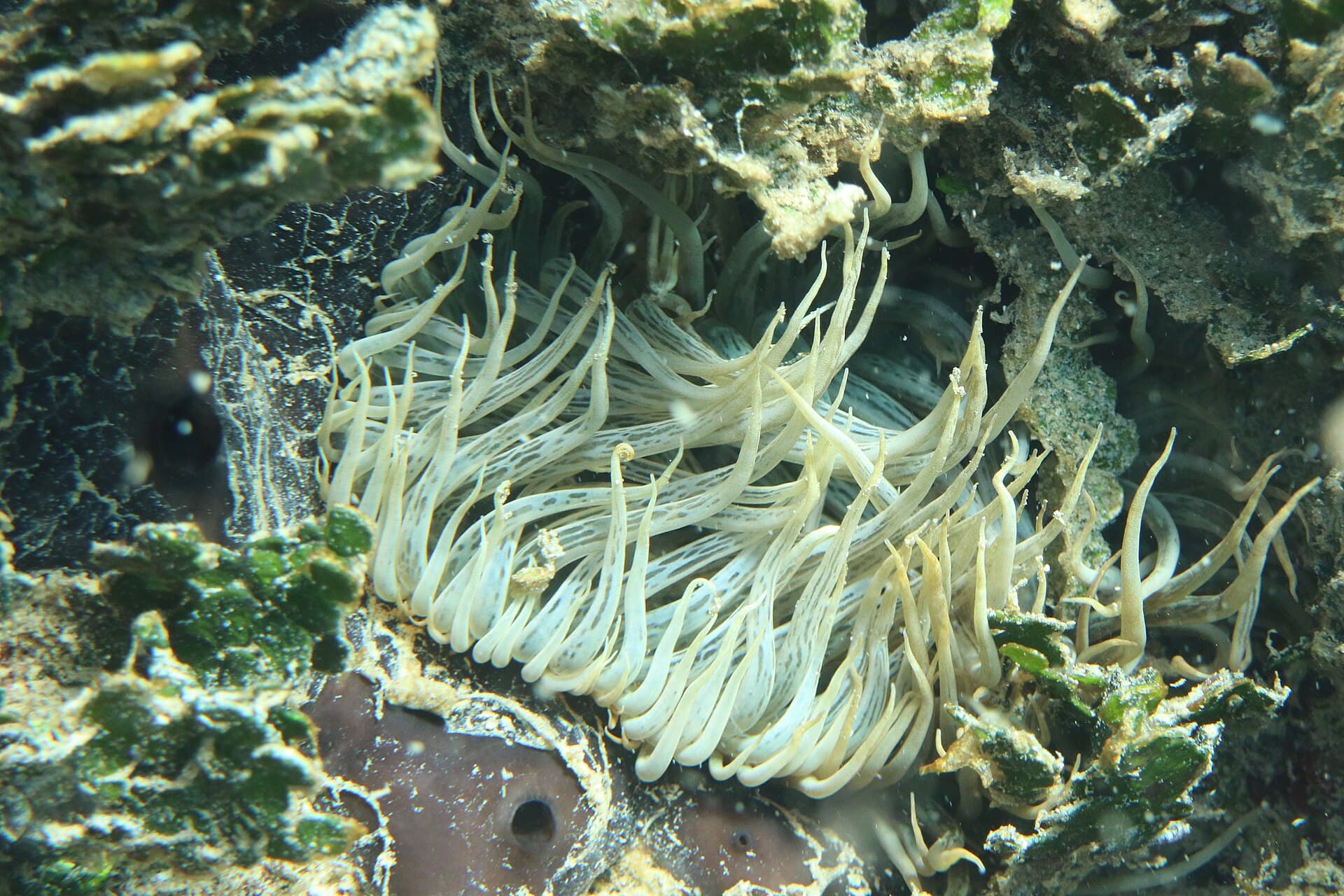

New corals and live rock sometimes bring unwanted hitchhikers. Other problems arise in the aquarium itself, from the wrong placement, too much light or fluctuating parameters. Most can be dealt with well if you recognise them early.
Aiptasia (glass anemones)
Small, brownish sea anemones that multiply rapidly and sting corals near them. Don’t try to pull them off or break them: a new anemone grows from every piece.
- Natural enemies: the nudibranch Berghia (eats only Aiptasia), the filefish Acreichthys tomentosus or certain shrimp (Lysmata wurdemanni). Not every shrimp or filefish eats them equally well.
- Injecting: with a special product or a kalkwasser paste, directly into the anemone.
- Prevention: check new corals and rocks and remove small anemones before they enter the aquarium.
Red flatworms
Small, red-brown flatworms (Convolutriloba retrogemma) that gather on rocks and corals and block the light. Siphon them off with a hose. If you use a treatment against them, follow the instructions: dying flatworms release toxins, so change water afterwards and use activated carbon.
Coral eaters
- Acropora-eating flatworms (AEFW): almost invisible worms that eat Acropora. You see crescent-shaped bite marks and eggs on the bare branches.
- Montipora-eating nudibranchs: small sea slugs that eat plating Montipora.
- Fireworms and sea spiders: some species eat corals, but most bristleworms are useful scavengers.
The best protection is to dip every new stony coral, check it for eggs and preferably keep it separate for a while.
Bleaching
A coral that turns white is losing its algae (zooxanthellae). Causes: too high a temperature, too sudden a change in light (for example new lighting), fluctuating parameters or a complete lack of nitrate and phosphate. Tackle the cause: a bleached coral is still alive and can recover if conditions improve quickly.
Tissue necrosis (RTN and STN)
Especially in SPS corals, tissue can die off: quickly, within hours or days (RTN, rapid tissue necrosis), or slowly from the base (STN, slow tissue necrosis). Causes are often swings in KH or temperature, or infections. Check your parameters, and break off a healthy piece to grow on as a new frag before the whole coral dies.
Harmless
- Asterina starfish: small starfish that usually eat algae. Sometimes they eat corals; keep an eye on them.
- Bristleworms: useful scavengers, as long as they don’t appear on corals in large numbers.
- Tube worms and sponges: a sign of a healthy, living aquarium.