Buying a healthy discus: what to look for
Discus quickly cost a lot of money. With this checklist you can recognise a healthy fish, avoid problems during acclimatisation and set up a proper quarantine.
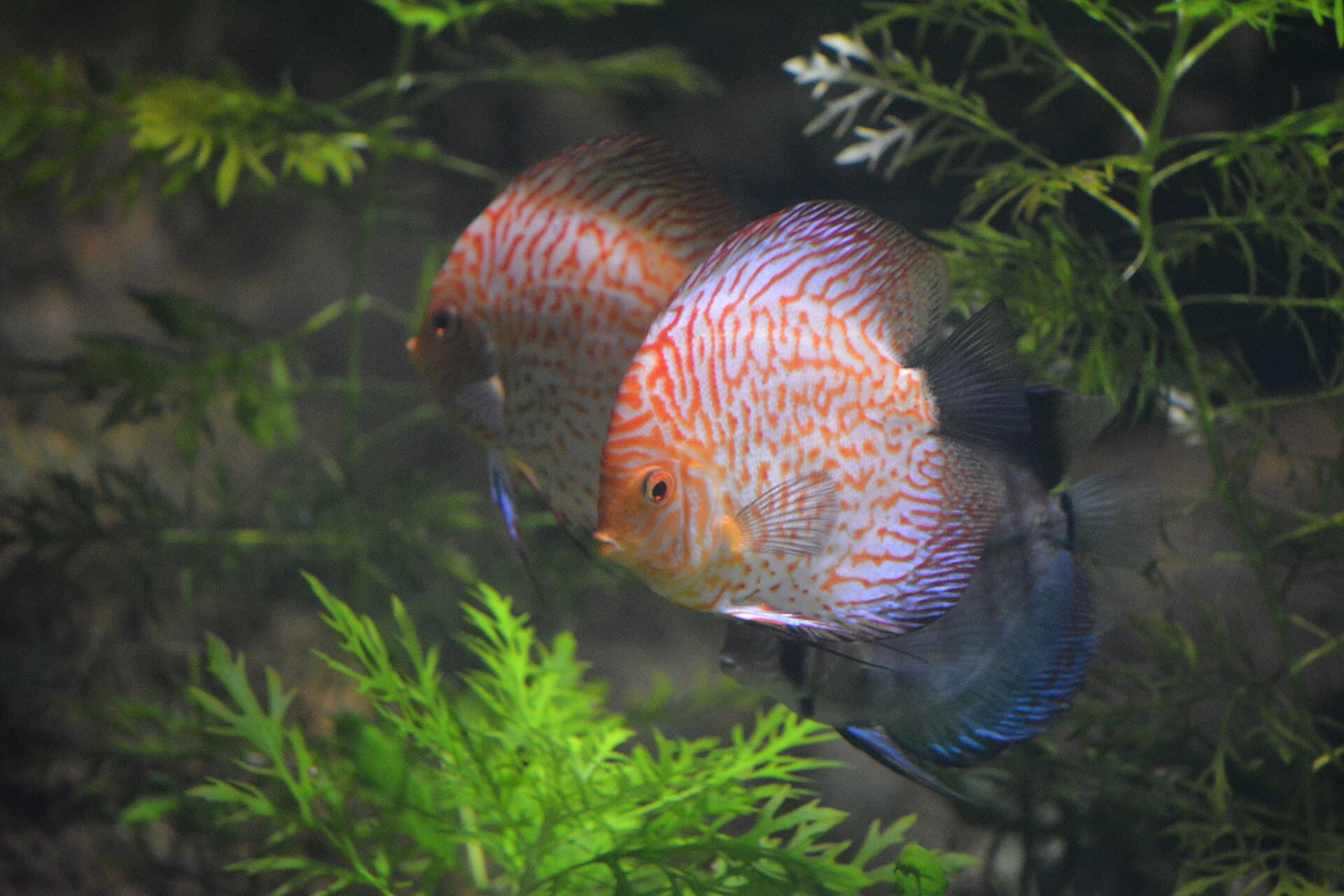

Discus aren’t cheap, and one sick fish can infect a whole group. So take your time when choosing, and don’t rely on colour alone.
Body
- Round and full: no hollow belly, no dented forehead.
- Small eyes: relative to the body. Large eyes point to stunted growth that won’t be made up later.
- Intact skin and fins: no wounds, white spots, holes in the head or ragged fins.
Behaviour
- A healthy discus is curious and comes to the front when you stand at the tank.
- Ask the seller to feed the fish: they should eat eagerly.
- Watch the breathing: rapid breathing, or breathing with one gill cover, points to gill problems.
- A fish standing dark-coloured in a corner is stressed or ill. (Shortly after transport or at night, a dark colour is normal.)
Size and group
Preferably buy fish of at least 8 to 10 cm. Young discus under 6 cm need feeding several times a day and daily water changes; without that care they grow unevenly or stay small. Discus are group fish: start with five to six fish at once.
At the seller
Look at the whole system, not just the fish you want. Dead fish, cloudy water or sick fish in the same system are warning signs. Ask which food and water parameters the fish are used to.
Transport and acclimatisation
- Keep the bag dark and warm during transport.
- Float the bag in the (quarantine) aquarium so the temperature equalises.
- Add aquarium water little by little over half an hour to an hour, especially if pH or hardness differ.
- Net the fish across without pouring the transport water into the tank.
- Keep the lights off on the first day and only feed the next day.
Quarantine
Keep new discus in a separate quarantine tank with its own cycled filter for four to six weeks. Observe them daily: appetite, droppings, breathing and colour. Many discus keepers have new fish dewormed preventively during this period. Only then mix them with your existing group, and be extra careful with fish of different origins: some pathogens cause no problems in one group but are deadly to another.