The best plants for a community aquarium
From indestructible Java fern to fast-growing stem plants and floating plants: the best plants for a community aquarium, and which plants are banned in the EU.
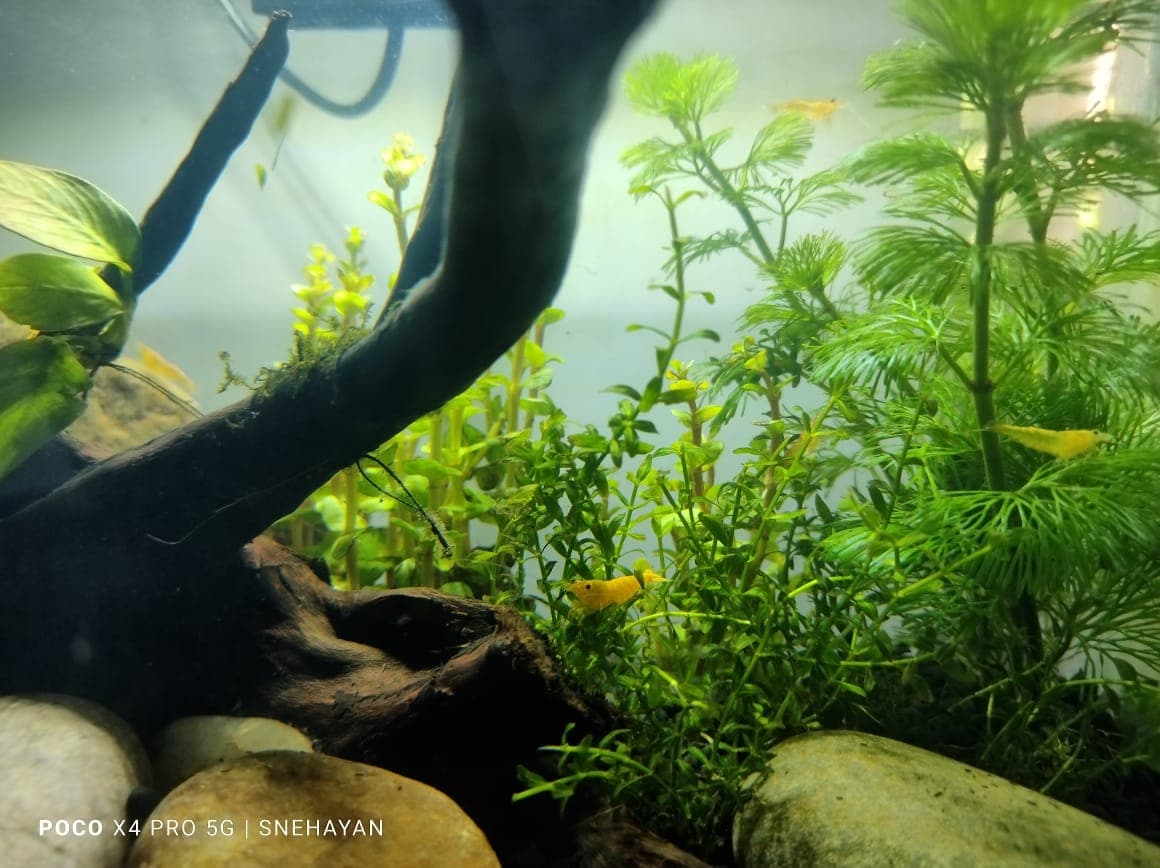

Plants make an aquarium more beautiful, but they also do a lot of work: they absorb nitrate, compete with algae, provide oxygen and offer fish and fry a hiding place. In a community aquarium they are practically indispensable.
Easy and indestructible
- Java fern (Microsorum pteropus): tie it to wood or stone; needs little light.
- Anubias: tough, dark green leaves; also tie it on, don’t plant it in the substrate.
- Java moss (Taxiphyllum barbieri): forms cushions on wood and stone, ideal for fry and shrimp.
- Cryptocoryne wendtii: for the fore- and midground; roots firmly and tolerates low light.
For the background
- Vallisneria: long, ribbon-like leaves; spreads via runners.
- Amazon sword (Echinodorus): a large specimen plant for bigger aquariums; give root tabs.
- Stem plants such as Rotala rotundifolia, Ludwigia repens and Bacopa caroliniana: grow fast, absorb lots of nutrients and are easy to propagate by cutting off tops and replanting them.
Floating plants
Floating plants such as Limnobium laevigatum (Amazon frogbit), Salvinia natans or Phyllanthus fluitans grow fast, remove a lot of nitrate from the water and dim the light. Gouramis and bettas use them to build their bubble nests. Leave part of the surface free.
Banned in the EU
Some plants that used to be common in aquariums are now on the EU list of invasive alien species. They may no longer be sold, grown or traded, because they cause major damage in nature. These include:
- Cabomba caroliniana (green cabomba)
- Water hyacinth (Eichhornia crassipes)
- Water lettuce (Pistia stratiotes)
- Giant salvinia (Salvinia molesta)
- Parrot’s feather (Myriophyllum aquaticum) and Myriophyllum heterophyllum
- Water primroses (Ludwigia grandiflora and L. peploides)
- Curly waterweed (Lagarosiphon major) and Nuttall’s waterweed (Elodea nuttallii)
- Floating pennywort (Hydrocotyle ranunculoides)
Never dump aquarium plants or aquarium water in ditches, ponds or nature. Plant waste goes in the garden waste or general waste.
Tips for healthy plants
- Light: eight hours a day with a timer.
- Nutrients: a nutrient substrate and possibly a liquid plant fertiliser with iron.
- Lots of plants from the start: a densely planted aquarium has fewer algae problems.
- Trim regularly: removing old leaves and overlong stems keeps plants healthy.
- Watch out for plant eaters: some fish, such as large barbs or silver dollars, eat soft plants.