Aggression in Malawi cichlids: causes and solutions
Chasing, biting and torn fins: aggression is the most common problem in a Malawi aquarium. How to recognise the cause and bring calm to your tank.
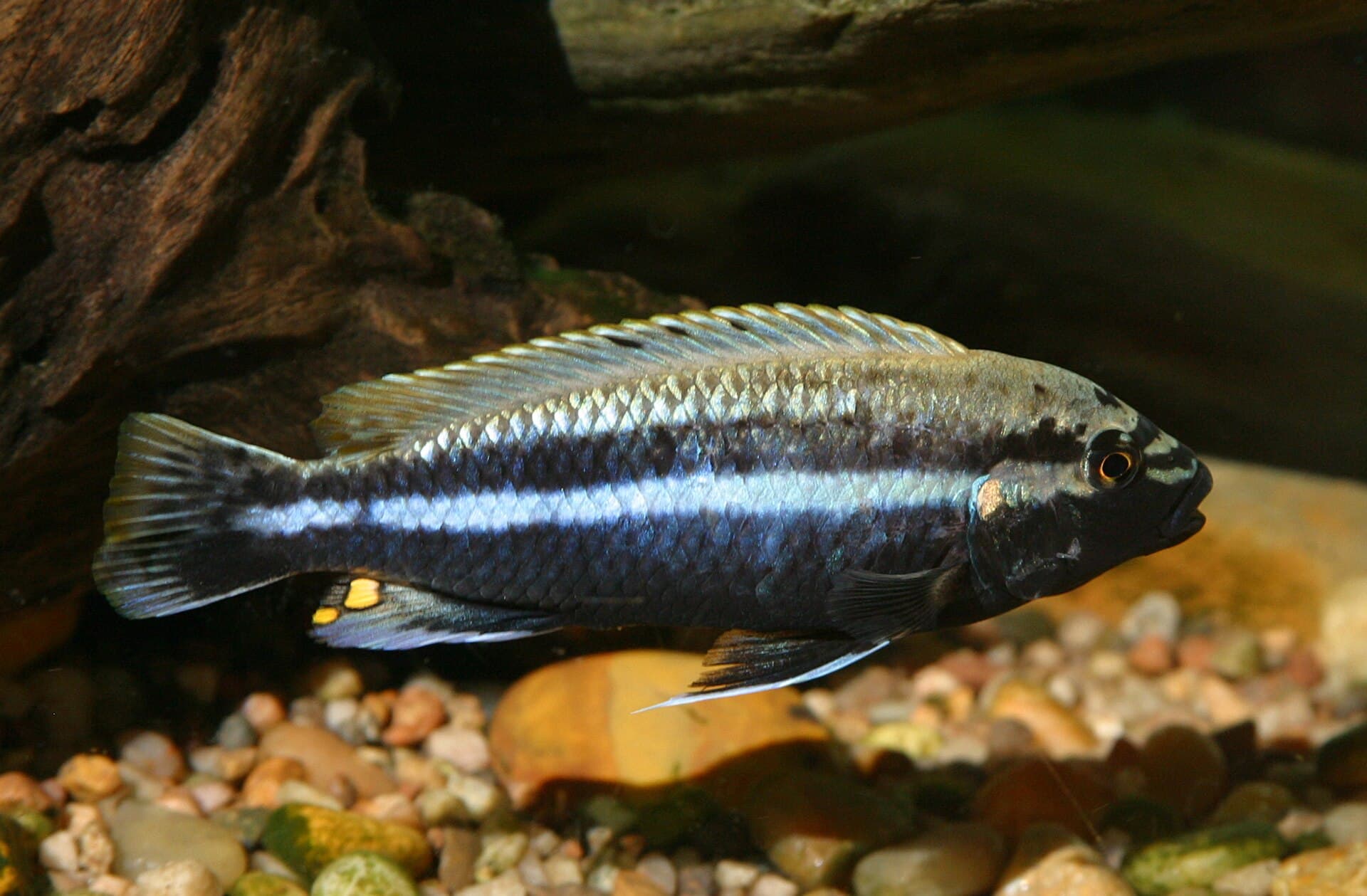

Territorial behaviour is part of Malawi cichlids: males defend a spot between the rocks and chase rivals away. Some chasing is normal. It becomes a problem when one fish is constantly harassed, no longer dares to show itself or gets injured.
Signs of too much aggression
- A fish that constantly hangs in a corner or at the surface.
- Torn fins, missing scales or wounds.
- A fish that no longer comes to eat.
- Females that become exhausted by a pushy male.
- The sudden death of one fish, without other signs of disease.
Common causes
- Too few fish or too few females: a male’s aggression focuses on one or two fish.
- Look-alike species: males see each other as rivals.
- Too few hiding places or a tank that is too small.
- A new fish in an existing group, without a spot of its own.
- A very aggressive species, such as Melanochromis auratus, or one dominant individual: a ‘bully’.
Solutions
- Rebuild the rockwork: all territories disappear and have to be divided again. Always do this when adding new fish too.
- Provide more hiding places and break up sightlines with stones, so fish don’t see each other constantly.
- Adjust the ratio: add females or remove a surplus male.
- Temporarily move the injured fish to a hospital tank until it has fully recovered.
- Remove a bully: sometimes one fish causes all the unrest. Isolate it for a few days, or find it a new home.
- Reconsider the stocking: sometimes certain species simply don’t go together.
Mouthbrooding females
A female with eggs in her mouth hardly eats for about three weeks and is sometimes harassed. If you want to raise the fry, move her to a quiet, covered tank. Move her carefully so she doesn’t spit out the eggs, and after she releases the fry let her regain strength before she returns to the group.
When it doesn’t work
Not every combination works, however well you set everything up. Returning a fish to the shop or giving it to another hobbyist is then better than an aquarium that never calms down. With a well-composed group, plenty of rocks and a stable routine, a Malawi aquarium is usually lively but peaceful.